
Basic Information:
- Common Name: Tomato Juice
- Scientific Name: Solanum lycopersicum (tomato)
- Category: Beverage
- Varieties: There are various brands of tomato juice available, each with its own combination of added ingredients and flavor profiles.
Nutritional Information:
- Macronutrients (per 100 ml):
- Carbohydrates: 4.32 grams
- Proteins: 0.86 grams
- Fats: 0.29 grams
- Micronutrients:
- Vitamins:
- Vitamin A: 27 µg (3% DV)
- Vitamin C: 11.7 mg (13% DV)
- Vitamin E: 0.14 mg (1% DV)
- Vitamin K: 0.1 µg (0% DV)
- Vitamin B6: 0.05 mg (3% DV)
- Minerals:
- Potassium: 250 mg (5% DV)
- Magnesium: 11 mg (3% DV)
- Phosphorus: 17 mg (1% DV)
- Calcium: 12 mg (1% DV)
- Iron: 0.3 mg (2% DV)
Phytonutrients:
While specific data on the phytonutrient content of tomato juice with added ingredients from concentrate may vary based on the specific brand and formulation, here are some common phytonutrients found in tomato juice:
- Lycopene:
- Lycopene is a carotenoid pigment responsible for the red color of tomatoes. It is a potent antioxidant that has been associated with various health benefits, including reducing the risk of certain cancers, protecting against cardiovascular disease, and supporting skin health.
- Beta-Carotene:
- Beta-carotene is another carotenoid found in tomatoes that contributes to their vibrant color. It is a precursor to vitamin A and has antioxidant properties that support eye health, immune function, and skin health.
- Flavonoids:
- Tomatoes contain various flavonoids, such as quercetin and kaempferol, which have antioxidant and anti-inflammatory properties. These compounds may help reduce the risk of chronic diseases and support overall health.
- Vitamin C:
- Tomato juice is a good source of vitamin C, a powerful antioxidant that supports immune function, collagen synthesis, and wound healing.
- Vitamin E:
- Vitamin E is a fat-soluble antioxidant found in tomatoes that helps protect cells from damage caused by free radicals.
- Phenolic Compounds:
- Tomatoes contain phenolic compounds, including chlorogenic acid and caffeic acid, which have antioxidant properties and may help reduce inflammation and lower the risk of chronic diseases.
- Fiber:
- While tomato juice is not a significant source of fiber compared to whole tomatoes, it still contains some dietary fiber, which supports digestive health and helps regulate blood sugar levels.
These are just a few examples of the phytonutrients that may be present in tomato juice with added ingredients from concentrate. Consuming tomato juice as part of a balanced diet can provide a variety of health-promoting compounds that contribute to overall well-being.
Calorie Count and Glycemic Index:
- Calorie Count: Approximately 20 calories per 100 ml
- Glycemic Index: Low
Physical Characteristics:
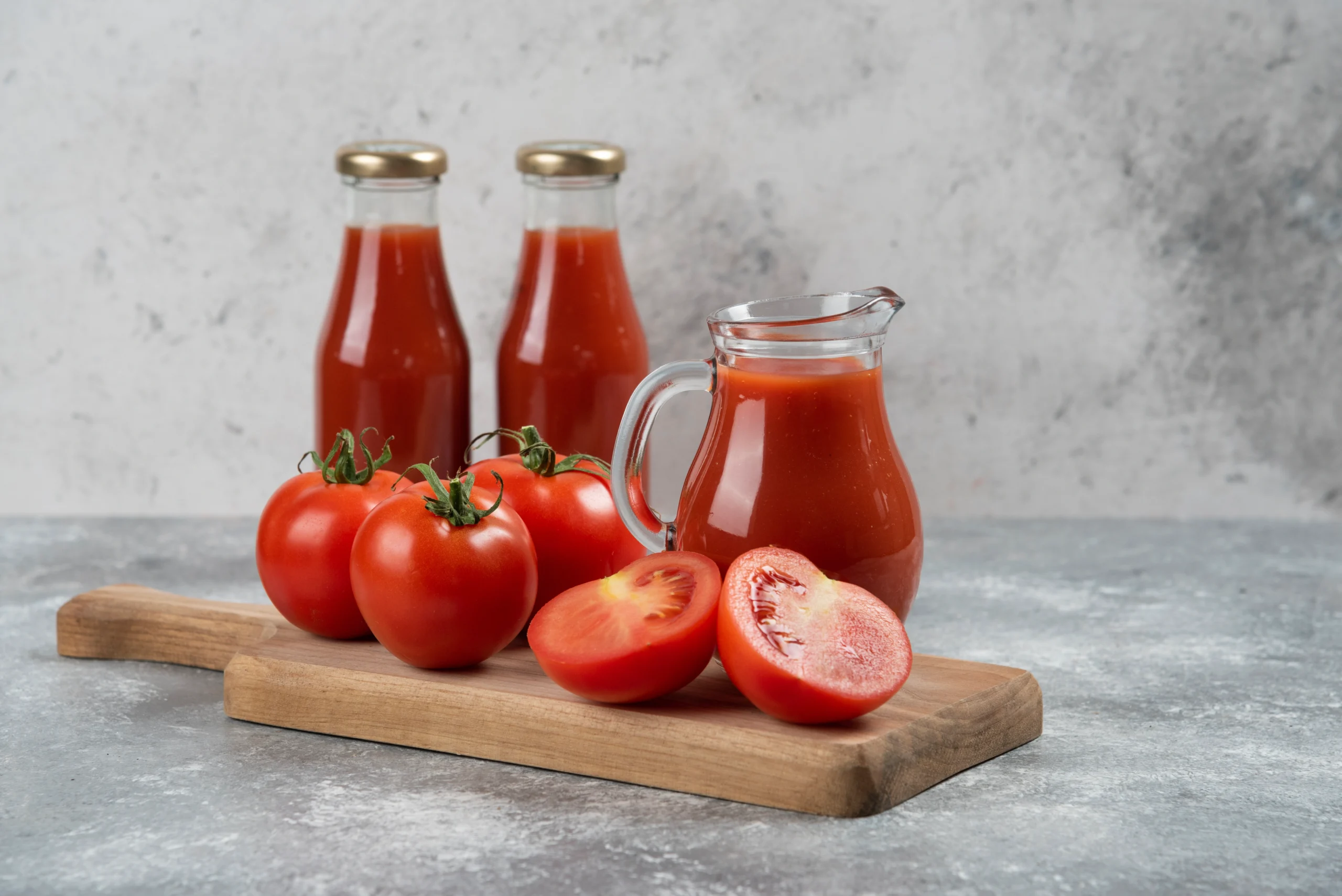
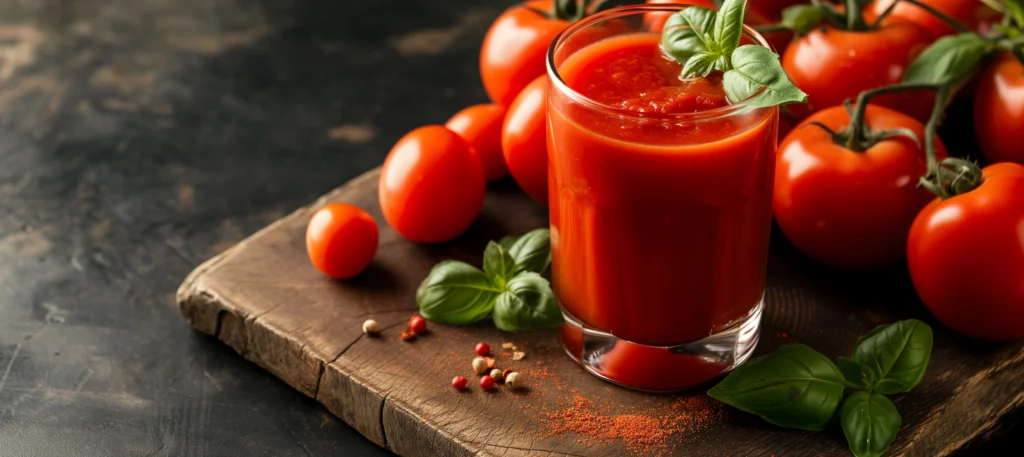
- Color: Typically red
- Shape: Liquid
- Size: Sold in various-sized containers, commonly ranging from small bottles to large cartons
- Texture: Smooth liquid
Culinary Uses:
- Common Dishes: Tomato juice is commonly consumed as a beverage on its own or as a base for cocktails like Bloody Mary and Virgin Mary. It can also be used as an ingredient in soups, sauces, and marinades.
- Preparation Methods: Tomato juice is typically consumed chilled or at room temperature. It can be enjoyed straight from the container or mixed with other ingredients to make cocktails or sauces.
- Suitable Pairings: Tomato juice pairs well with vodka, gin, Worcestershire sauce, hot sauce, lemon or lime juice, horseradish, celery salt, and various vegetable garnishes.
Geographical Information:
- Origin: Tomatoes are native to western South America and were first cultivated by indigenous peoples in the region.
- Primary Growing Regions: Tomatoes are now grown worldwide in both temperate and tropical regions. Major producing countries include China, India, the United States, Turkey, and Egypt.
- Seasonal Availability: While tomatoes are available year-round in many regions due to greenhouse cultivation and global trade, they are typically harvested during the summer months in temperate climates.
| Proximates: | |
| Water | 93.6 g |
| Energy (Atwater General Factors) | 23 kcal |
| Energy (Atwater Specific Factors) | 20 kcal |
| Nitrogen | 0.14 g |
| Protein | 0.86 g |
| Total lipid (fat) | 0.29 g |
| Ash | 0.93 g |
| Carbohydrates: | |
| Carbohydrate, by difference | 4.32 g |
| Sugars, Total | 2.57 g |
| Sucrose | <0.25 g |
| Glucose | 1.2 g |
| Fructose | 1.37 g |
| Lactose | <0.25 g |
| Maltose | <0.25 g |
| Galactose | <0.1 g |
| Organic acids: | |
| Citric acid | <40 mg |
| Malic acid | 11 mg |
| Oxalic acid | <40 mg |
| Quinic acid | <40 mg |
| Minerals: | |
| Calcium, Ca | 10 mg |
| Iron, Fe | 0.3 mg |
| Magnesium, Mg | 10.4 mg |
| Phosphorus, P | 19 mg |
| Potassium, K | 198 mg |
| Sodium, Na | 236 mg |
| Zinc, Zn | 0.1 mg |
| Copper, Cu | 0.057 mg |
| Manganese, Mn | 0.058 mg |
| Vitamins and Other Components: | |
| Vitamin C, total ascorbic acid | 49.8 mg |
| Thiamin | 0.042 mg |
| Niacin | 0.086 mg |
| Vitamin B-6 | 0.076 mg |
| Folate, total | 19 µg |