

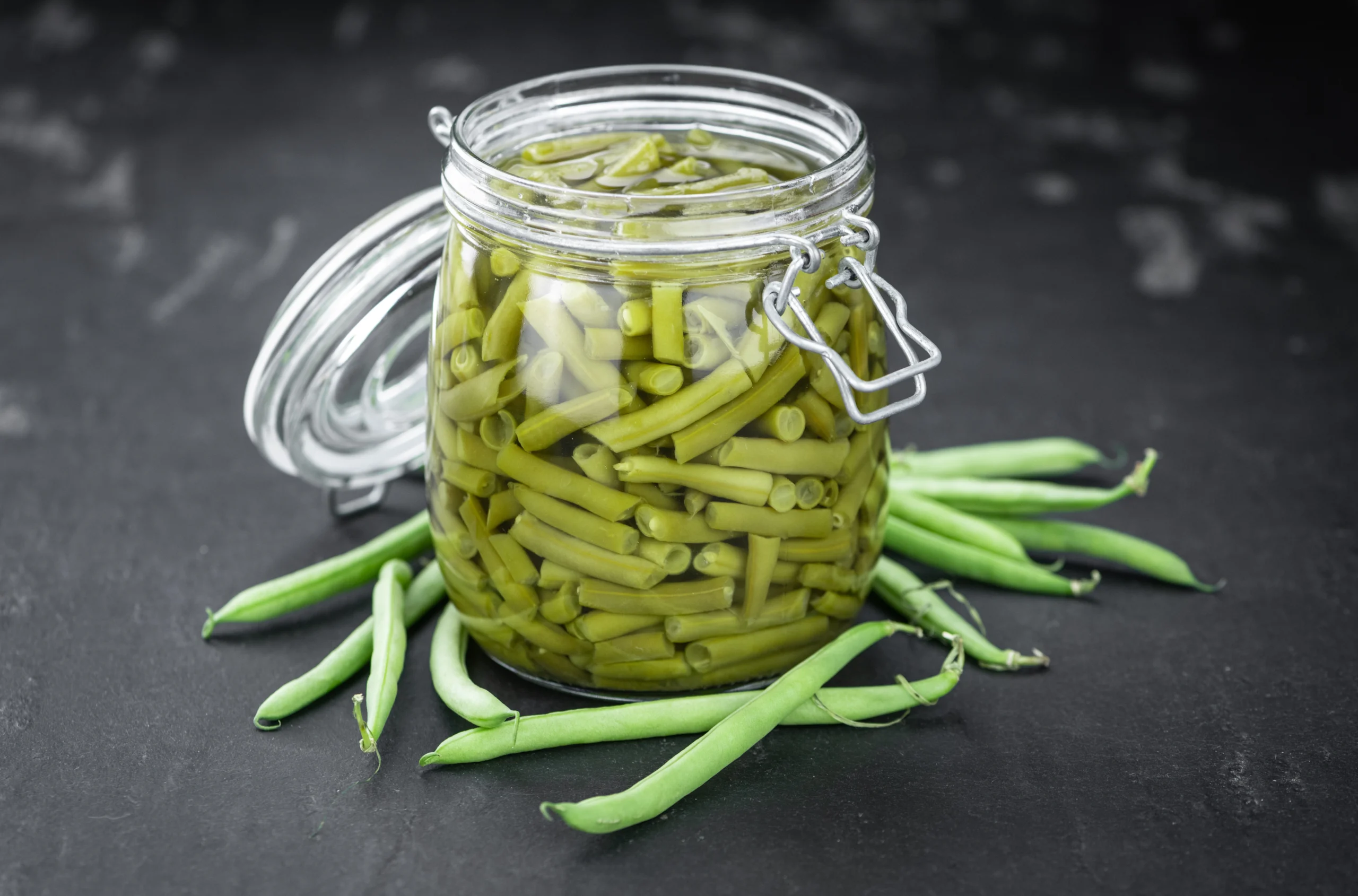
Basic Information
- Common Name: Green Beans, Snap Beans
- Scientific Name: Phaseolus vulgaris
- Category: Vegetable
Varieties
Green beans, or snap beans, come in several varieties that can be categorized mainly by the color (green being the most common) and whether they are pole or bush types. The canned “regular pack” refers to standard processing with water and possibly added salt, without specifying a particular variety. The varieties are more relevant to fresh beans and include names like ‘Blue Lake’, ‘Contender’, and ‘Kentucky Wonder’.
Nutritional Information
- Macronutrients: Green beans are low in calories and contain a small amount of proteins and carbohydrates with negligible fat. A typical serving (1 cup, approximately 135 grams, canned, drained solids) contains:
- Carbohydrates: About 4.11 grams
- Proteins: About 1.04 grams
- Fats: Less than 0.39 grams
- Micronutrients: A good source of vitamins and minerals, especially vitamin C, vitamin K, vitamin A (from beta-carotene), folate, and dietary fiber. They also contain minerals like potassium and iron.
Phytonutrients
Green beans, even when canned, contain a variety of phytonutrients that contribute to their health benefits. These compounds play a crucial role in providing antioxidant, anti-inflammatory, and overall health-promoting properties. While the canning process may slightly alter the nutrient content, canned green beans still offer a valuable source of these beneficial phytonutrients. Here’s a closer look at the key phytonutrients found in canned green beans:
1. Flavonoids
- Type: Includes quercetin and kaempferol.
- Benefits: Antioxidant properties that can help reduce inflammation and protect cells from oxidative stress.
2. Carotenoids
- Type: Beta-carotene, lutein, and zeaxanthin.
- Benefits: Support eye health and have antioxidant effects. Beta-carotene is converted into vitamin A in the body, which is essential for vision, immune function, and skin health.
3. Phenolic Acids
- Type: Such as caffeic acid and ferulic acid.
- Benefits: Provide antioxidant protection, which may reduce the risk of chronic diseases and support heart health.
4. Saponins
- Type: Naturally occurring plant compounds found in many vegetables and beans.
- Benefits: May have anti-inflammatory and immune-boosting properties, and could help lower cholesterol levels.
5. Fiber
- Type: Although not a phytonutrient per se, dietary fiber is a crucial component that supports digestive health and helps control blood sugar levels.
- Benefits: Feeds beneficial gut bacteria, promotes regular bowel movements, and aids in maintaining a healthy weight.
6. Vitamins and Minerals
- Type: Vitamin C, Vitamin K, and minerals like potassium and iron.
- Benefits: Essential for various bodily functions, including immune support (vitamin C), bone health (vitamin K), muscle function, and oxygen transport (potassium and iron).
Canned green beans retain much of their nutrient content, making them a healthy addition to the diet. Their phytonutrients offer protective health benefits, and the convenience of canned vegetables helps ensure that individuals can include these nutrients in their diets year-round. Incorporating canned green beans into meals is an easy way to consume a variety of phytonutrients that support overall health.
- Calorie Count: Roughly 30 calories per cup.
- Glycemic Index: Low, typically under 55, contributing to stable blood sugar levels.

Physical Characteristics
- Color: Bright to dark green
- Shape: Long and slender pods
- Size: Can vary from 4 to 6 inches in length, depending on the variety and harvesting time.
- Texture: Tender-crisp with a smooth surface; the texture can be softer in canned varieties compared to fresh, while still retaining some crispness.
Culinary Uses
Green beans are versatile in culinary uses, suitable for a wide range of dishes:
- Common Dishes: Often used in casseroles, salads, stir-fries, and side dishes. A classic ingredient in green bean casserole.
- Preparation Methods: Can be eaten directly from the can or heated through in cooking. Canned green beans are pre-cooked, making them a convenient, time-saving option.
- Suitable Pairings: Pairs well with almonds, garlic, lemon, mushrooms, onions, and tomatoes. Works nicely with herbs such as dill, tarragon, and thyme. Complements proteins like chicken, beef, and fish.
Geographical Information
- Origin: Native to the Americas, green beans have been cultivated around the world for thousands of years.
- Primary Growing Regions: Widely grown globally, with major production in the United States, China, and many European countries.
- Seasonal Availability: Fresh green beans are typically available in the summer and fall, but canned green beans are available year-round, providing a convenient and shelf-stable option.
Green beans, especially when canned, offer a nutritious and convenient vegetable choice that fits well into a variety of dietary patterns. Their low calorie count, beneficial nutrients, and versatility in recipes make them a popular vegetable for both home cooks and professional chefs alike.
| Proximates: | |
| Water | 93.6 g |
| Energy (Atwater General Factors) | 24 kcal |
| Energy (Atwater Specific Factors) | 20 kcal |
| Nitrogen | 0.17 g |
| Protein | 1.04 g |
| Total lipid (fat) | 0.39 g |
| Ash | 0.89 g |
| Carbohydrates: | |
| Carbohydrate, by difference | 4.11 g |
| Sugars, Total | 1.29 g |
| Sucrose | 0 g |
| Glucose | 0.65 g |
| Fructose | 0.64 g |
| Lactose | 0 g |
| Maltose | 0 g |
| Galactose | 0 g |
| Minerals: | |
| Calcium, Ca | 36 mg |
| Iron, Fe | 0.78 mg |
| Magnesium, Mg | 12.7 mg |
| Phosphorus, P | 23 mg |
| Potassium, K | 97 mg |
| Sodium, Na | 282 mg |
| Zinc, Zn | 0.19 mg |
| Copper, Cu | 0.041 mg |
| Manganese, Mn | 0.176 mg |