

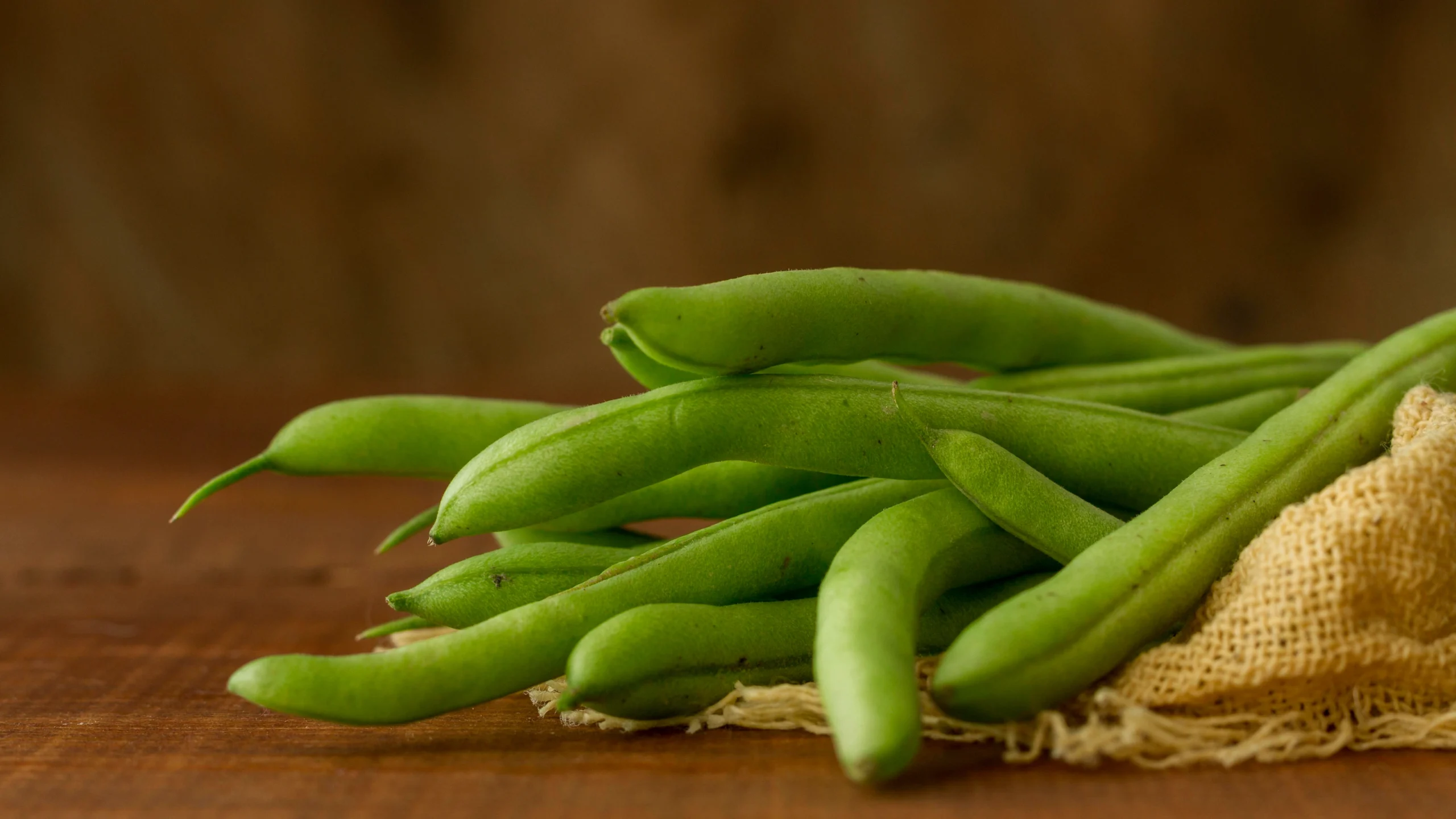
Basic Information
- Common Name: Green Beans, Snap Beans
- Scientific Name: Phaseolus vulgaris
- Category: Vegetable
Varieties
Green beans come in numerous varieties, which can be broadly divided into two main types: bush beans and pole beans. Some popular varieties include ‘Blue Lake’, ‘Contender’, ‘Provider’, and ‘Kentucky Wonder’. These varieties differ in growth habits, pod size, and slight variations in flavor and texture.
Nutritional Information
- Macronutrients: Green beans are low in calories and carbohydrates, with a moderate amount of protein and minimal fat. A typical serving (100 grams, raw) contains:
- Carbohydrates: About 7.41 grams
- Proteins: About 1.96 grams
- Fats: Less than 0.28 grams
- Micronutrients: High in vitamin C, vitamin K, and vitamin A (from beta-carotene), and a good source of dietary fiber, folate, and minerals such as manganese, potassium, and iron.
Phytonutrients
Raw green beans are a nutritious vegetable rich in various phytonutrients, which contribute to their health benefits, including antioxidant and anti-inflammatory effects. These phytonutrients play a crucial role in promoting health and preventing chronic diseases. Here’s an overview of the key phytonutrients found in raw green beans:
1. Flavonoids
- Types: Quercetin, kaempferol, catechins.
- Benefits: These compounds have antioxidant properties that help protect cells from free radical damage, reduce inflammation, and may lower the risk of various chronic diseases, including heart disease and cancer.
2. Carotenoids
- Types: Beta-carotene, lutein, zeaxanthin.
- Benefits: Carotenoids are known for their role in eye health, particularly in protecting against macular degeneration and cataracts. They also function as antioxidants and can support the immune system.
3. Phenolic Acids
- Types: Caffeic acid, ferulic acid.
- Benefits: These acids contribute to the antioxidant activity of green beans, helping to neutralize harmful free radicals and reduce the risk of chronic disease.
4. Saponins
- Types: Found in many legumes, including green beans.
- Benefits: Saponins have been shown to have cholesterol-lowering properties, improve immune function, and may have anti-cancer effects.
5. Fiber
- Type: Although technically a macronutrient, dietary fiber has numerous health benefits.
- Benefits: Promotes digestive health, helps regulate blood sugar levels, and can contribute to heart health by lowering cholesterol levels.
6. Vitamins and Minerals
- Types: Rich in vitamin C, vitamin K, vitamin A, folate, and minerals such as iron and manganese.
- Benefits: Essential for various bodily functions, including collagen synthesis (vitamin C), bone health (vitamin K), and red blood cell formation (iron).
Green beans, particularly when raw, retain the maximum amount of these phytonutrients, offering significant health benefits. Incorporating raw green beans into your diet through salads or as a snack can contribute to your intake of essential nutrients and phytonutrients, supporting overall health and well-being.
- Calorie Count: Approximately 31 calories per 100 grams.
- Glycemic Index: Low, typically considered to be under 55, which is beneficial for maintaining stable blood sugar levels.
Physical Characteristics
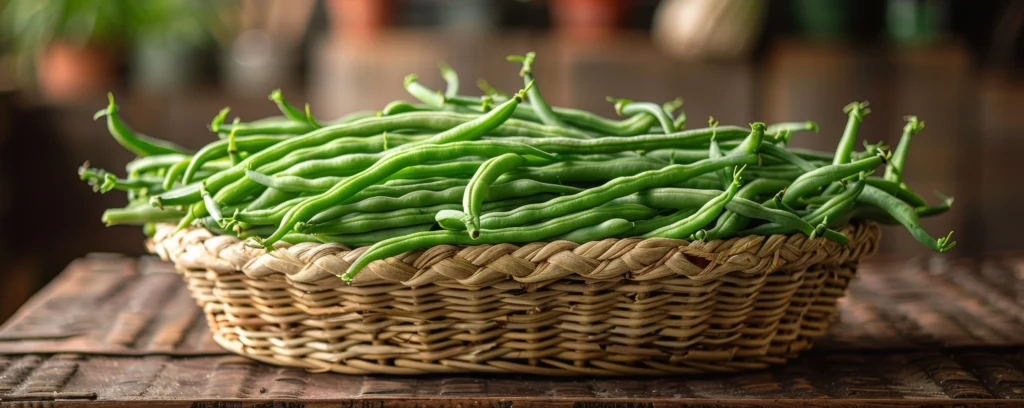
- Color: Bright green
- Shape: Long, slender pods
- Size: Typically 4 to 6 inches in length, though this can vary by variety.
- Texture: Crisp and tender when fresh, with a smooth exterior and small seeds inside the pod.
Culinary Uses
Green beans are extremely versatile in the kitchen and can be used in a wide range of dishes:
- Common Dishes: Salads, stir-fries, casseroles, and side dishes. Green beans almondine is a classic preparation.
- Preparation Methods: Can be steamed, boiled, roasted, or sautéed. They’re also popularly pickled or used in marinated salads.
- Suitable Pairings: Pairs well with garlic, almonds, lemon, tomatoes, mushrooms, and onions. Herbs such as dill, parsley, and thyme complement their flavor, as do various nuts and cheeses.
Geographical Information
- Origin: Native to Central and South America, green beans have been cultivated around the world for thousands of years.
- Primary Growing Regions: Today, they are grown globally, with significant production in China, Indonesia, Turkey, and the United States.
- Seasonal Availability: Peak season is summer through early fall, though greenhouse cultivation makes them available year-round in many places.
Green beans, when consumed raw, offer crisp texture and a fresh flavor that can enhance a variety of dishes. They are a nutritious addition to the diet, providing essential vitamins, minerals, and fiber with very low calorie content. Their wide range of varieties and versatility in cooking make them a favored vegetable in cuisines worldwide.
| Proximates: | |
| Water | 87.7 g |
| Energy (Atwater General Factors) | 40 kcal |
| Energy (Atwater Specific Factors) | 34 kcal |
| Nitrogen | 0.32 g |
| Protein | 1.96 g |
| Total lipid (fat) | 0.28 g |
| Ash | 0.68 g |
| Carbohydrates: | |
| Carbohydrate, by difference | 7.41 g |
| Fiber, total dietary | 3 g |
| Sugars, Total | 2.33 g |
| Sucrose | 0.08 g |
| Glucose | 1.33 g |
| Fructose | 0.93 g |
| Lactose | <0.25 |
| Maltose | <0.25 |
| Minerals: | |
| Calcium, Ca | 40 mg |
| Iron, Fe | 0.65 mg |
| Magnesium, Mg | 28.2 mg |
| Phosphorus, P | 41 mg |
| Potassium, K | 290 mg |
| Sodium, Na | <2.5 mg |
| Zinc, Zn | 0.35 mg |
| Copper, Cu | 0.098 mg |
| Manganese, Mn | 0.332 mg |
| Molybdenum, Mo | 41.6µg |
| Vitamins and other components: | |
| Thiamin | 0.06 mg |
| Niacin | 0.731 mg |
| Vitamin B-6 | 0.121 mg |
| Vitamin K (phylloquinone) | 43.9µg |
| Vitamin K (Dihydrophylloquinone) | <0.1µg |
| Vitamin K (Menaquinone-4) | <0.1µg |