
Basic Information
- Common Name: Broccoli
- Scientific Name: Brassica oleracea var. italica
- Category: Vegetable
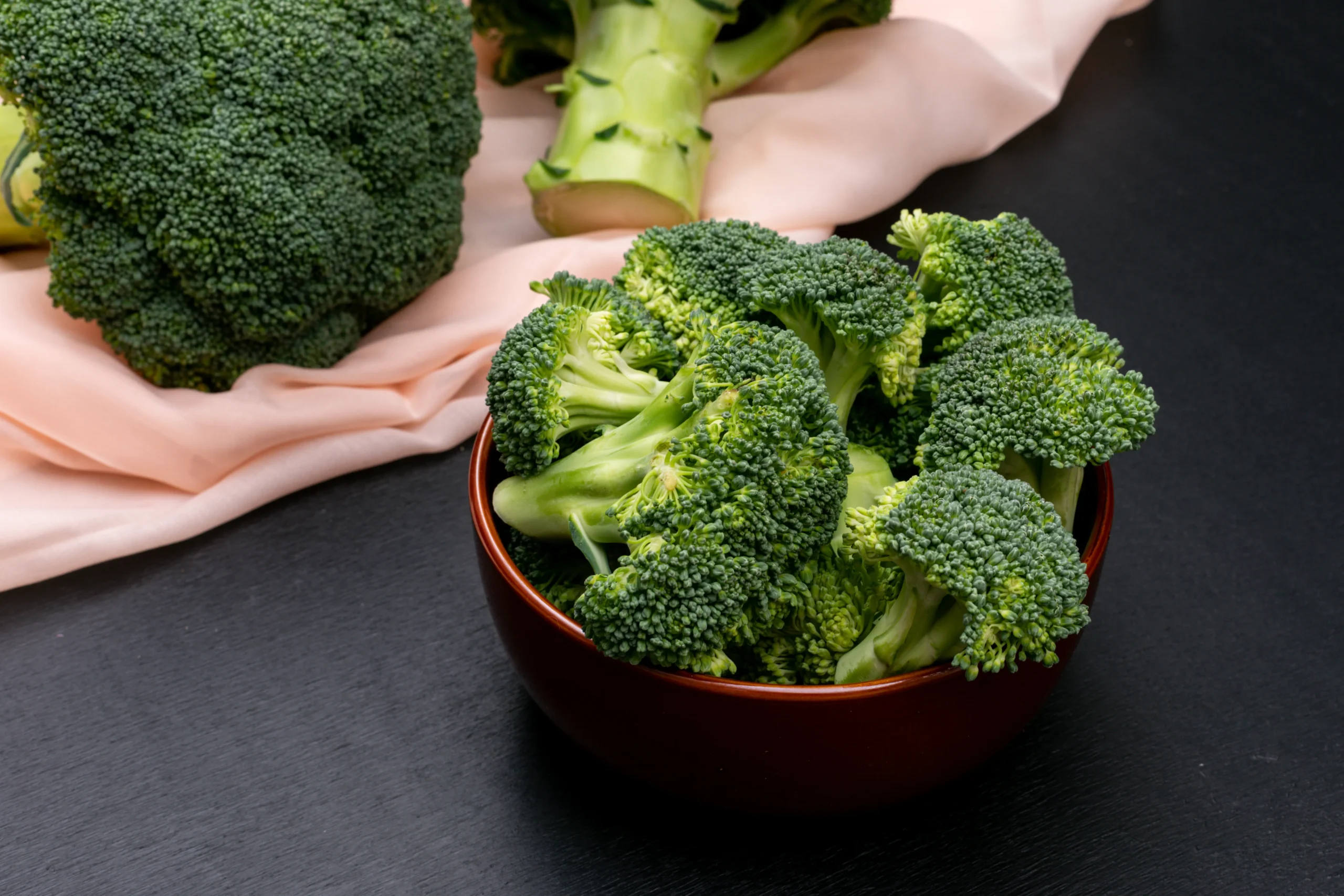
- Varieties: There are several varieties of broccoli, including Calabrese broccoli (the most common type found in grocery stores), sprouting broccoli, and purple cauliflower (a type of broccoli despite its name). These varieties differ mainly in their appearance, with variations in the color and shape of the florets and the plant’s size.
Nutritional Information
- Macronutrients (per 100 grams of raw broccoli):
- Carbohydrates: About 6.27 grams, including 2.6 grams of dietary fiber
- Proteins: Approximately 2.57 grams
- Fats: 0.34 grams
- Micronutrients: Broccoli is rich in vitamin C, vitamin K, folate, potassium, and contains significant amounts of vitamin A (from beta-carotene), calcium, and iron. It also provides various phytonutrients with antioxidant properties.
- Calorie Count: Roughly 34 calories per 100 grams.
- Glycemic Index: Low, estimated to be around 15, making it suitable for most diets, including those for individuals managing blood sugar levels.
Phytonutrients
Raw broccoli is a powerhouse of phytonutrients, compounds that contribute significantly to its health-promoting properties. These naturally occurring chemicals are known for their antioxidant, anti-inflammatory, and potentially anti-cancer effects. Here’s an overview of the key phytonutrients found in raw broccoli:
1. Sulforaphane
- Type: A sulfur-containing compound (isothiocyanate) that is formed when broccoli is chopped or chewed, due to the breakdown of glucoraphanin.
- Benefits: Sulforaphane is studied for its potential to fight cancer, reduce inflammation, and provide antioxidant effects. It may also have benefits for heart health and blood sugar control.
2. Glucosinolates
- Types: Glucoraphanin, gluconasturtiin, and glucobrassicin.
- Benefits: Precursors to isothiocyanates like sulforaphane, glucosinolates are responsible for broccoli’s potential anti-cancer properties. They may also support detoxification processes in the body.
3. Indoles
- Type: Particularly indole-3-carbinol (I3C).
- Benefits: Indoles have been shown to influence estrogen metabolism, which may help in reducing the risk of certain hormone-related cancers.
4. Flavonoids
- Types: Kaempferol and quercetin.
- Benefits: These compounds have antioxidant properties that can help reduce the risk of chronic diseases. They may also support heart health and provide anti-inflammatory effects.
5. Carotenoids
- Types: Beta-carotene, lutein, and zeaxanthin.
- Benefits: These antioxidants are important for eye health, preventing oxidative stress, and may support the immune system.
6. Vitamins and Minerals
While not phytonutrients, it’s worth noting that broccoli is also rich in vitamins C and K, folate, potassium, and other micronutrients that contribute to its overall health benefits.
7. Fiber
- Type: Both soluble and insoluble fiber.
- Benefits: Supports digestive health, helps control blood sugar levels, and can contribute to heart health.
The combination of these phytonutrients in broccoli not only contributes to its status as a superfood but also highlights the importance of including a variety of vegetables in the diet to harness these health-promoting compounds. The synergistic effects of broccoli’s phytonutrients can play a significant role in reducing the risk of chronic diseases and enhancing overall health.
Physical Characteristics
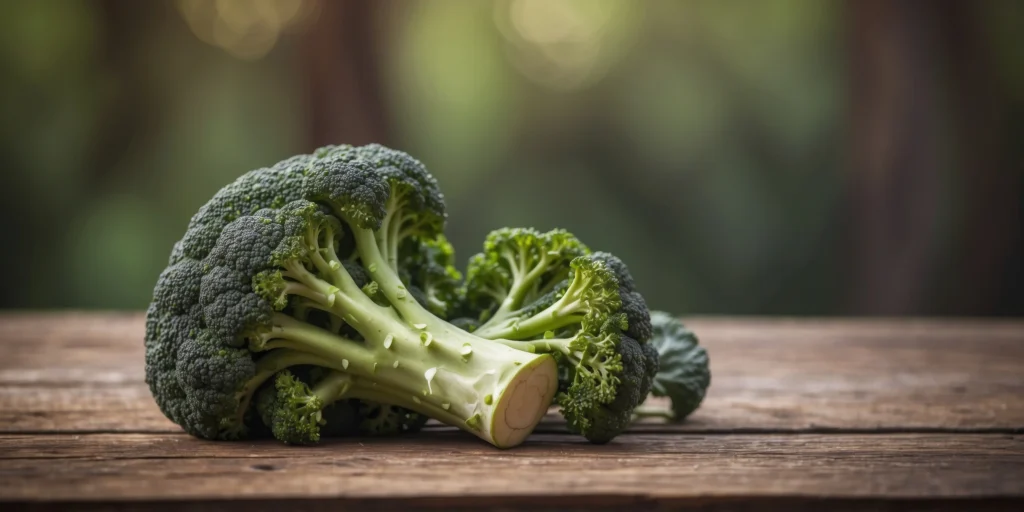
- Color: Dark green, though some varieties may have purple or bluish hues.
- Shape: Characterized by its tree-like structure, with a thick, fibrous stalk and clusters of tight, green florets.
- Size: An average head of broccoli can weigh between 150 to 300 grams.
- Texture: Firm and slightly crunchy when raw, becoming tender when cooked.
Culinary Uses
Broccoli is versatile and can be used in a variety of culinary applications:
- Common Dishes: Steamed, roasted, or stir-fried broccoli; broccoli salads; soups; casseroles; and pasta dishes.
- Preparation Methods: Can be eaten raw, steamed, boiled, roasted, sautéed, or blended into soups and sauces. It’s often recommended to cook broccoli to enhance its digestibility and flavor while preserving its nutrients.
- Suitable Pairings: Complements garlic, lemon, Parmesan cheese, almonds, and meats such as chicken and beef. It pairs well with creamy or vinaigrette dressings and various spices and herbs.
Geographical Information
- Origin: Native to the Mediterranean region and Asia Minor, broccoli was cultivated in Italy in ancient Roman times before spreading across Europe and the rest of the world.
- Primary Growing Regions: Today, broccoli is grown globally, with major production in China, India, the United States (particularly California), and Italy.
- Seasonal Availability: Although available year-round due to global agriculture, broccoli’s peak season in temperate climates is from fall to early spring.
Broccoli is a nutrient-dense food that offers a wealth of vitamins, minerals, and antioxidants, contributing to its numerous health benefits, including supporting immune function, reducing inflammation, and potentially lowering the risk of chronic diseases. Its wide range of culinary uses and availability make it a staple vegetable in diverse cuisines worldwide.
| Proximates: | |
| Water | 90 g |
| Energy (Atwater General Factors) | 39 kcal |
| Energy (Atwater Specific Factors) | 32 kcal |
| Nitrogen | 0.41 g |
| Protein | 2.57 g |
| Total lipid (fat) | 0.34 g |
| Total fat (NLEA) | 0.07 g |
| Ash | 0.83 g |
| Carbohydrates: | |
| Carbohydrate, by difference | 6.27 g |
| Carbohydrate, by summation | 3.8 g |
| Fiber, total dietary | 2.4 g |
| Fiber, soluble | 0 g |
| Fiber, insoluble | 2.4 g |
| Sugars, Total | 1.4 g |
| Sucrose | 0.01 g |
| Glucose | 0.58 g |
| Fructose | 0.82 g |
| Lactose | 0 g |
| Maltose | 0 g |
| Galactose | 0 g |
| Starch | 0 g |
| Minerals: | |
| Calcium, Ca | 46 mg |
| Iron, Fe | 0.69 mg |
| Magnesium, Mg | 21 mg |
| Phosphorus, P | 67 mg |
| Potassium, K | 303 mg` |
| Sodium, Na | 36 mg |
| Zinc, Zn | 0.42 mg |
| Copper, Cu | 0.059 mg |
| Manganese, Mn | 0.197 mg |
| Selenium, Se | 1.6 µg |
| Vitamins and Other Components: | |
| Vitamin C, total ascorbic acid | 91.3 mg |
| Thiamin | 0.077 mg |
| Riboflavin | 0.114 mg |
| Niacin | 0.639 mg |
| Pantothenic acid | 0.61 mg |
| Vitamin B-6 | 0.191 mg |
| Folate, total | 65 µg |
| Vitamin A, RAE | 8 µg |
| Carotene, beta | 93 µg |
| Carotene, alpha | 0 µg |
| Cryptoxanthin, beta | 0 µg |
| Lycopene | 0 µg |
| Lutein + zeaxanthin | 745 µg |
| Phytoene | 0 µg |
| Phytofluene | 0 µg |
| Vitamin E (alpha-tocopherol) | 0.15 mg |
| Tocopherol, beta | 0 mg |
| Tocopherol, gamma | 0.04 mg |
| Tocopherol, delta | 0 mg |
| Tocotrienol, alpha | 0.01 mg |
| Tocotrienol, beta | 0 mg |
| Tocotrienol, gamma | 0 mg |
| Tocotrienol, delta | 0 mg |
| Vitamin K (phylloquinone) | 102 |
| Vitamin K (Dihydrophylloquinone) | 0 µg |
| Lipids: | |
| Fatty acids, total saturated | 0.039 g |
| SFA 8:0 | 0 g |
| SFA 10:0 | 0 g |
| SFA 12:0 | 0 g |
| SFA 14:0 | 0.001 g |
| SFA 15:0 | 0 g |
| SFA 16:0 | 0.029 g |
| SFA 17:0 | 0 g |
| SFA 18:0 | 0.006 g |
| SFA 20:0 | 0.002 g |
| SFA 22:0 | 0.002 g |
| Fatty acids, total monounsaturated | 0.011 g |
| MUFA 14:1 c | 0 g |
| MUFA 15:1 | 0 g |
| MUFA 16:1 c | 0 g |
| MUFA 17:1 | 0.001 g |
| MUFA 17:1 c | 0.001 g |
| MUFA 18:1 | 0.01 g |
| MUFA 18:1 c | 0.01 g |
| MUFA 20:1 | 0 g |
| MUFA 20:1 c | 0 g |
| Fatty acids, total polyunsaturated | 0.017 g |
| PUFA 18:2 | 0.017 g |
| PUFA 18:2 c | 0.017 g |
| PUFA 18:3 | 0.021 g |
| PUFA 18:3 c | 0 g |
| PUFA 18:3 n-6 c,c,c | 0 g |
| PUFA 20:2 c | 0 g |
| PUFA 20:2 n-6 c,c | 0 g |
| PUFA 20:3 | 0 g |
| PUFA 20:3 c | 0 g |
| PUFA 20:4 | 0 g |
| PUFA 20:4c | 0 g |
| Amino acids: | |
| Tryptophan | 0.033 g |
| Threonine | 0.088 g |
| Isoleucine | 0.079 g |
| Leucine | 0.129 g |
| Lysine | 0.135 g |
| Methionine | 0.038 g |
| Cystine | 0.028 g |
| Phenylalanine | 0.117 g |
| Tyrosine | 0.05 g |
| Valine | 0.125 g |
| Arginine | 0.191 g |
| Histidine | 0.059 g |
| Alanine | 0.104 g |
| Aspartic acid | 0.325 g |
| Glutamic acid | 0.542 g |
| Glycine | 0.089 g |
| Proline | 0.11 g |
| Serine | 0.121 g |