

Carrots, particularly baby carrots (raw), are a popular and nutritious vegetable widely enjoyed for their sweet flavor, crisp texture, and numerous health benefits. Here’s a comprehensive overview of baby carrots:
Basic Information
- Common Name: Baby Carrot
- Scientific Name: Daucus carota
- Category: Vegetable
Nutritional Information
- Macronutrients: Baby carrots are primarily composed of water and carbohydrates, with a small amount of protein and virtually no fat. The carbohydrates are mainly in the form of sugars and dietary fiber.
- Micronutrients: They are an excellent source of beta-carotene (which the body converts to vitamin A), and contain vitamins K and C, as well as minerals like potassium and manganese.
Phytonutrients:
Carrots, including baby carrots, are particularly renowned for their rich content of phytonutrients. These compounds are bioactive and offer various health benefits, contributing to the vegetable’s reputation as a nutritious addition to the diet. Here’s a detailed look at the phytonutrients present in raw baby carrots:
Beta-Carotene
- Description: Beta-carotene is a precursor to vitamin A (retinol), which the body converts as needed. It’s a potent antioxidant that plays a crucial role in vision health, immune function, and skin health.
- Health Benefits: Supports eye health, reduces the risk of chronic diseases, and improves skin health.
Alpha-Carotene
- Description: Similar to beta-carotene, alpha-carotene is another type of carotenoid with antioxidant properties, but it’s less effective than beta-carotene in converting to vitamin A.
- Health Benefits: Contributes to lowering the risk of various diseases, including heart disease and cancer.
Lutein
- Description: A type of carotenoid that is important for eye health, lutein is found in relatively high amounts in carrots. It’s known for its role in the retina and lens of the eye.
- Health Benefits: Enhances visual function and may reduce the risk of age-related macular degeneration and cataracts.
Zeaxanthin
- Description: Zeaxanthin is closely related to lutein and is another eye health-promoting carotenoid found in carrots. It works in synergy with lutein to protect the eyes from harmful light.
- Health Benefits: Supports eye health by protecting against macular degeneration and cataracts.
Polyacetylenes
- Description: Compounds such as falcarinol and falcarindiol, which have been found to have anti-inflammatory, antifungal, and anticancer properties.
- Health Benefits: May contribute to cancer prevention, particularly in the reduction of the risk of developing colorectal cancers.
Vitamin C
- Description: While not a phytonutrient, vitamin C is a powerful antioxidant present in baby carrots that supports the immune system and skin health.
- Health Benefits: Aids in the production of collagen, enhances iron absorption, and supports immune function.
Other Phytonutrients
Carrots also contain a variety of other phytonutrients and antioxidants, including flavonoids and phenolic compounds, which have been studied for their anti-inflammatory and heart health benefits.
Overall Health Benefits of Carrots’ Phytonutrients
The combination of these phytonutrients in carrots can contribute to a range of health benefits, including:
- Enhancing immune function
- Reducing inflammation
- Protecting against cardiovascular disease
- Supporting eye health
- Potentially reducing the risk of certain cancers
The high concentration of these beneficial compounds makes carrots, particularly baby carrots, a valuable addition to a healthy diet, contributing to overall well-being and disease prevention.
Calorie Count and Glycemic Index
- Calorie Count: Approximately 35 calories per 100 grams.
- Glycemic Index: Low; typically between 16 and 32, making them a good option for blood sugar management.
Physical Characteristics
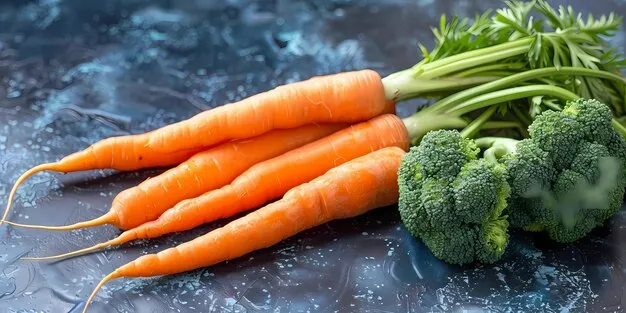
- Color: Orange, although some varieties may have shades of purple, yellow, or white.
- Shape: Cylindrical, tapering to a blunt point; baby carrots are often shaped to a uniform size through cutting and peeling.
- Size: Typically about 2 to 3 inches in length for the processed baby carrots found in stores; true baby carrots, harvested young, can vary in size.
- Texture: Crisp and moist.
Culinary Uses
- Common Dishes: Baby carrots are versatile and can be eaten raw as a snack, roasted, steamed, boiled, or added to soups, stews, and salads.
- Preparation Methods: No need for peeling; just wash and eat. They can also be glazed, pickled, or used in baking.
- Suitable Pairings: Hummus, ranch dressing, balsamic glaze, or as a sweet counterpoint in savory dishes.
Geographical Information
- Origin: Carrots are believed to have originated in Persia and were originally cultivated for their leaves and seeds.
- Primary Growing Regions: China is the largest producer of carrots, but they are grown in many countries worldwide, including the United States, which is a significant producer.
- Seasonal Availability: While baby carrots (especially those shaped from larger carrots) are available year-round, the best season for true baby carrots is spring and fall when the weather is cool.
Baby carrots offer a convenient and healthful option for snacking and cooking, providing essential nutrients without the need for extensive preparation. Their low calorie and glycemic index values make them an excellent choice for various dietary needs.
| proximates: | |
| Water | 89.3 g |
| Energy (Atwater General Factors) | 41 kcal |
| Energy (Atwater Specific Factors) | 38 kcal |
| Nitrogen | 0.13 g |
| Protein | 0.8 g |
| Total lipid (fat) | 0.14 g |
| Ash | 0.68 g |
| Carbohydrates: | |
| Carbohydrate, by difference | 9.08 g |
| Fiber, total dietary | 2.7 g |
| Minerals: | |
| Calcium, Ca | 42 mg |
| Iron, Fe | 0.09 mg |
| Magnesium, Mg | 11.1 mg |
| Phosphorus, P | 30 mg |
| Potassium, K | 237 mg |
| Sodium, Na | 63 mg |
| Zinc, Zn | 0.16 mg |
| Copper, Cu | 0.041 mg |
| Manganese, Mn | 0.093 mg |
| Selenium, Se | <2.5 µg |
| Vitamins and Other Components: | |
| Thiamin | 0.044 mg |
| Riboflavin | 0.116 mg |
| Niacin | 0.741 mg |
| Vitamin B-6 | 0.115 mg |
| Biotin | 2.4 µg |
| Folate, total | 44 µg |