

Basic Information
Name: Chickpeas (also known as Garbanzo Beans or Bengal Gram)
Scientific Name: Cicer arietinum
Category: Legume (Pulse)
Varieties: Two main types are commonly found: the larger, lighter-colored Kabuli type, which is prevalent in the Mediterranean, Europe, and North and South America; and the smaller, darker, and more fiber-rich Desi type, found mainly in India, Pakistan, Ethiopia, and Mexico.
Nutritional Information
Macronutrients
- Carbohydrates: High; about 60.4 grams per 100 grams, with a significant portion as dietary fiber (approximately 17 grams).
- Proteins: High; around 21.3 grams per 100 grams, making chickpeas a great plant-based protein source.
- Fats: Low; around 6.27 grams per 100 grams, primarily unsaturated fats.
Micronutrients
Vitamins: Good source of folate (B9), and contains B6, thiamine (B1), and riboflavin (B2).
Minerals: Rich in iron, magnesium, phosphorus, zinc, copper, and manganese.
Phytonutrients
Dry chickpeas (Cicer arietinum), like other legumes, are rich in a variety of phytonutrients that contribute to their health benefits. These bioactive compounds play a role in preventing chronic diseases, exhibiting antioxidant, anti-inflammatory, and potential anti-cancer properties. Here’s a detailed look at some of the key phytonutrients found in dry chickpeas:
Phytonutrients in Chickpeas
Saponins: These are glycoside compounds known for their antioxidant and immune-boosting properties. Saponins may also help lower blood cholesterol levels, reduce cancer risk, and improve blood sugar regulation.
Isoflavones: Including genistein and daidzein, isoflavones are a type of phytoestrogen that can mimic human estrogen in the body, potentially reducing the risk of hormone-related cancers, heart disease, and osteoporosis.
Polyphenols: Chickpeas are a good source of polyphenols, such as flavonoids, tannins, and phenolic acids. These include quercetin, kaempferol, and myricetin, which possess potent antioxidant properties that help protect against oxidative stress and may reduce the risk of chronic diseases.
Phytic Acid (Phytate): Often considered an anti-nutrient due to its ability to bind minerals and reduce their absorption, phytic acid also has antioxidant properties and may offer protective effects against kidney stones and cancer.
Lectins: Present in many legumes, lectins can bind to carbohydrates on cell membranes. Proper cooking of chickpeas significantly reduces lectin content, minimizing potential health risks while possibly retaining beneficial effects on immune function and cell growth regulation.
Nutritional and Health Benefits
The combination of phytonutrients in chickpeas, alongside their high fiber and protein content, contributes to several health benefits:
Digestive Health: The fiber in chickpeas can help improve digestive function and prevent constipation.
Blood Sugar Control: The low glycemic index of chickpeas, coupled with their fiber and protein content, helps in the slow release of glucose into the bloodstream, aiding in blood sugar control.
Heart Health: Phytonutrients like saponins and polyphenols, along with the fiber in chickpeas, can contribute to lowering cholesterol levels and reducing heart disease risk.
Weight Management: The high fiber and protein content in chickpeas contribute to feelings of fullness, which can help in weight management efforts.
Incorporating Chickpeas into the Diet
To maximize the health benefits of chickpeas, including their phytonutrient content, it’s important to incorporate them into the diet in various forms. They can be soaked and cooked, added to salads, soups, and stews, or made into spreads like hummus. Cooking chickpeas properly not only enhances their flavor and digestibility but also ensures the optimal availability of their beneficial phytonutrients.
- Calorie Count
Approximately 364 calories per 100 grams.
- Glycemic Index
Low; estimated to be around 28-35, making them beneficial for blood sugar control.
Physical Characteristics
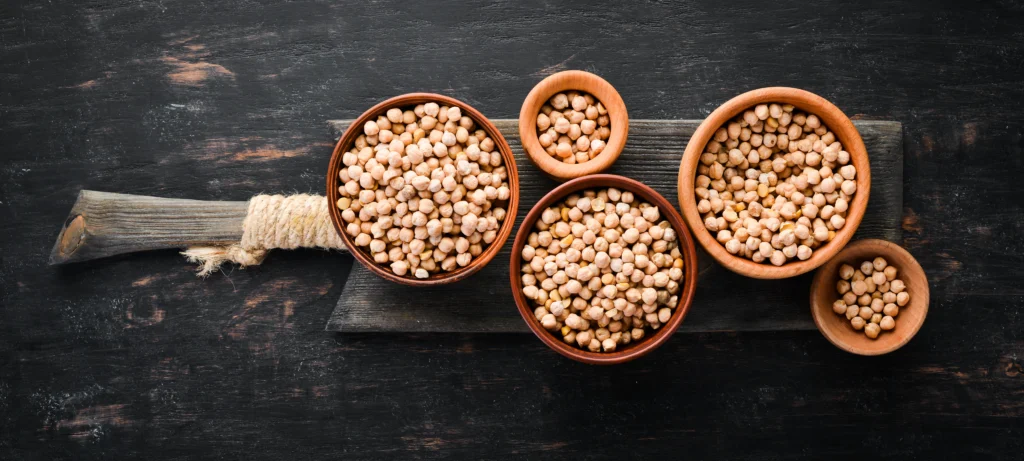
Color: Varies from beige to dark brown, depending on the variety.
Shape: Small, rounded, with a beak-like protrusion on one side.
Size: About 3/8 inch (1 cm) in diameter.
Texture: Hard and dry when uncooked but becomes soft and creamy when cooked.
Culinary Uses
Common Dishes: Hummus, falafel, curries, salads, soups, stews, and baked goods.
Preparation Methods: Require soaking (overnight or quick-soak method) and cooking (boiling, pressure cooking) to become digestible and palatable. Can also be roasted for a crunchy snack.
Suitable Pairings: Complements a wide range of spices, herbs, and flavors, including cumin, coriander, garlic, onion, parsley, and lemon. Works well with vegetables, grains, and meats.
Geographical Information
Origin: Chickpeas have been cultivated in the Middle Eastern region for thousands of years, with evidence dating back over 7,500 years in the Mediterranean and Middle East.
Primary Growing Regions: Today, they are grown worldwide, with India being the largest producer, followed by Australia, Pakistan, Turkey, and the United States.
Seasonal Availability: Dry chickpeas are stored and available year-round, though they are harvested in late spring through summer in temperate climates and during the winter months in tropical climates.
Dry chickpeas are a versatile and nutritious food item that can be incorporated into a variety of dietary patterns to enhance protein intake, fiber, and essential micronutrients. Their low glycemic index makes them particularly beneficial for managing blood sugar levels, supporting heart health, and contributing to a feeling of fullness, which can aid in weight management.
| Proximates: | |
| Water | 8.77 g |
| Energy (Atwater General Factors) | 383 kcal |
| Energy (Atwater Specific Factors) | 372 kcal |
| Nitrogen | 3.4 g |
| Protein | 21.3 g |
| Total lipid (fat) | 6.27 g |
| Ash | 3.32 g |
| Carbohydrates: | |
| Carbohydrate, by difference | 60.4 g |
| Starch | 34.1 g |
| Minerals: | |
| Calcium, Ca | 111 mg |
| Iron, Fe | 5.09 mg |
| Magnesium, Mg | 135 mg |
| Phosphorus, P | 353 mg |
| Potassium, K | 1070 mg |
| Sodium, Na | 9 mg |
| Zinc, Zn | 3.12 mg |
| Copper, Cu | 0.804 mg |
| Manganese, Mn | 3.58 mg |