

Basic Information
- Common Name: Barley Flour
- Scientific Name: Hordeum vulgare
- Category: Grain
Varieties
Barley flour is typically made from two main types of barley:
- Hulled Barley: Only the outermost hull is removed, retaining most of the bran and germ. It’s more nutritious.
- Pearled Barley: Both the hull and bran layers are removed, resulting in a less nutritious but finer flour.
Nutritional Information
- Macronutrients:
- Carbohydrates: High, about 77.4g per 100g, including a significant amount of dietary fiber (around 10g per 100g).
- Proteins: Moderate, approximately 8.72g per 100g.
- Fats: Low, around 2.45g per 100g.
- Micronutrients:
- Vitamins: Contains B-vitamins, particularly niacin (B3), thiamin (B1), and folate (B9).
- Minerals: Rich in minerals such as selenium, magnesium, phosphorus, and manganese. It also provides iron and zinc.
Phytonutrients
Barley flour, derived from the Hordeum vulgare grain, is not just a source of essential nutrients but also contains various phytonutrients that contribute to its health benefits. These bioactive compounds play a role in reducing the risk of certain diseases, providing antioxidant properties, and supporting overall health. Here’s an overview of the key phytonutrients found in barley flour:
Beta-Glucans
- Beta-Glucans: A type of soluble fiber with significant health benefits, notably for heart health by lowering cholesterol levels and improving blood sugar regulation, thus also impacting glycemic control. Beta-glucans also support immune function.
Phenolic Acids
- Ferulic Acid: The most abundant phenolic acid in barley, known for its antioxidant properties. It helps to neutralize free radicals, potentially reducing the risk of chronic diseases.
- Vanillic Acid and p-Coumaric Acid: Other phenolic acids present in barley flour, contributing to its antioxidant capacity.
Flavonoids
- Quercetin, Kaempferol, and Catechins: These flavonoids have antioxidant properties that may protect cells from oxidative stress, reduce inflammation, and lower the risk of chronic diseases such as heart disease and cancer.
Lignans
- Enterolactone and Enterodiol Precursors: Barley contains lignans, which are converted by intestinal bacteria into enterolactone and enterodiol, compounds associated with reduced risk of certain cancers, especially hormone-related cancers.
Tocols
- Vitamin E (Tocopherols and Tocotrienols): Barley flour contains tocopherols and tocotrienols, forms of Vitamin E that act as antioxidants, protecting the body from oxidative damage and supporting skin health.
Saponins
- Saponins: These compounds have been shown to have cholesterol-lowering properties, immune-boosting effects, and may contribute to the anti-cancer properties of barley.
Dietary Fiber
- While not a phytonutrient, the high dietary fiber content in barley flour, especially the insoluble fiber, is crucial for digestive health, helping to prevent constipation and reduce the risk of colorectal cancer.
The combination of these phytonutrients in barley flour contributes to a wide range of health benefits, from cardiovascular protection and improved blood sugar control to potential roles in cancer prevention and immune support. Including barley flour in the diet can be part of a healthy eating pattern, providing not only essential nutrients but also these beneficial phytochemicals.
Calorie Count and Glycemic Index
- Calorie Count: About 357 calories per 100g.
- Glycemic Index: Medium, ranging from 50 to 70, depending on the processing and fiber content.
Physical Characteristics
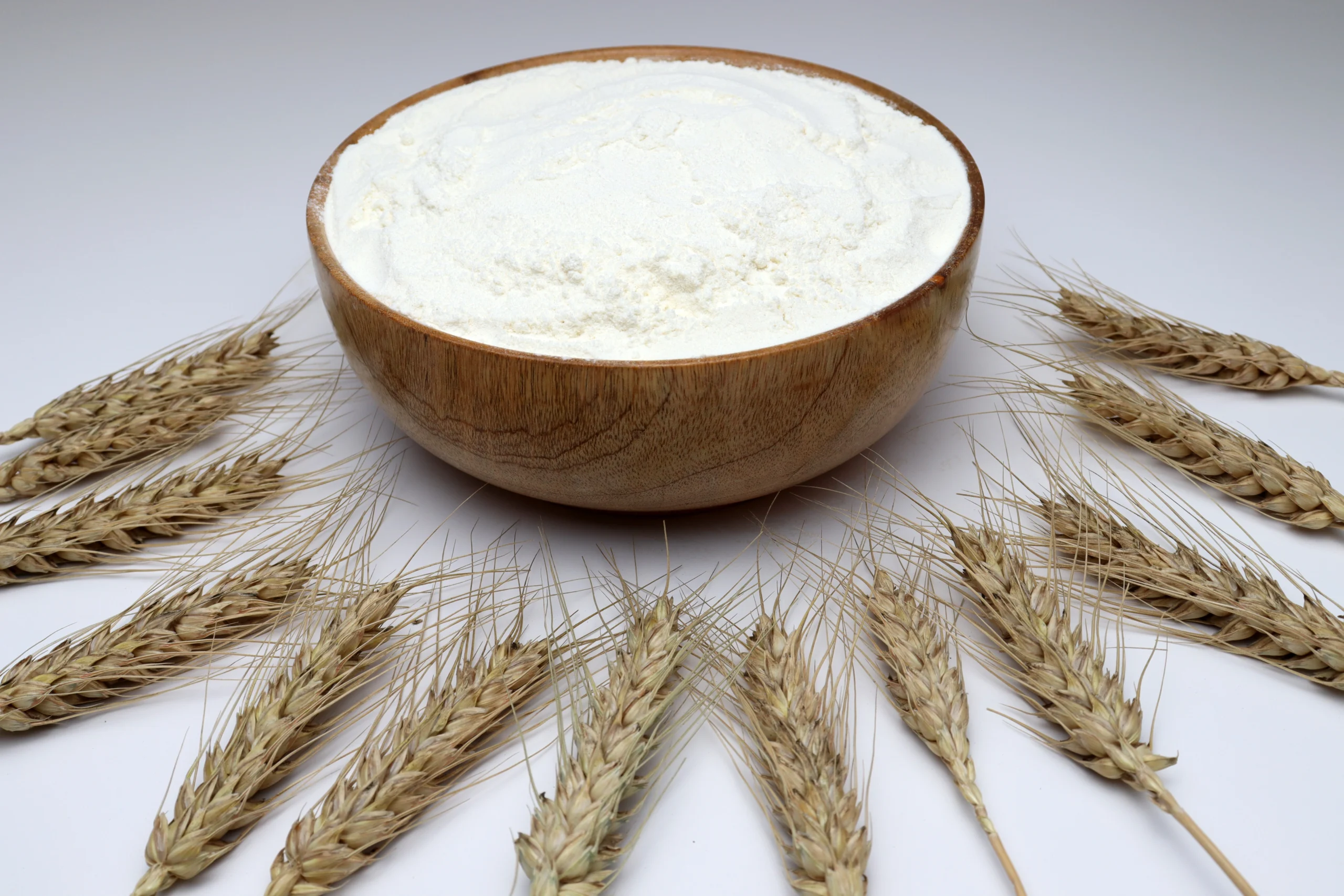
- Color: Light tan to beige, depending on the type of barley used.
- Shape: Powdered form.
- Size: Fine to medium grain size, similar to wheat flour but may have a slightly coarser texture.
- Texture: Slightly grainy and may have a more earthy texture compared to wheat flour.
Culinary Uses
- Common Dishes: Barley flour is used in baking bread, pancakes, muffins, and cookies. It’s also used to thicken soups, sauces, and gravies.
- Preparation Methods: Often mixed with wheat flour to improve the texture of baked goods, as barley flour alone does not contain enough gluten for bread to rise properly.
- Suitable Pairings: Pairs well with flavors like honey, nuts, and spices. It’s also good for savory applications like in bread and soup recipes.
Geographical Information
- Origin: Barley is one of the oldest cultivated grains, originally domesticated in the Fertile Crescent region of the Near East.
- Primary Growing Regions: Today, barley is grown in a wide range of climates, with major producers including Russia, France, Germany, Ukraine, and Australia.
- Seasonal Availability: Barley flour is available year-round, as barley can be stored and milled as needed.
Barley flour is valued for its nutritional benefits, including high fiber content and essential minerals. Its use in culinary applications offers a slightly nutty flavor and tender texture to baked goods and other dishes. As a whole grain flour, it contributes to a healthy diet by promoting digestive health, supporting heart health, and providing sustained energy.
| proximates: | |
| Water | 9.9 g |
| Energy (Atwater General Factors) | 367 kcal |
| Energy (Atwater Specific Factors) | 357 kcal |
| Nitrogen | 1.5 g |
| Protein | 8.72 g |
| Total lipid (fat) | 2.45 g |
| Ash | 1.53 g |
| Carbohydrates: | |
| Carbohydrate, by difference | 77.4 g |
| Fiber, total dietary | 12.8 g |
| Total dietary fiber (AOAC 2011.25) | 16.2 g |
| High Molecular Weight Dietary Fiber (HMWDF) | 13.8 g |
| Low Molecular Weight Dietary Fiber (LMWDF) | 2.31 g |
| Beta-glucan | 4.2 g |
| Starch | 56.9 g |
| Minerals: | |
| Calcium, Ca | 36 mg |
| Iron, Fe | 3.3 mg |
| Magnesium, Mg | 88 mg |
| Phosphorus, P | 234 mg |
| Potassium, K | 367 mg |
| Sodium, Na | 20 mg |
| Zinc, Zn | 2.14 mg |
| Copper, Cu | 0.394 mg |
| Manganese, Mn | 1.18 mg |
| Selenium, Se | 13.1 µg |
| Molybdenum, Mo | 57.4 µg |
| Vitamins and Other Components: | |
| Thiamin | 0.225 mg |
| Riboflavin | 0.146 mg |
| Niacin | 5.94 mg |
| Vitamin B-6 | 0.2 mg |
| Biotin | 8.61 µg |