


Basic Information
- Common Name: Buckwheat Flour
- Scientific Name: Fagopyrum esculentum
- Category: Pseudocereal
Varieties
Buckwheat flour is primarily derived from two types of buckwheat:
- Common Buckwheat (Fagopyrum esculentum): The most widely cultivated species, used for making traditional buckwheat flour.
- Tartary Buckwheat (Fagopyrum tataricum): Known for its higher antioxidant content, it is less commonly used but valued for its nutritional properties.
Nutritional Information
- Macronutrients:
- Carbohydrates: About 75g per 100g, with a significant amount of dietary fiber (about 10g per 100g).
- Proteins: Approximately 8.88g per 100g, including a relatively high composition of the amino acid lysine, which is limited in other grains.
- Fats: Around 2.48g per 100g, including essential fatty acids.
- Micronutrients:
- Vitamins: Contains B-vitamins, particularly high in niacin (B3), folate (B9), and riboflavin (B2).
- Minerals: Rich in minerals such as magnesium, phosphorus, copper, and manganese. Also contains iron, zinc, and selenium.
Phytonutrients
Buckwheat flour, derived from the seeds of Fagopyrum esculentum, is not only nutritious due to its vitamins, minerals, and macronutrients but is also rich in phytonutrients that contribute to its health benefits. These bioactive compounds have been associated with antioxidant, anti-inflammatory, and disease-preventing properties. Here’s an overview of the key phytonutrients present in buckwheat flour:
Flavonoids
- Rutin: Buckwheat flour is particularly high in rutin, a flavonoid that strengthens blood vessels, improves circulation, and has potent antioxidant and anti-inflammatory effects. Rutin has been shown to help lower blood pressure and cholesterol levels.
- Quercetin: Another significant flavonoid, known for its antioxidant properties, which help neutralize harmful free radicals in the body.
Phenolic Acids
- Ferulic Acid, Gallic Acid, and Protocatechuic Acid: These compounds exhibit strong antioxidant activity, contributing to the protection against oxidative stress and chronic diseases.
D-Chiro-Inositol
- This unique phytonutrient found in buckwheat has been shown to improve insulin sensitivity and may help manage blood sugar levels, making it beneficial for people with or at risk for diabetes.
Tannins
- Although tannins are often categorized due to their ability to bind and precipitate proteins, they also have antioxidant properties.
Magnesium and Zinc
- While not phytonutrients, the high levels of magnesium and zinc in buckwheat contribute to its health benefits, supporting metabolic health, and immune function.
Saponins and Phytosterols
- Saponins: Present in buckwheat, these compounds have been shown to have cholesterol-lowering effects.
- Phytosterols: Also contribute to lowering cholesterol levels and improving heart health.
Resistant Starch
- Buckwheat flour contains resistant starch, which acts similarly to fiber. It feeds the beneficial gut bacteria, leading to improved gut health and reduced risk of certain diseases.
The combination of these phytonutrients in buckwheat flour contributes to a wide array of health benefits, including enhanced cardiovascular health, improved blood sugar control, and potential cancer-fighting properties. Its rich phytonutrient profile, alongside its nutritional content, makes buckwheat flour a valuable addition to a healthy diet, particularly for those seeking gluten-free or nutrient-dense alternatives to conventional grains.
Calorie Count and Glycemic Index
- Calorie Count: About 334 calories per 100g.
- Glycemic Index: Medium, estimated around 50 to 55, making it a better option for blood sugar control compared to many other grains.
Physical Characteristics
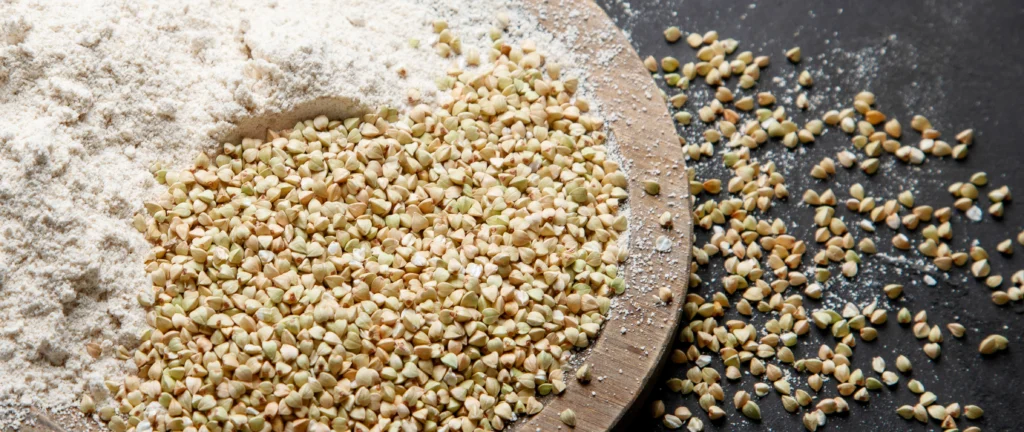
- Color: Light brown to grayish, depending on the hull’s presence and the grinding process.
- Shape: Fine powder, though its granularity can vary from very fine to slightly coarse.
- Size: Consistent with flour texture, but may have a more rustic feel if ground less finely.
- Texture: Slightly gritty compared to wheat flour, with an earthy, nutty flavor.
Culinary Uses
- Common Dishes: Widely used in pancakes (like Russian blinis), noodles (such as Japanese soba), and various gluten-free baked goods. Also used for making crepes, biscuits, and as a thickener for soups and sauces.
- Preparation Methods: Can be used alone or mixed with other flours to add a rich, earthy flavor and nutritional boost to recipes. It’s particularly popular in gluten-free cooking.
- Suitable Pairings: Complements both sweet and savory ingredients. Pairs well with hearty vegetables, mushrooms, cheeses, and is excellent in both traditional Eastern European dishes and gluten-free recipes.
Geographical Information
- Origin: Central Asia, with a long history of cultivation in Russia, China, and Eastern Europe.
- Primary Growing Regions: Today, it is grown worldwide, with significant production in Russia, China, Ukraine, and parts of Europe and North America.
- Seasonal Availability: Buckwheat flour is made from the dried seeds of the buckwheat plant and is available year-round.
Buckwheat flour is celebrated for its rich nutritional profile, offering a gluten-free alternative to traditional grain flours. Its unique flavor and versatility in both sweet and savory dishes make it a popular choice in diverse culinary traditions. Beyond its use in traditional dishes, buckwheat flour is increasingly recognized for its health benefits, including improving heart health and supporting blood sugar control.
| proximates: | |
| Water | 12 g |
| Energy (Atwater General Factors) | 358 kcal |
| Energy (Atwater Specific Factors) | 334 kcal |
| Nitrogen | 1.52 g |
| Protein | 8.88 g |
| Total lipid (fat) | 2.48 g |
| Ash | 1.57 g |
| Carbohydrates: | |
| Carbohydrate, by difference | 75 g |
| Fiber, total dietary | 10.4 g |
| Total dietary fiber (AOAC 2011.25) | 11.4 g |
| High Molecular Weight Dietary Fiber (HMWDF) | 10.7 g |
| Low Molecular Weight Dietary Fiber (LMWDF) | <1 g |
| Beta-glucan | <0.1 g |
| Starch | 59 g |
| Minerals: | |
| Calcium, Ca | 31 mg |
| Iron, Fe | 3.84 mg |
| Magnesium, Mg | 167 mg |
| Phosphorus, P | 282 mg |
| Potassium, K | 378 mg |
| Sodium, Na | <2.5 mg |
| Zinc, Zn | 1.76 mg |
| Copper, Cu | 0.53 mg |
| Manganese, Mn | 1.54 mg |
| Selenium, Se | 15.7 µg |
| Molybdenum, Mo | 44.6 µg |
| Vitamins and Other Components: | |
| Thiamin | 0.241 mg |
| Riboflavin | 0.16 mg |
| Niacin | 3.84 mg |
| Vitamin B-6 | 0.17 mg |
| Biotin | 15.1 µg |