

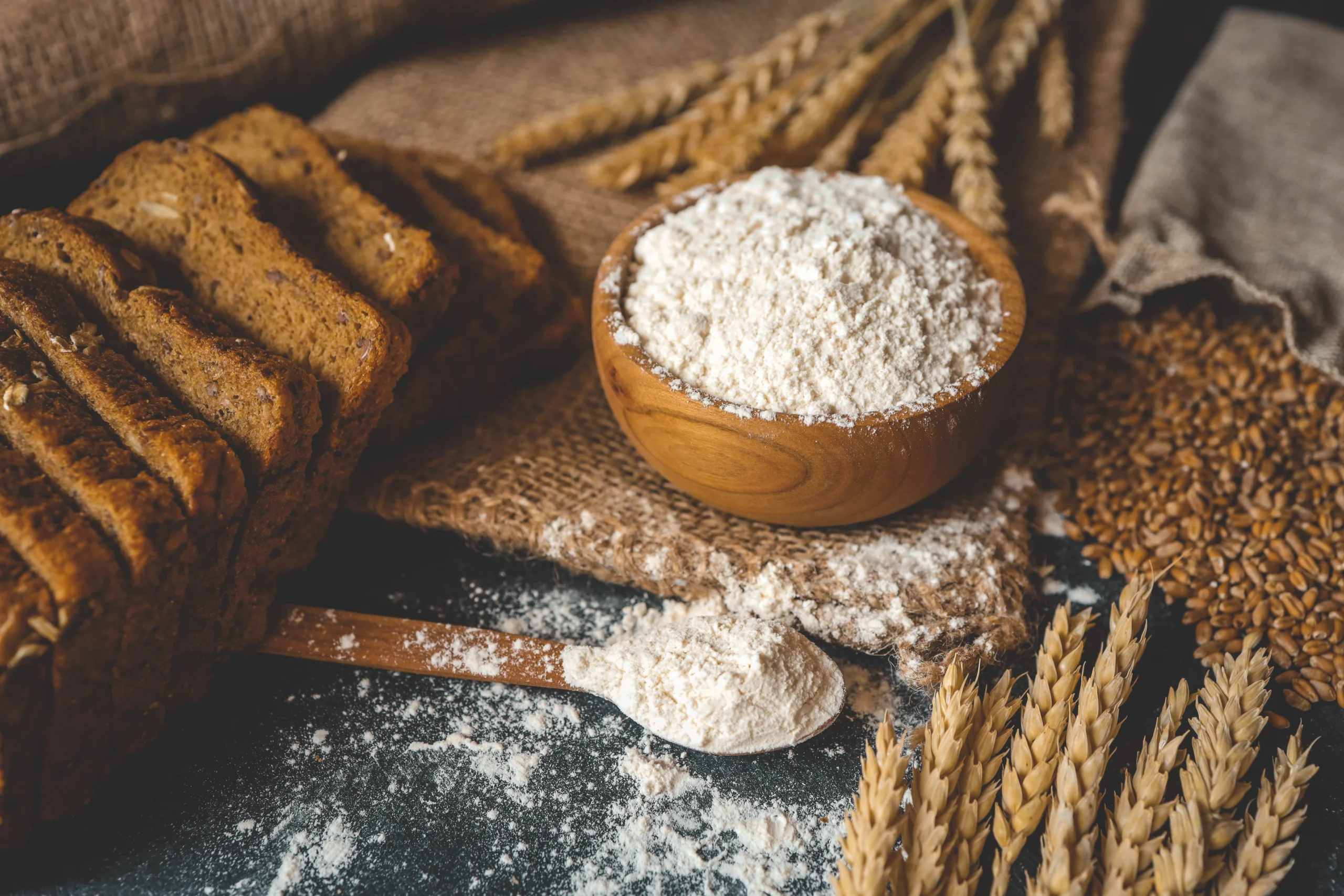
Rye flour, derived from the grain of the rye plant (Secale cereale), holds a significant place in culinary traditions across the world, particularly in Europe and North America. It’s a staple ingredient in many breads, imparting a distinctive flavor and nutritional profile. Here’s an in-depth look at rye flour, covering its basic information, nutritional content, physical characteristics, culinary uses, and geographical background.
Basic Information
- Common Name: Rye Flour
- Scientific Name: Derived from Secale cereale
- Category: Grain (Cereal)
- Varieties: Rye flour comes in several varieties, including whole rye flour (also known as pumpernickel flour), dark rye flour, light rye flour, and white rye flour. These varieties differ in their processing and the amount of bran and germ retained, affecting their color, texture, and nutritional content.
Nutritional Information
- Macronutrients: Rye flour is rich in carbohydrates, with a moderate amount of protein and minimal fat. Its fiber content is notably higher than that of wheat flour, making it a healthier option for digestive health.
- Micronutrients: It is a good source of essential minerals such as magnesium, iron, phosphorus, and zinc. Rye flour also contains B vitamins, including niacin, thiamin, and vitamin B6.
Phytonutrients
Rye flour is notable not only for its macronutrient and micronutrient content but also for its rich array of phytonutrients. These bioactive compounds play a role in promoting health and preventing disease. Here is a detailed look at the phytonutrients present in rye flour:
Lignans
- Description: Lignans are a type of phytoestrogen, which are plant compounds that can mimic the hormone estrogen in the body. Rye is particularly high in lignans compared to other grains.
- Health Benefits: They have been linked to reduced risk of cardiovascular disease and certain types of cancer, especially hormone-sensitive cancers such as breast cancer. Lignans also have antioxidant properties.
Phenolic Acids
- Description: These are a group of antioxidants found in rye that include ferulic acid, p-coumaric acid, and sinapic acid, among others.
- Health Benefits: Phenolic acids have strong antioxidant activities, helping to protect cells from oxidative stress and reduce inflammation. They may also play a role in preventing chronic diseases, including heart disease and diabetes.
Alkylresorcinols
- Description: Unique to whole grain wheat and rye, alkylresorcinols are phenolic lipids.
- Health Benefits: They are thought to have antioxidant properties, contribute to the prevention of cancer, and play a role in regulating immune response and inflammation.
Betaine
- Description: Betaine is a compound involved in liver function and cellular reproduction.
- Health Benefits: It contributes to heart health by reducing homocysteine levels in the blood, a risk factor for heart disease. Betaine also helps in the maintenance of cellular hydration and assists in the metabolism of homocysteine.
Saponins
- Description: Saponins are compounds found in many plants, including rye, known for their soap-like qualities.
- Health Benefits: They have been shown to possess antimicrobial properties, contribute to cholesterol reduction, and may play a role in cancer prevention.
Arabinoxylans
- Description: A type of non-starch polysaccharide, arabinoxylans are significant components of cell walls in rye grains.
- Health Benefits: They are considered to have prebiotic effects, promoting the growth of beneficial gut bacteria, enhancing gut health, and potentially boosting immune function.
Fructans
- Description: Fructans are a type of carbohydrate made up of fructose molecules. Rye contains these fibers in significant amounts.
- Health Benefits: Like arabinoxylans, fructans have prebiotic effects that support digestive health. However, in sensitive individuals, they can contribute to irritable bowel syndrome (IBS) symptoms.
The presence of these phytonutrients in rye flour underscores its health benefits beyond basic nutrition. They contribute to rye flour’s protective effects against chronic diseases, highlighting its value in a balanced diet. However, it’s important to note that the impact of these phytonutrients can vary based on individual health conditions and dietary needs.

Calorie Count and Glycemic Index
- Calorie Count: Approximately 351 calories per 100 grams.
- Glycemic Index: Rye flour has a lower glycemic index compared to white wheat flour, making it a better option for blood sugar control.
Physical Characteristics
- Color: The color ranges from light to dark, depending on the variety, with whole rye flour having the darkest color due to the inclusion of the whole grain.
- Shape and Size: It is a finely ground powder, though the texture can vary from very fine to slightly coarse, again depending on the variety.
- Texture: The texture is denser and darker than most wheat flours, with a distinctive, hearty flavor.
Culinary Uses
- Common Dishes: Rye flour is most commonly used in bread-making, including pumpernickel, rye bread, and sourdough rye. It’s also used in crispbreads, pancakes, and crackers.
- Preparation Methods: It can be mixed with wheat flour to improve its gluten content, which is necessary for bread to rise properly. Rye flour absorbs more water than wheat flour, so recipes often require adjustments in liquid amounts.
- Suitable Pairings: Rye flour pairs well with strong flavors like caraway seeds, onions, and cheese. It’s also used in sweet recipes with molasses, chocolate, and coffee flavors.
Geographical Information
- Origin: Rye is believed to have originated in what is now Turkey and the surrounding areas. It has been cultivated for over 4,000 years.
- Primary Growing Regions: Today, the largest producers of rye are Russia, Poland, and Germany. It thrives in harsher climates where other grains might not grow as well.
- Seasonal Availability: Rye is typically sown in autumn and harvested in early summer, but rye flour is available year-round due to storage and global trade.
Rye flour’s unique characteristics and health benefits make it a valuable ingredient in a variety of culinary traditions. Its versatility and nutritional profile continue to endear it to chefs and home bakers seeking to incorporate whole grains into their diet.
| proximates: | |
| Water | 11.1 g |
| Energy (Atwater General Factors) | 359 kcal |
| Energy (Atwater Specific Factors) | 351 kcal |
| Nitrogen | 1.44 g |
| Protein | 8.4 g |
| Total lipid (fat) | 1.91 g |
| Ash | 1.4 g |
| Carbohydrates: | |
| Carbohydrate, by difference | 77.2 g |
| Fiber, total dietary | 13.7 g |
| Total dietary fiber (AOAC 2011.25) | 17.9 g |
| High Molecular Weight Dietary Fiber (HMWDF) | 13 g |
| Low Molecular Weight Dietary Fiber (LMWDF) | 4.9 g |
| Beta-glucan | 1.91 g |
| Starch | 54.1 g |
| Minerals: | |
| Calcium, Ca | 32 mg |
| Iron, Fe | 2.54 mg |
| Magnesium, Mg | 95.4 mg |
| Phosphorus, P | 280 mg |
| Potassium, K | 434 mg |
| Sodium, Na | <2.5 mg |
| Zinc, Zn | 2.33 mg |
| Copper, Cu | 0.338 mg |
| Manganese, Mn | 2.13 mg |
| Selenium, Se | 16.6 µg |
| Molybdenum, Mo | 75.5 µg |
| Vitamins and Other Components: | |
| Thiamin | 0.216 mg |
| Riboflavin | 0.17 mg |
| Niacin | 1.16 mg |
| Vitamin B-6 | 0.164 mg |
| Biotin | 8.98 µg |