

Basic Information
- Name: Kiwifruit, Green
- Scientific Name: Actinidia deliciosa
- Category: Fruit
Varieties
The most commonly consumed variety of green kiwifruit is the ‘Hayward’. However, there are other varieties of kiwifruit, including golden kiwi (Actinidia chinensis), which has a smooth, bronze skin and yellow flesh.
Nutritional Information
- Macronutrients:
- Carbohydrates: Approximately 14 g per 100 g, primarily from natural sugars and dietary fiber.
- Proteins: About 1.06 g per 100 g.
- Fats: Minimal, about 0.44 g per 100 g.
- Micronutrients: High in Vitamin C (exceeding the daily recommended intake in just one fruit), Vitamin K, and Vitamin E. Contains significant amounts of potassium and also provides folate, copper, and dietary fiber.
phytonutrients
Green kiwifruit is not only delicious but also packed with a variety of phytonutrients that contribute to its health benefits. These compounds have antioxidant properties and may offer protective effects against certain diseases. Here’s a detailed look at the key phytonutrients found in raw green kiwifruit:
Types of Phytonutrients in Green Kiwifruit
- Vitamin C: While technically a vitamin, vitamin C acts as a potent antioxidant in the body. Green kiwifruit is exceptionally high in vitamin C, which helps protect cells from damage caused by free radicals, supports the immune system, and aids in collagen production.
- Vitamin E: This fat-soluble antioxidant helps protect cell membranes from oxidative damage and supports immune function.
- Carotenoids: Green kiwifruit contains several carotenoids, including beta-carotene, lutein, and zeaxanthin. These phytonutrients offer antioxidant protection and are important for eye health, particularly in preventing macular degeneration.
- Flavonoids: Kiwifruit contains various flavonoids, such as quercetin, which have antioxidant and anti-inflammatory properties. These compounds may help reduce the risk of chronic diseases like heart disease and cancer.
- Fiber: While not a phytonutrient, the dietary fiber in kiwifruit supports digestive health and may help regulate blood sugar levels.
Nutritional Implications
The phytonutrients in green kiwifruit offer a range of health benefits:
- Antioxidant Protection: The high levels of vitamin C and other antioxidants help neutralize free radicals, potentially reducing the risk of inflammation and disease.
- Cardiovascular Health: The combination of antioxidant and fiber content in kiwifruit can support heart health by lowering cholesterol levels and improving blood pressure.
- Digestive Health: Kiwifruit contains actinidin, a unique enzyme that helps break down proteins and facilitates digestion. The dietary fiber also promotes regular bowel movements and gut health.
- Immune Support: The high vitamin C content significantly contributes to immune system function, helping the body resist infection.
- Eye Health: Carotenoids like lutein and zeaxanthin in kiwifruit are crucial for protecting the eyes from oxidative stress and may reduce the risk of age-related macular degeneration.
Including green kiwifruit in your diet can provide these phytonutrients, contributing to overall health and well-being. Its unique flavor and nutritional profile make it a popular choice for those looking to enhance their diet with healthful, nutrient-rich foods.

Calorie Count and Glycemic Index
- Calorie Count: Roughly 64 calories per 100 g.
- Glycemic Index: Low, approximately 53.
Physical Characteristics
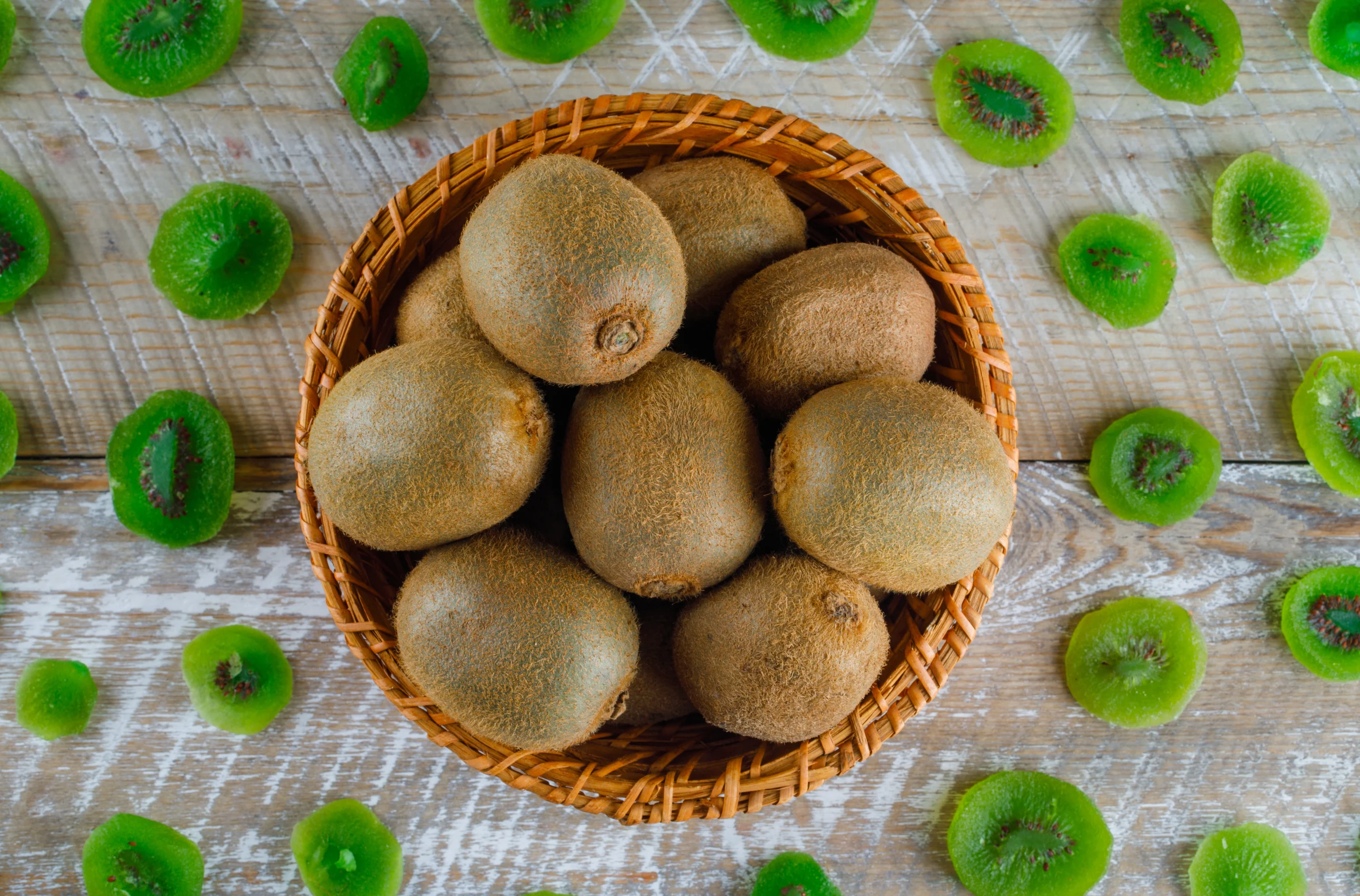
- Color: Brown fuzzy skin with bright green flesh and black seeds around a white core.
- Shape: Oval.
- Size: About 5 to 8 cm in length.
- Texture: Soft and juicy flesh when ripe, with edible seeds that add a slight crunch.
Culinary Uses
Green kiwifruit is versatile in the kitchen, lending itself to both sweet and savory dishes:
- Common Dishes: Eaten raw as a snack, used in fruit salads, smoothies, and desserts. Also makes an attractive garnish for pavlovas and tarts.
- Preparation Methods: Can be sliced, diced, or scooped out of the skin with a spoon. The fruit’s enzyme, actinidin, can tenderize meats, making it useful in marinades.
- Suitable Pairings: Pairs well with citrus fruits, berries, and tropical fruits. Complements creamy desserts and can balance rich meats in savory dishes.
Geographical Information
- Origin: Native to China, specifically the Yangtze River valley and Zhejiang Province.
- Primary Growing Regions: Now widely cultivated in New Zealand, which is a leading exporter, as well as Italy, Chile, Greece, and France.
- Seasonal Availability: Available year-round due to staggered growing seasons in different regions, with peak seasons in the Northern and Southern Hemispheres.
Green kiwifruit is a nutritious and flavorful addition to a variety of dishes, offering a unique combination of vitamins, minerals, and antioxidants. Its vibrant green flesh and sweet-tart flavor make it a favorite around the world, enjoyed on its own or used to enhance the flavor and nutritional value of meals and snacks.
| proximates: | |
| Water | 83.9 g |
| Energy (Atwater General Factors) | 64 kcal |
| Energy (Atwater Specific Factors) | 58 kcal |
| Nitrogen | 0.17 g |
| Protein | 1.06 g |
| Total lipid (fat) | 0.44 g |
| Ash | 0.63 g |
| Carbohydrates: | |
| Carbohydrate, by difference | 14 g |
| Carbohydrate, by summation | 12 g |
| Fiber, total dietary | 3 g |
| Fiber, soluble | 0.7 g |
| Fiber, insoluble | 2.3 g |
| Sugars, Total | 8.99 g |
| Sucrose | 0.15 g |
| Glucose | 4.11 g |
| Fructose | 4.35 g |
| Lactose | 0.02 g |
| Maltose | 0.19 g |
| Galactose | 0.17 g |
| Minerals: | |
| Calcium, Ca | 35 mg |
| Iron, Fe | 0.24 mg |
| Magnesium, Mg | 15.7 mg |
| Phosphorus, P | 34 mg |
| Potassium, K | 198 mg |
| Sodium, Na | 5 mg |
| Zinc, Zn | 0.14 mg |
| Copper, Cu | 0.134 mg |
| Manganese, Mn | 0.064 mg |
| Selenium, Se | 0.2 µg |
| Vitamins and Other Components: | |
| Vitamin C, total ascorbic acid | 74.7 mg |
| Thiamin | 0.027 mg |
| Riboflavin | 0.025 mg |
| Niacin | 0.27 mg |
| Pantothenic acid | 0.206 mg |
| Vitamin B-6 | 0.061 mg |
| Folate, total | 26 µg |
| Vitamin A, RAE | 4 µg |
| Carotene, beta | 52 µg |
| Lutein + zeaxanthin | 122 µg |
| Vitamin E (alpha-tocopherol) | 1.3 mg |
| Tocopherol, gamma | 0.03 mg |
| Tocotrienol, gamma | 0.1 mg |
| Vitamin K (phylloquinone) | 40.3 µg |
| Amino acids: | |
| Tryptophan | 0.013 g |
| Threonine | 0.043 g |
| Isoleucine | 0.046 g |
| Leucine | 0.059 g |
| Lysine | 0.055 g |
| Methionine | 0.022 g |
| Cystine | 0.028 g |
| Phenylalanine | 0.039 g |
| Tyrosine | 0.03 g |
| Valine | 0.052 g |
| Arginine | 0.073 g |
| Histidine | 0.024 g |
| Alanine | 0.048 g |
| Aspartic acid | 0.113 g |
| Glutamic acid | 0.165 g |
| Glycine | 0.054 g |
| Proline | 0.04 g |
| Serine | 0.047 g |