
Basic Information
- Name: Cantaloupe
- Scientific Name: Cucumis melo var. cantalupensis
- Category: Fruit
Varieties
Cantaloupes are part of the muskmelon family, and while “cantaloupe” often refers specifically to the North American variety known for its netted skin and orange flesh, there are several related varieties, including:
- European Cantaloupe: With a slightly different ribbed and less netted skin, known for a more intense flavor.
- Muskmelons: A broader category that sometimes includes cantaloupes, characterized by their sweet, musky aroma and variety of skin textures and flesh colors.
Nutritional Information
- Macronutrients:
- Carbohydrates: About 8.16 g per 100 g, mainly from sugars and dietary fiber.
- Proteins: Approximately 0.82 g per 100 g.
- Fats: Negligible, about 0.18 g per 100 g.
- Micronutrients: High in Vitamin A (from beta-carotene) and Vitamin C, and provides potassium, folate, and small amounts of B vitamins and minerals like magnesium and phosphorus.
phytonutrients
Raw cantaloupe melons are not only a delicious and hydrating fruit but also a rich source of various phytonutrients that contribute to their health benefits. These bioactive compounds offer antioxidant, anti-inflammatory, and potentially protective effects against certain diseases. Here’s a detailed overview of the key phytonutrients found in raw cantaloupe:
Types of Phytonutrients in Cantaloupe
- Beta-Carotene: Cantaloupe is well-known for its high beta-carotene content, which the body converts into vitamin A. This carotenoid is a powerful antioxidant that supports healthy vision, skin health, and immune function.
- Vitamin C: While technically a vitamin, vitamin C acts as a potent antioxidant, supporting immune health, collagen synthesis, and aiding in the absorption of iron from plant-based foods.
- Lutein and Zeaxanthin: These carotenoids are concentrated in the eye’s retina and are essential for eye health, helping to protect against macular degeneration and cataracts.
- Phytoene and Phytofluene: Cantaloupe contains these lesser-known carotenoids, which have antioxidant properties and may also contribute to skin health by protecting against UV radiation.
- Cucurbitacins: Specific to cucurbit plants like cantaloupe, cucurbitacins are compounds known for their bitter taste and potential anti-inflammatory and anticancer properties.
Nutritional Implications
The phytonutrients in cantaloupe offer several health benefits:
- Antioxidant Protection: The carotenoids, including beta-carotene, lutein, zeaxanthin, phytoene, and phytofluene, along with vitamin C, help protect cells from damage by neutralizing harmful free radicals.
- Eye Health: Lutein and zeaxanthin are crucial for protecting the eyes from harmful light waves and may reduce the risk of age-related eye disorders.
- Immune Support: Vitamin C boosts the immune system, helping the body to fight off infections and diseases.
- Skin Health: Beta-carotene and other carotenoids may contribute to healthy skin by protecting against UV damage and promoting skin repair.
Including cantaloupe in your diet can provide these beneficial phytonutrients, contributing to a healthy and balanced diet. Its sweet flavor and high water content make it a refreshing choice, perfect for snacks, salads, or as part of a fruit medley.
Calorie Count and Glycemic Index
- Calorie Count: Roughly 34 calories per 100 g.
- Glycemic Index: Low to medium, about 65, but its high water and fiber content moderate blood sugar response.
Physical Characteristics
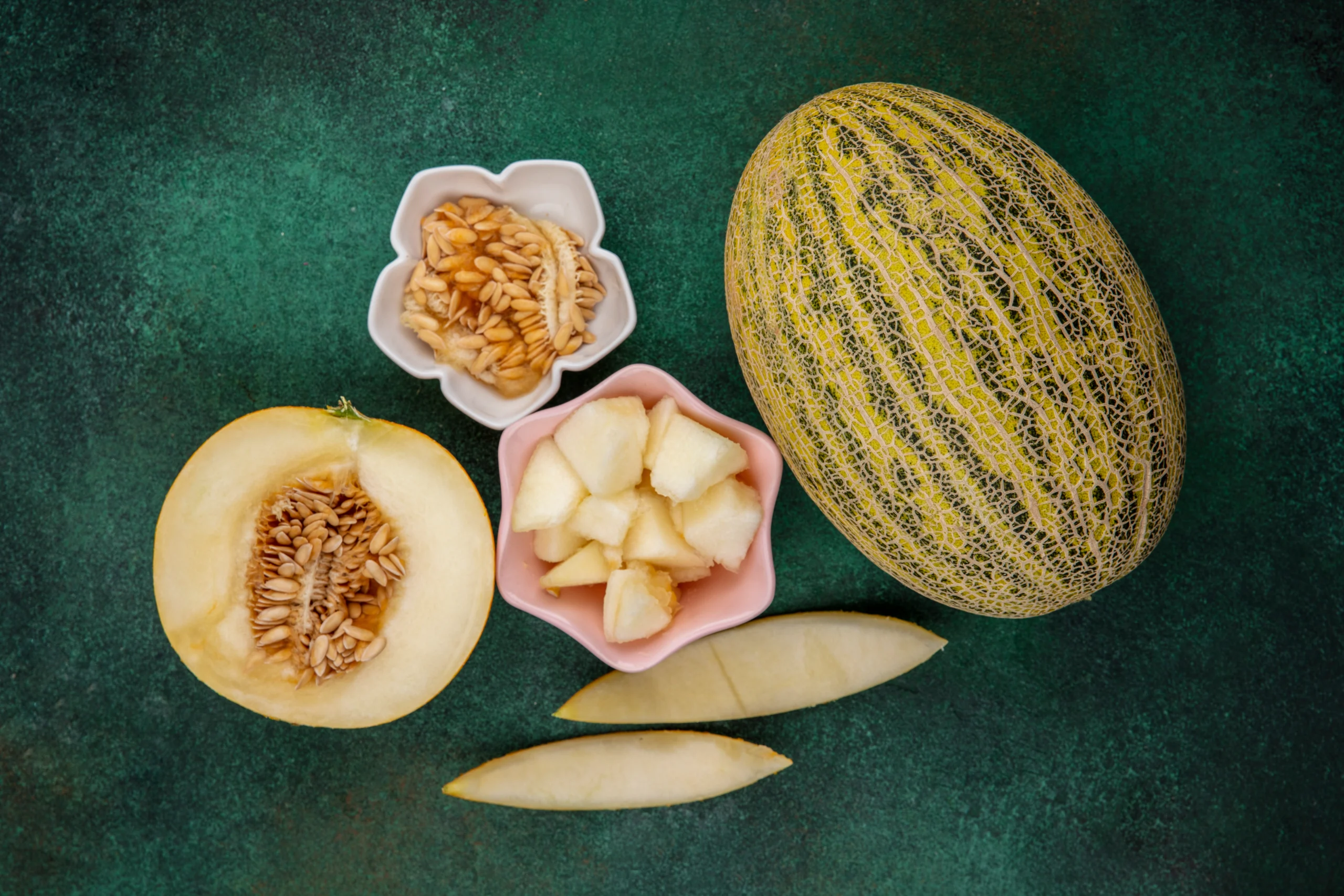
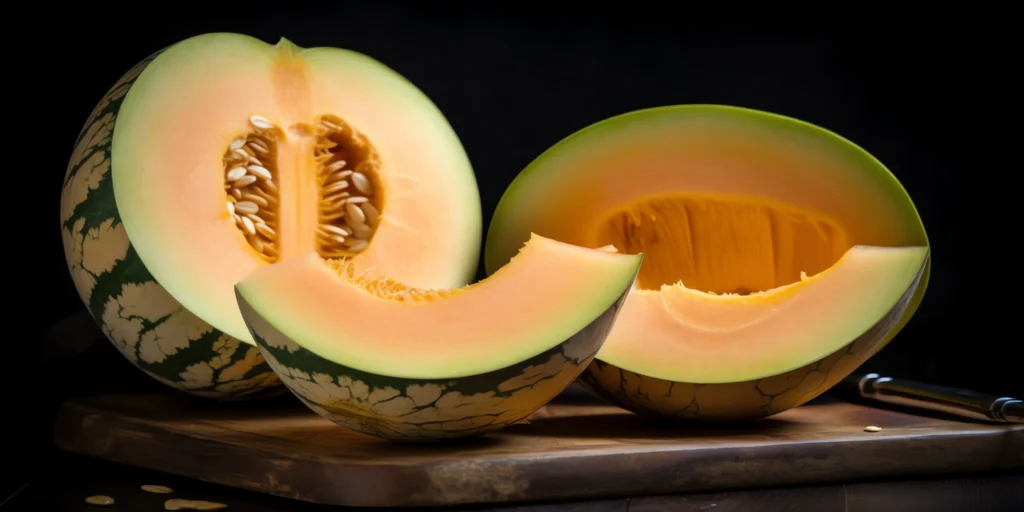
- Color: Outer skin is beige with a netted texture, while the inner flesh is typically bright orange.
- Shape: Spherical to slightly oval.
- Size: Can range widely, typically between 1.5 to 5 kilograms (3 to 11 pounds).
- Texture: The flesh is juicy and soft when ripe, with a central seed cavity that contains loose, fibrous seeds.
Culinary Uses
Cantaloupe is enjoyed for its sweet, refreshing flavor and can be used in various dishes:
- Common Dishes: Eaten raw as a snack or in fruit salads, blended into smoothies, or served as a dessert with ice cream or yogurt. It’s also used in savory salads, paired with cured meats like prosciutto, or as a garnish for drinks.
- Preparation Methods: Typically cut into slices, cubes, or scooped into balls. Can be grilled or added to cold soups for a unique flavor.
- Suitable Pairings: Complements both sweet and savory ingredients, including mint, basil, lime, balsamic vinegar, and salty cheeses like feta.
Geographical Information
- Origin: Originally from Iran, India, and Africa, cantaloupe was later introduced to Europe and subsequently to the Americas.
- Primary Growing Regions: Today, cantaloupes are grown in warm climates worldwide, with major production in the United States (California, Arizona, and Texas), China, Turkey, and Spain.
- Seasonal Availability: Peak season varies by region but typically falls in summer months in the Northern Hemisphere.
Cantaloupe is a nutrient-rich fruit that offers hydration and essential vitamins and minerals with its sweet and versatile flavor making it a favorite in a wide array of culinary contexts.
| proximates: | |
| Water | 90.2 g |
| Energy (Atwater General Factors) | 38 kcal |
| Energy (Atwater Specific Factors) | 34 kcal |
| Nitrogen | 0.13 g |
| Protein | 0.82 g |
| Total lipid (fat) | 0.18 g |
| Ash | 0.63 g |
| Carbohydrates: | |
| Carbohydrate, by difference | 8.16 g |
| Carbohydrate, by summation | 8.69 g |
| Fiber, total dietary | 0.8 g |
| Fiber, soluble | 0.3 g |
| Fiber, insoluble | 0.5 g |
| Sugars, Total | 7.88 g |
| Sucrose | 3.32 g |
| Glucose | 2.08 g |
| Fructose | 2.4 g |
| Maltose | 0.02 g |
| Galactose | 0.06 g |
| Starch | 0.02 g |
| Minerals: | |
| Calcium, Ca | 9 mg |
| Iron, Fe | 0.38 mg |
| Magnesium, Mg | 13 mg |
| Phosphorus, P | 17 mg |
| Potassium, K | 157 mg |
| Sodium, Na | 30 mg |
| Zinc, Zn | 0.44 mg |
| Copper, Cu | 0.085 mg |
| Manganese, Mn | 0.046 mg |
| Selenium, Se | 1.7 µg |
| Vitamins and Other Components: | |
| Vitamin C, total ascorbic acid | 10.9 mg |
| Thiamin | 0.049 mg |
| Riboflavin | 0.027 mg |
| Niacin | 0.694 mg |
| Pantothenic acid | 0.085 mg |
| Vitamin B-6 | 0.04 mg |
| Folate, total | 14 µg |
| Vitamin A, RAE | 232 µg |
| Carotene, beta | 2780 µg |
| Lutein + zeaxanthin | 32 µg |
| Vitamin K (phylloquinone) | 2.7 µg |
| Amino acids: | |
| Tryptophan | 0.002 g |
| Threonine | 0.014 g |
| Isoleucine | 0.017 g |
| Leucine | 0.024 g |
| Lysine | 0.024 g |
| Methionine | 0.01 g |
| Cystine | 0.002 g |
| Phenylalanine | 0.019 g |
| Tyrosine | 0.012 g |
| Valine | 0.027 g |
| Arginine | 0.024 g |
| Histidine | 0.012 g |
| Alanine | 0.077 g |
| Aspartic acid | 0.113 g |
| Glutamic acid | 0.174 g |
| Glycine | 0.021 g |
| Proline | 0.016 g |
| Serine | 0.034 g |