

Basic Information
- Name: Millet
- Scientific Name: Various species within the genus Panicum, Setaria, Echinochloa, and others
- Category: Grain/Cereal
Varieties
Millet encompasses several types, each with unique characteristics. Key varieties include:
- Pearl Millet (Pennisetum glaucum): The most widely produced type, known for its tolerance to drought.
- Foxtail Millet (Setaria italica)
- Proso Millet (Panicum miliaceum): Also known as common millet, broomcorn millet, and hog millet.
- Finger Millet (Eleusine coracana): Noted for its high calcium content.
- Barnyard Millet (_Echinochloa spp.)
- Little Millet (Panicum sumatrense)
Nutritional Information
- Macronutrients:
- Carbohydrates: Approximately 74.4 g per 100 g (raw), primarily complex carbohydrates.
- Proteins: About 10 g per 100 g (raw), containing essential amino acids.
- Fats: Roughly 4.19 g per 100 g (raw), including healthy polyunsaturated fats.
- Micronutrients: Rich in B vitamins (especially niacin, B6, and folic acid), magnesium, potassium, zinc, iron, and calcium. Finger millet, in particular, is noted for its high calcium content.
phytonutrients
Whole grain millet is a nutritious food source rich in vitamins, minerals, and bioactive compounds, although it’s more commonly recognized for its macronutrient content and essential minerals rather than specific “phytonutrients” as found in fruits and vegetables. Nonetheless, millet contains several bioactive compounds and phytonutrients that contribute to its health benefits. Here’s an overview of these components:
Types of Phytonutrients and Bioactive Compounds in Whole Grain Millet
- Polyphenols: Millet grains are a source of polyphenolic compounds, which have antioxidant properties. These include ferulic acid, catechins, and p-coumaric acid, among others. Polyphenols can help protect the body against oxidative stress and may reduce the risk of chronic diseases.
- Phytic Acid: Often considered an antinutrient because it can bind minerals and reduce their absorption, phytic acid also has antioxidant properties. Some research suggests it might play a role in preventing the formation of cancer cells.
- Lignans: Converted by intestinal bacteria into enterolactone and enterodiol, lignans have antioxidant properties and are thought to play a role in preventing certain types of cancer, particularly hormone-related cancers.
- Tannins: These are a type of polyphenol found in certain varieties of millet, known for their antioxidant properties. However, they can also inhibit the digestion of proteins and absorption of various nutrients.
Nutritional Implications
The phytonutrients in millet contribute to several health benefits:
- Antioxidant Protection: The polyphenols and other antioxidant compounds in millet can help neutralize harmful free radicals, potentially reducing the risk of chronic diseases such as heart disease and cancer.
- Digestive Health: The dietary fiber in millet, while not a phytonutrient, supports digestive health, promotes regular bowel movements, and may help prevent digestive disorders.
- Anti-inflammatory Effects: Some of the bioactive compounds in millet have anti-inflammatory properties, which can contribute to reducing the risk of inflammation-related conditions.
- Cancer Prevention: Components like phytic acid and lignans have been studied for their potential roles in cancer prevention, though more research is needed to fully understand these effects.
Including whole grain millet in your diet can offer these phytonutrient benefits, contributing to a balanced and nutritious dietary pattern. Millet’s versatility in cooking allows it to be easily incorporated into various dishes, from traditional porridges and bread to modern salads and side dishes, enhancing both the nutritional value and diversity of meals.
Calorie Count and Glycemic Index
- Calorie Count: Around 376 calories per 100 g (raw).
- Glycemic Index: Low to medium, depending on the variety and cooking method.
Physical Characteristics
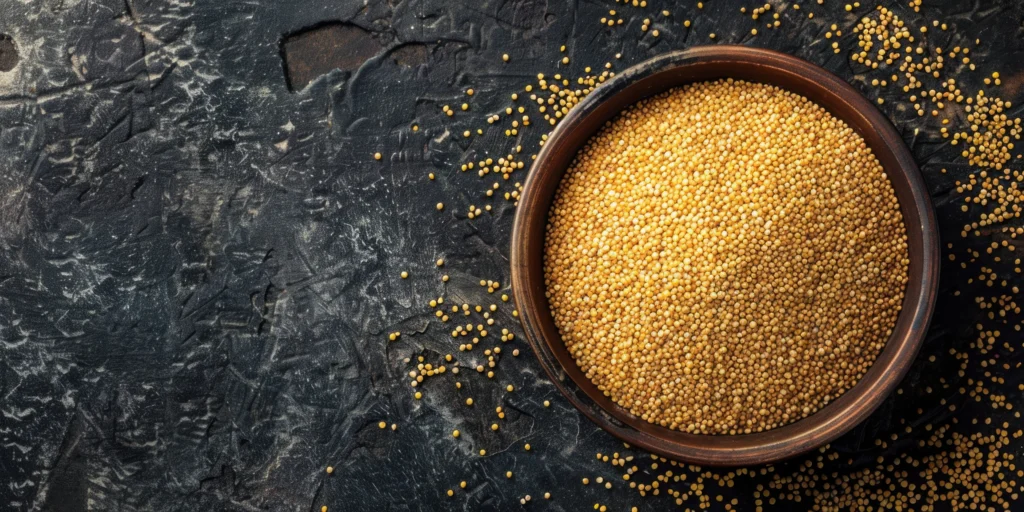
- Color: Varies by type, from white and yellow to gray, red, and even deep brown.
- Shape: Small, round grains.
- Size: Generally about 2-3 mm in diameter.
- Texture: Dry and hard in raw form, becoming soft and fluffy when cooked.
Culinary Uses
Millet is versatile in cooking and can be prepared in various ways:
- Common Dishes: Used in porridges, bread, salads, pilafs, and fermented to make traditional drinks or flatbreads.
- Preparation Methods: Can be boiled like rice, toasted, popped, or ground into flour for use in baking.
- Suitable Pairings: Pairs well with vegetables, legumes, and spices. Its mild, nutty flavor complements both sweet and savory dishes.
Geographical Information
- Origin: Thought to have been cultivated first in East Asia or West Africa over 4,000 years ago.
- Primary Growing Regions: Widely grown in Africa, India, and parts of Asia and Europe. It’s adapted to grow in harsh environments, making it an important crop in semi-arid regions.
- Seasonal Availability: Generally available year-round, as it is harvested at various times across different growing regions.
Whole grain millet is a nutritious, gluten-free grain that serves as an excellent source of vitamins, minerals, and dietary fiber. Its versatility and nutritional profile make it a valuable addition to various diets, particularly in regions where food security is a concern due to its resilience and adaptability to different growing conditions.
| proximates: | |
| Water | 10.2 g |
| Energy (Atwater General Factors) | 376 kcal |
| Energy (Atwater Specific Factors) | 381 kcal |
| Nitrogen | 1.72 g |
| Protein | 10 g |
| Total lipid (fat) | 4.19 g |
| Ash | 1.13 g |
| Carbohydrates: | |
| Carbohydrate, by difference | 74.4 g |
| Fiber, total dietary | 2.76 g |
| Total dietary fiber (AOAC 2011.25) | 3.33 g |
| High Molecular Weight Dietary Fiber (HMWDF) | 2.73 g |
| Low Molecular Weight Dietary Fiber (LMWDF) | <1 g |
| Beta-glucan | <0.1 g |
| Starch | 67.1 g |
| Minerals: | |
| Calcium, Ca | 9 mg |
| Iron, Fe | 2.53 mg |
| Magnesium, Mg | 106 mg |
| Phosphorus, P | 258 mg |
| Potassium, K | 214 mg |
| Sodium, Na | <2.5 mg |
| Zinc, Zn | 2.26 mg |
| Copper, Cu | 0.488 mg |
| Manganese, Mn | 0.924 mg |
| Selenium, Se | 23.1 µg |
| Molybdenum, Mo | 29.5 µg |
| Vitamins and Other Components: | |
| Thiamin | 0.411 mg |
| Riboflavin | 0.136 mg |
| Niacin | 4.86 mg |
| Vitamin B-6 | 0.192 mg |
| Biotin | 11.4 µg |