
Basic Information
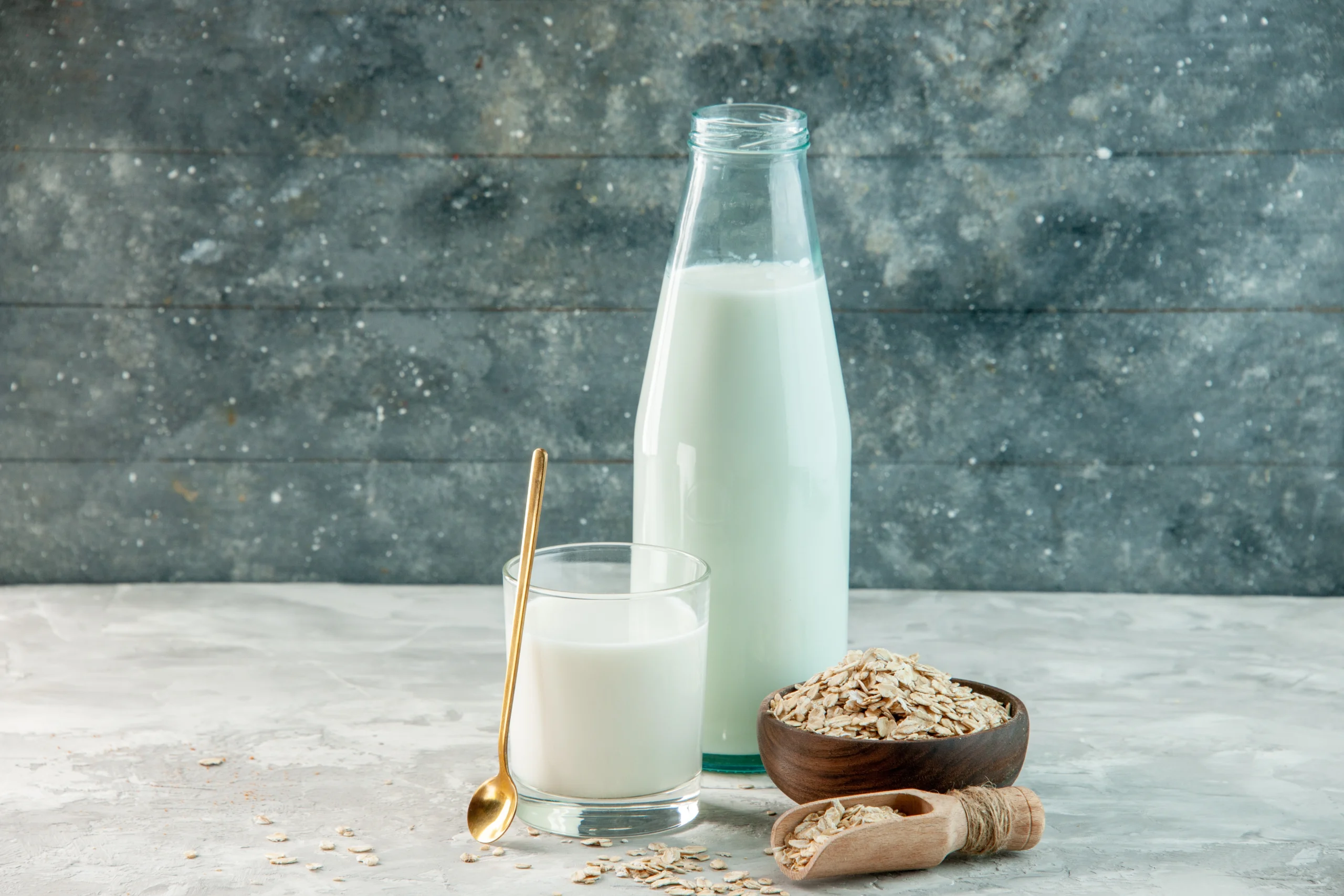
Name: Commonly known as Oat Milk. The term does not correspond to a botanical name, as oat milk is a processed product derived from oats (Avena sativa).
Category: Oat milk is categorized as a plant-based milk alternative or non-dairy milk.
Varieties: While the focus here is on unsweetened, plain, refrigerated oat milk, it is available in various forms including flavored (such as vanilla or chocolate), fortified with additional vitamins and minerals, and barista editions specifically designed for coffee.
Nutritional Information
- Macronutrients: Oat milk generally contains carbohydrates primarily from oats, a low amount of proteins, and a variable fat content depending on the brand and formulation. Unsweetened varieties have lower sugar content compared to their flavored counterparts.
- Carbohydrates: 5.1 g.
- Proteins: 0.8 g.
- Fats: 2.75 g.
- Micronutrients: Fortified oat milk is a good source of vitamins and minerals, including calcium, vitamin D, vitamin B12, and riboflavin (vitamin B2). The fortification levels can vary by brand.
Phytonutrients
Oat milk, particularly the unsweetened, plain, refrigerated variety, retains some of the nutritional qualities of whole oats, although the concentration of phytonutrients may be lower due to processing and dilution. The primary phytonutrients in oats that may also be found in oat milk, depending on the brand and manufacturing process, include:
1. Beta-Glucan
- Primary Phytonutrient in Oats: Beta-glucan is a soluble fiber with significant health benefits, including lowering cholesterol levels and improving heart health. In oat milk, the concentration of beta-glucan depends on the oat content and the processing method.
2. Avenanthramides
- Antioxidant Properties: Unique to oats, avenanthramides are compounds with antioxidant and anti-inflammatory properties. They can help lower blood pressure and provide anti-itching effects when applied topically. The presence and amount in oat milk can vary widely.
3. Phenolic Acids
- Antioxidants: Ferulic acid and caffeic acid are among the phenolic acids found in oats, contributing to their antioxidant capacity. These compounds may be present in oat milk, offering potential health benefits such as protection against chronic diseases.
4. Phytic Acid
- Mineral Binding: Phytic acid has both positive and negative nutritional impacts; it can bind minerals and reduce their absorption but also has antioxidant properties.
5. Tocols
- Vitamin E Family: Tocols, including tocopherols and tocotrienols, are found in oats and contribute to their antioxidant profile. They may be present in oat milk, providing vitamin E’s benefits, which include protecting cells from oxidative damage.
Health Benefits
The processing of oats into milk may reduce the concentration of these phytonutrients compared to whole oats, but oat milk can still contribute to a healthy diet, especially when fortified:
- Heart Health: Beta-glucan in oat milk can contribute to heart health by lowering cholesterol levels.
- Antioxidant Support: The presence of avenanthramides, phenolic acids, and tocols can provide antioxidant support, although in smaller amounts than found in whole oats.
- Vitamin and Mineral Fortification: Many brands of oat milk are fortified with additional vitamins and minerals, such as calcium, vitamin D, and vitamin B12, enhancing its nutritional profile.
When choosing oat milk, it’s important to look for unsweetened, plain varieties to minimize added sugars and maximize health benefits. Also, checking the label for fortification can ensure you’re getting additional vitamins and minerals that may not naturally occur in significant amounts in oat milk.
Calorie Count and Glycemic Index
- Calorie Count: Approximately 48 calories per cup (240 ml) for unsweetened, plain oat milk. This can vary slightly between brands.
- Glycemic Index: While specific glycemic index (GI) values for oat milk can vary, it is generally considered to be low to medium GI, particularly unsweetened varieties which have less sugar.
Physical Characteristics
- Color: Creamy white to light beige.
- Shape: As a liquid, it does not have a shape but conforms to its container.
- Size: Sold in various container sizes, commonly in quarts (946 ml) or liters.
- Texture: Smooth and slightly thicker than cow’s milk, with a creamy consistency that can vary depending on the brand and formulation.
Culinary Uses
- Common Dishes: Oat milk is versatile and used in a variety of dishes and beverages. It can be used as a dairy milk substitute in coffee and tea, cereals, smoothies, and baking.
- Preparation Methods: Ready to use from the carton, it can be consumed cold or heated, depending on personal preference or the requirements of a recipe.
- Suitable Pairings: Oat milk pairs well with coffee and tea, enhancing them with its creamy texture without overpowering their flavors. It also works well in smoothies, adding body and a slight sweetness, and is suitable for both sweet and savory cooking applications.
Geographical Information
- Origin: The concept of oat milk originated in Sweden, with the commercial version being developed in the 1990s.
- Primary Growing Regions: Oats are widely cultivated in temperate regions. Major oat milk production has strong roots in Scandinavia, but it has become popular and is now produced in many countries, including the United States, Canada, and various European nations.
- Seasonal Availability: As a processed product, oat milk is available year-round, with its production not directly affected by seasonal changes in oat cultivation.
| proximates: | |
| Water | 90.6 g |
| Energy (Atwater General Factors) | 48 kcal |
| Nitrogen | 0.13 g |
| Protein | 0.8 g |
| Total lipid (fat) | 2.75 g |
| Ash | 0.79 g |
| Carbohydrates: | |
| Carbohydrate, by difference | 5.1 g |
| Fiber, total dietary | <0.75 g |
| Sugars, Total | 2.32 g |
| Sucrose | <0.25 g |
| Glucose | 0.77 g |
| Fructose | <0.25 g |
| Lactose | <0.25 g |
| Maltose | 1.55 g |
| Galactose | <0.1 g |
| Minerals: | |
| Calcium, Ca | 148 mg |
| Iron, Fe | 0.26 mg |
| Magnesium, Mg | 5.9 mg |
| Phosphorus, P | 89 mg |
| Potassium, K | 148 mg |
| Sodium, Na | 42 mg |
| Zinc, Zn | 0.09 mg |
| Copper, Cu | 0.027 mg |
| Manganese, Mn | 0.126 mg |
| Selenium, Se | <2.5 µg |
| Molybdenum, Mo | 10.1 µg |
| Vitamins and Other Components: | |
| Thiamin | 0.04 mg |
| Riboflavin | 0.281 mg |
| Niacin | 0.096 mg |
| Vitamin B-6 | 0.006 mg |
| Biotin | 1.41 µg |
| Folate, total | <6 µg |
| Vitamin B-12 | 0.51 µg |
| Vitamin A | |
| Retinol | 85 µg |
| Vitamin D (D2 + D3), International Units | 65 IU |
| Vitamin D (D2 + D3) | 1.7 µg |
| Vitamin D2 (ergocalciferol) | 1.69 µg |
| Vitamin D3 (cholecalciferol) | 0.01 µg |
| Vitamin K (phylloquinone) | 0.4 µg |
| Vitamin K (Dihydrophylloquinone) | <0.1 µg |
| Vitamin K (Menaquinone-4) | <0.1 µg |
| Amino acids: | |
| Tryptophan | 0.009 g |
| Threonine | 0.022 g |
| Isoleucine | 0.025 g |
| Leucine | 0.081 g |
| Lysine | 0.061 g |
| Methionine | 0.01 g |
| Phenylalanine | 0.072 g |
| Tyrosine | 0.041 g |
| Valine | 0.032 g |
| Arginine | 0.082 g |
| Histidine | 0.018 g |
| Alanine | 0.038 g |
| Aspartic acid | 0.082 g |
| Glutamic acid | 0.15 g |
| Glycine | 0.056 g |
| Proline | 0.072 g |
| Serine | 0.056 g |
| Hydroxyproline | <0.01 g |
| Cysteine | 0.025 g |