
Basic Information
Name: Commonly known as Corn Oil. Scientifically, it is derived from the germ of Zea mays, a species in the grass family.
Category: Corn oil is categorized as a vegetable oil.
Varieties: While there aren’t varieties of corn oil per se, it can be classified based on the processing method, including refined and unrefined corn oil. Refined corn oil is the most common and is used widely in cooking and food processing due to its high smoke point and neutral flavor.
Nutritional Information
- Macronutrients: Corn oil is composed almost entirely of fats, predominantly polyunsaturated and monounsaturated fatty acids, with a small amount of saturated fats. The primary fatty acids are linoleic acid (omega-6) and oleic acid.
- Micronutrients: It contains vitamin E, a fat-soluble antioxidant important for skin health and immune function.
Phytonutrients
Corn oil, derived from the germ of Zea mays kernels, is primarily known for its high content of polyunsaturated fatty acids, particularly linoleic acid (an omega-6 fatty acid), and monounsaturated fatty acids like oleic acid. While it is not as rich in a diverse range of phytonutrients as whole grains, fruits, or vegetables, corn oil does contain several important compounds contributing to its nutritional profile:
1. Phytosterols
- Key Components: Corn oil is a rich source of phytosterols, especially beta-sitosterol, campesterol, and stigmasterol. These plant-derived compounds are structurally similar to cholesterol and can help lower cholesterol levels by blocking its absorption in the intestines.
- Health Implications: The presence of phytosterols in corn oil contributes to cardiovascular health by potentially reducing the risk of heart disease.
2. Tocopherols (Vitamin E)
- Antioxidant Properties: Corn oil contains vitamin E in the form of tocopherols, which act as antioxidants to protect the body from oxidative stress and inflammation. Vitamin E also supports skin health and immune function.
- Types: Alpha-tocopherol is the most active form of vitamin E in the body and is present in corn oil, along with gamma-tocopherol, which has been studied for its potential health benefits, including anti-inflammatory properties.
3. Polyphenols
- Antioxidants: While present in smaller quantities than in whole corn or other plant-based foods, corn oil may contain trace amounts of polyphenolic compounds that contribute to its antioxidant capacity. The processing method can affect the polyphenol content, with unrefined oils potentially retaining more of these beneficial compounds.
Health Benefits
The phytonutrients in corn oil, particularly phytosterols and tocopherols, contribute to its health benefits:
- Heart Health: The phytosterols in corn oil can help lower LDL cholesterol levels, potentially reducing the risk of heart disease.
- Antioxidant Effects: Vitamin E in corn oil provides antioxidant benefits, protecting the body from damage caused by free radicals and supporting overall health.
Considerations
Despite the presence of these beneficial phytonutrients, it’s important to consume corn oil in moderation due to its high calorie content and the balance of omega-6 to omega-3 fatty acids. A diet high in omega-6 fatty acids and low in omega-3 fatty acids can contribute to inflammation and has been associated with various health issues. Including a variety of fat sources in the diet, particularly those rich in omega-3 fatty acids like flaxseed oil or fish oil, can help maintain a healthy balance.

Calorie Count and Glycemic Index
- Calorie Count: Approximately 884 calories per 100 grams or about 120 calories per tablespoon (13.6 grams).
- Glycemic Index: As it is a pure fat source, corn oil has no carbohydrates, thus no glycemic index value.
Physical Characteristics
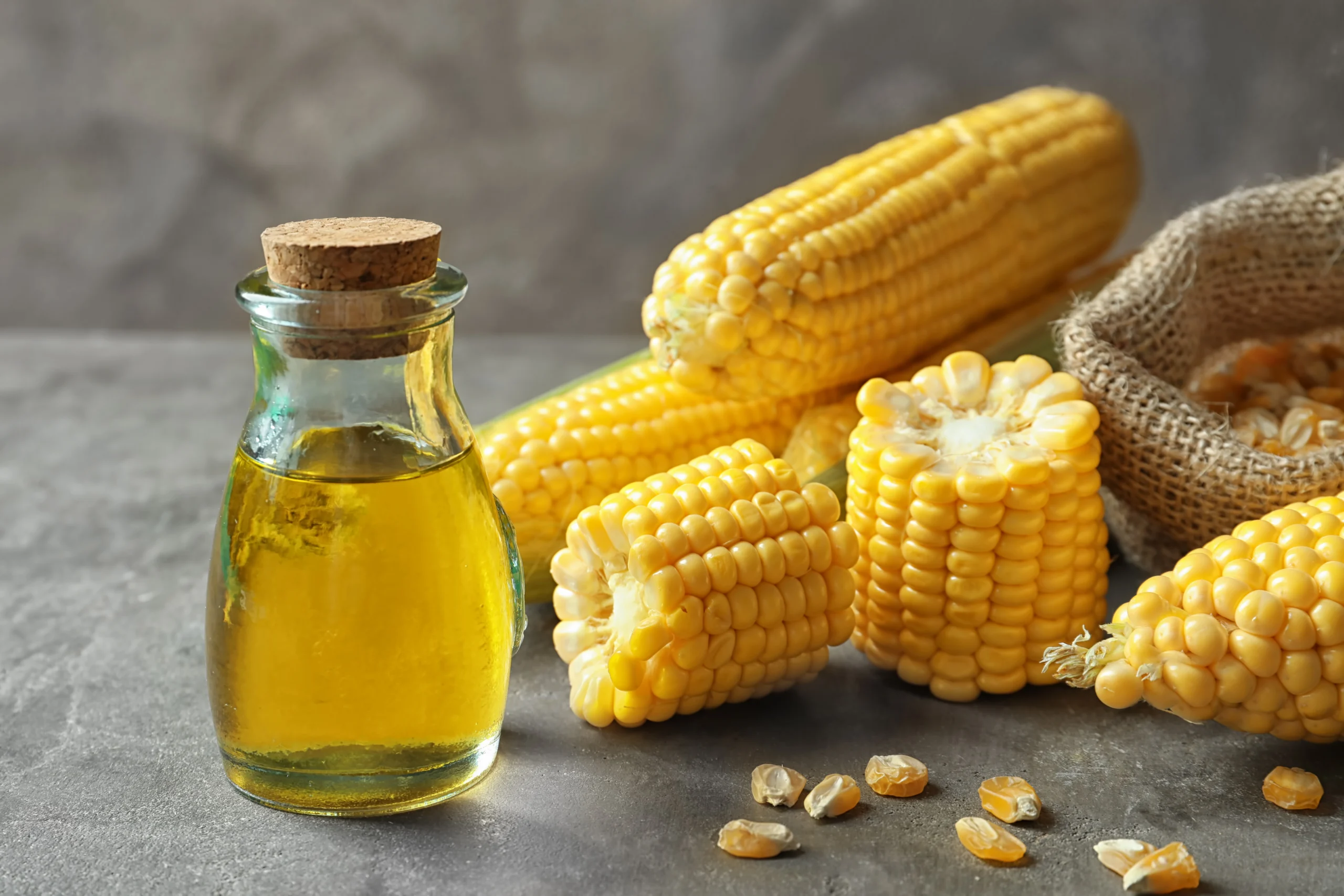
- Color: Refined corn oil is light to golden yellow in color.
- Shape: As a liquid, it assumes the shape of its container.
- Size: Available in various sizes, from small bottles to large industrial containers.
- Texture: Corn oil has a smooth, liquid texture at room temperature.
Culinary Uses
- Common Dishes: Corn oil is used in frying due to its high smoke point, making it suitable for high-heat cooking methods. It’s also used in salad dressings, baking, and margarine production for its neutral flavor.
- Preparation Methods: Can be used directly from the bottle for frying, sautéing, or as a dressing. It does not require any special preparation.
- Suitable Pairings: Its neutral flavor makes it versatile for both sweet and savory dishes, pairing well with virtually any ingredient.
Geographical Information
- Origin: The cultivation of corn (maize) originated in Mexico over 7,000 years ago. However, the use of corn for oil production developed significantly with modern agricultural and processing techniques.
- Primary Growing Regions: The United States is the largest producer of corn and corn oil, followed by China, Brazil, Argentina, and Ukraine. Corn oil production is closely linked to the regions where corn is grown extensively.
- Seasonal Availability: Corn oil is available year-round, as it is produced from the germ of corn kernels and can be stored and processed throughout the year.
| proximates: | |
| Total fat (NLEA) | 94 g |
| Vitamins and Other Components: | |
| Vitamin E (alpha-tocopherol) | 22.6 mg |
| Tocopherol, beta | 1.1 mg |
| Tocopherol, gamma | 60.9 mg |
| Tocopherol, delta | 2.78 mg |
| Tocotrienol, alpha | 1.49 mg |
| Tocotrienol, beta | 4.4 mg |
| Tocotrienol, gamma | 1.6 mg |
| Lipids: | |
| Fatty acids, total saturated | 13.4 g |
| SFA 14:0 | 0.034 g |
| SFA 15:0 | 0.008 g |
| SFA 16:0 | 11.1 g |
| SFA 17:0 | 0.061 g |
| SFA 18:0 | 1.58 g |
| SFA 20:0 | 0.349 g |
| SFA 21:0 | 0.004 g |
| SFA 22:0 | 0.112 g |
| SFA 24:0 | 0.154 g |
| Fatty acids, total monounsaturated | 27.7 g |
| MUFA 16:1 c | 0.091 g |
| MUFA 18:1 c | 27.2 g |
| MUFA 20:1 c | 0.365 g |
| Fatty acids, total polyunsaturated | 52.9 g |
| PUFA 18:2 c | 51.9 g |
| PUFA 18:2 n-6 c,c | 51.9 g |
| PUFA 18:3 c | 1.04 g |
| PUFA 18:3 n-3 c,c,c (ALA) | 1.04 g |
| Phytosterols: | |
| Stigmasterol | 55.3 mg |
| Campesterol | 153 mg |
| Brassicasterol | 0.414 mg |
| Beta-sitosterol | 538 mg |
| Campestanol | 12.9 mg |
| Beta-sitostanol | 30.4 mg |
| Delta-5-avenasterol | 25.9 mg |
| Phytosterols, other | 17.8 mg |