
Red onions, known for their vibrant color and bold flavor, are a staple in many cuisines around the world. Here’s a detailed overview based on the categories you’re interested in:
Basic Information
- Common Name: Red Onion
- Scientific Name: Allium cepa
- Category: Vegetable
- Varieties: There are various cultivars of red onions, which can vary in size, flavor, and color intensity. Some popular varieties include ‘Red Burgundy’, ‘Red Globe’, ‘Red Baron’, and ‘Purple Majesty’.
Nutritional Information
For a typical serving size (about 1 cup, chopped, approximately 160 grams):
- Macronutrients:
- Carbohydrates: 9.93 grams, mainly consisting of sugars and dietary fiber.
- Proteins: 0.94 grams, offering a small amount of plant-based protein.
- Fats: Negligible amounts, as onions are very low in fat about 0.1 grams.
- Micronutrients:
- Rich in vitamin C, important for immune function and skin health.
- Contains small amounts of vitamins B6 and folate, which are crucial for energy metabolism and brain health.
- Provides potassium and a trace of magnesium and calcium.
Phytonutrients
Red onions (Allium cepa) are not just flavorful and colorful additions to many dishes; they’re also packed with beneficial phytonutrients. These compounds contribute to health through their antioxidant, anti-inflammatory, and potentially anti-cancer properties. Here’s a detailed look at the phytonutrients present in raw red onions:
Flavonoids
- Quercetin: Red onions are particularly rich in quercetin, a potent antioxidant that has been studied for its potential to lower blood pressure, reduce inflammation, and provide anticancer effects. It’s found in higher concentrations in the outer layers of the onion.
- Anthocyanins: The pigments that give red onions their vibrant color, anthocyanins are antioxidants linked to heart health benefits, improved brain function, and a lower risk of certain chronic diseases.
- Kaempferol and Myricetin: Other flavonoids that have antioxidant properties and may contribute to the protective effects against certain types of cancer and chronic diseases.
Sulfur Compounds
- Sulfides and Thiosulfinates: These sulfur-containing compounds are responsible for the pungent smell and taste of onions. They have antimicrobial properties and may help lower blood lipid and blood pressure levels.
- S-allylcysteine: A sulfur compound that may help reduce the risk of certain types of cancer and has been shown to have cardiovascular benefits.
Other Phytonutrients
- Alliin and Allicin: While more commonly associated with garlic, onions also contain these sulfur-containing compounds, which are converted to allicin when the onion is cut or crushed. Allicin has been shown to have antimicrobial and anti-inflammatory effects.
- Fructans: A type of prebiotic fiber found in onions, fructans promote digestive health by feeding beneficial gut bacteria.
Health Benefits
The phytonutrients in red onions contribute to a wide array of health benefits, including:
- Antioxidant Protection: They help neutralize free radicals, reducing oxidative stress and potentially lowering the risk of chronic diseases.
- Cardiovascular Health: The flavonoids and sulfur compounds in red onions can contribute to heart health by improving arterial function and lowering blood pressure.
- Anti-Inflammatory Effects: Many of the phytonutrients in onions have anti-inflammatory properties, which may help reduce the risk of chronic conditions such as heart disease and diabetes.
- Cancer Prevention: Some studies suggest that the phytonutrients in onions may have protective effects against certain types of cancer.
Consuming red onions raw maximizes their phytonutrient content, as cooking can reduce the levels of some beneficial compounds. Adding raw red onions to salads, sandwiches, and salsas not only enhances flavor but also provides a nutritional boost.

Calorie Count Glycemic Index
- Calorie Count: About 44 calories per cup.
- Glycemic Index: Low, making it a suitable option for maintaining stable blood sugar levels.
Physical Characteristics
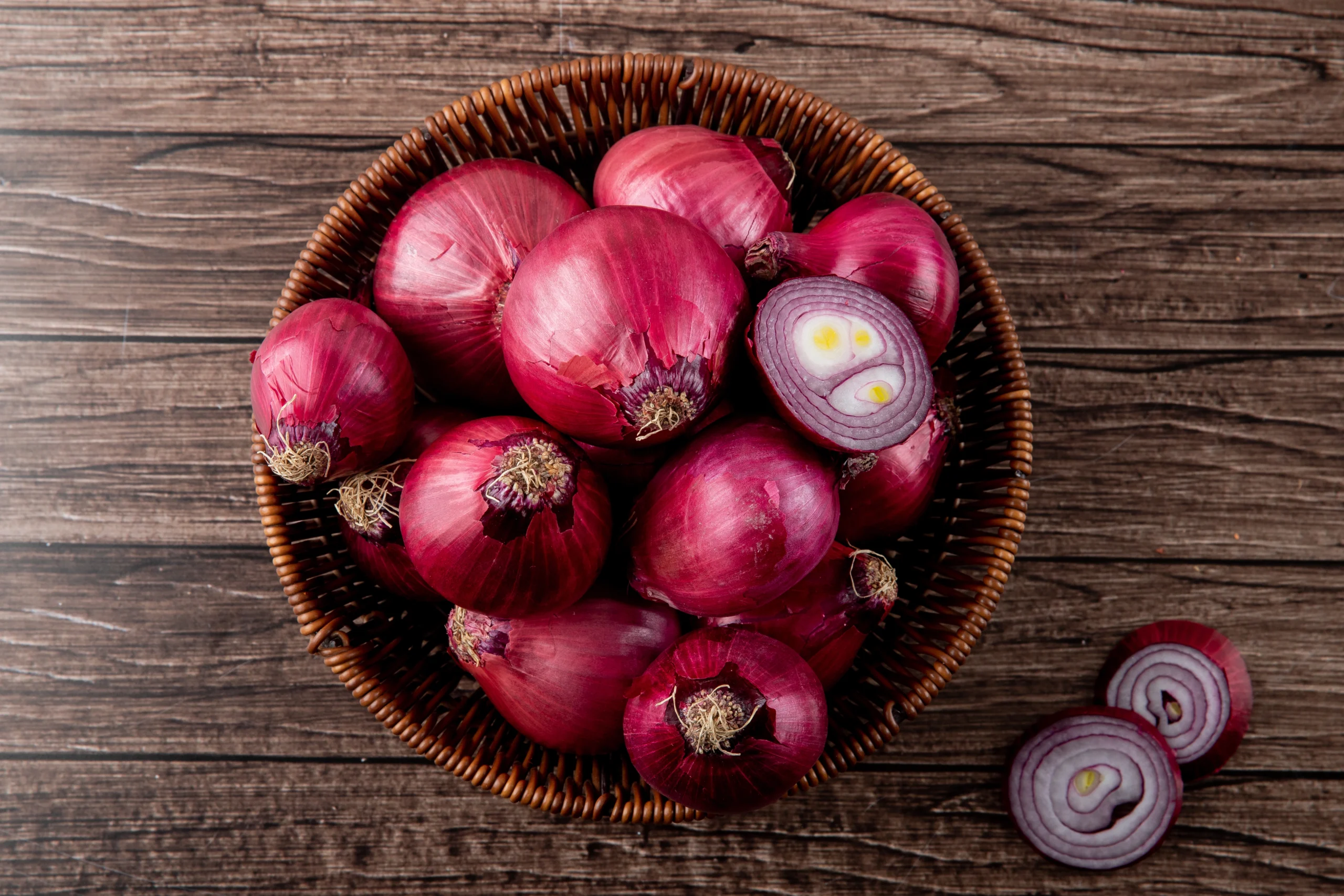
- Color: The outer skin is a deep purple or burgundy, while the inner flesh is white with red or purple tinges.
- Shape: Typically round with a slightly flattened top and bottom.
- Size: Can vary from small (about 2 inches in diameter) to large (up to 4 inches or more).
- Texture: Crisp and juicy when raw.
Culinary Uses
- Common Dishes: Red onions are used in salads, salsas, pickles, sandwiches, and as a garnish for their color and mild to sharp taste.
- Preparation Methods: They can be eaten raw, grilled, roasted, or lightly cooked. Raw red onions are especially popular for their crisp texture and vibrant flavor.
- Suitable Pairings: Red onions pair well with ingredients that complement their bold flavor, such as tomatoes, cucumbers, bell peppers, citrus fruits, and rich meats like beef and lamb.
Geographical Information
- Origin: Onions are believed to have originated in central Asia or Iran and Pakistan. Red onions, like other onion varieties, have been cultivated for thousands of years.
- Primary Growing Regions: They are grown globally, with major production in the United States, China, India, and several countries in the Middle East and Europe.
- Seasonal Availability: Red onions are available year-round, although their peak season varies by region.
Red onions are appreciated not only for their distinctive flavor and color but also for their nutritional benefits, including antioxidant properties. They’re a versatile ingredient that enhances a wide range of dishes across various cuisines.
| proximates: | |
| Water | 88.6 g |
| Energy (Atwater General Factors) | 44 kcal |
| Energy (Atwater Specific Factors) | 42 kcal |
| Protein | 0.94 g |
| Total lipid (fat) | 0.1 g |
| Ash | 0.43 g |
| Carbohydrates: | |
| Carbohydrate, by difference | 9.93 g |
| Fiber, total dietary | 2.2 g |
| Total dietary fiber (AOAC 2011.25) | 3.97 g |
| Sugars, Total | 5.76 g |
| Sucrose | 1.68 g |
| Glucose | 2.29 g |
| Fructose | 1.79 g |
| Lactose | <0.15 g |
| Maltose | <0.15 g |
| Minerals: | |
| Calcium, Ca | 17 mg |
| Iron, Fe | 0.24 mg |
| Magnesium, Mg | 11.4 g |
| Phosphorus, P | 41 mg |
| Potassium, K | 197 mg |
| Sodium, Na | 1 mg |
| Zinc, Zn | 0.17 mg |
| Copper, Cu | 0.058 mg |
| Manganese, Mn | 0.119 mg |
| Iodine, I | <10 µg |
| Selenium, Se | 0.5 µg |
| Vitamins and Other Components: | |
| Vitamin C, total ascorbic acid | 8.1 mg |
| Biotin | <0.004 µg |