
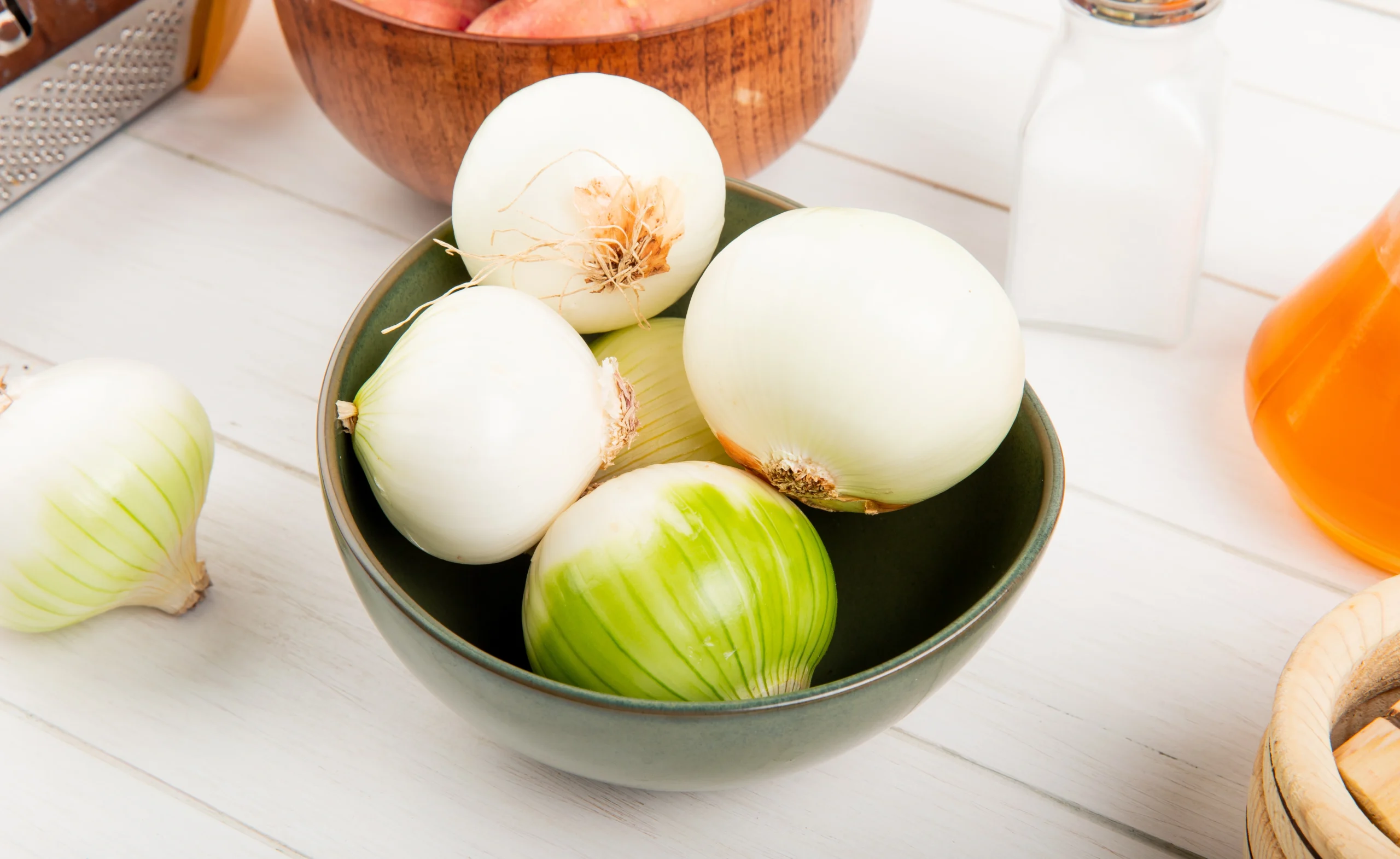
White onions, with their mild flavor and versatility, are a key ingredient in various cuisines around the world. Here’s a comprehensive overview based on the aspects you’re interested in:
Basic Information
- Common Name: White Onion
- Scientific Name: Allium cepa
- Category: Vegetable
- Varieties: White onions come in several varieties, each with slight differences in flavor, size, and texture. Some popular types include ‘White Bermuda’, ‘White Sweet Spanish’, and ‘Crystal White Wax’.
Nutritional Information
For a typical serving size (about 1 cup, chopped, approximately 160 grams):
- Macronutrients:
- Carbohydrates: 7.68 grams, with sugars and dietary fiber making up the bulk of this.
- Proteins: 0.89 grams, providing a modest amount of plant-based protein.
- Fats: Negligible, as onions are very low in fat about 0.13 grams.
- Micronutrients:
- Vitamin C: Offers a good amount, essential for immune function and skin health.
- B Vitamins: Includes small amounts of B-vitamins like folate and pyridoxine (vitamin B6) necessary for energy metabolism and neurological health.
- Minerals: Contains potassium, with traces of magnesium and calcium.
Phytonutrients
White onions, like their red and yellow counterparts, are rich in various phytonutrients that contribute to their health benefits. These compounds play a significant role in the onion’s anti-inflammatory, antioxidant, and potentially anti-cancer properties. Here’s an overview of the phytonutrients present in raw white onions:
Flavonoids
- Quercetin: White onions contain quercetin, a flavonoid known for its strong antioxidant properties. It may help reduce inflammation, lower blood pressure, and decrease the risk of heart disease. While red onions are often cited as having higher quercetin levels, white onions still provide this beneficial compound.
- Other Flavonoids: Apart from quercetin, white onions also contain smaller amounts of other flavonoids like kaempferol and isorhamnetin, which contribute to their antioxidant capacity.
Sulfur Compounds
- Sulfides and Thiosulfinates: These compounds are responsible for the characteristic smell and taste of onions. They have antimicrobial properties and may also contribute to cardiovascular health by improving blood lipid profiles and reducing blood pressure levels.
- Allyl Sulfides: Found in all onions, these compounds may help in detoxifying carcinogens and are studied for their potential to inhibit cancer growth.
Allium Compounds
- Alliin: A sulfur-containing compound that, when chopped or crushed, converts to allicin through an enzymatic reaction. Allicin is known for its antimicrobial properties and may also have cardiovascular benefits.
Prebiotics
- Inulin and Fructooligosaccharides (FOS): These are types of soluble dietary fiber that function as prebiotics, feeding beneficial gut bacteria and improving gut health.
Health Benefits
The phytonutrients in white onions contribute to their various health benefits, including:
- Antioxidant Protection: The flavonoids and sulfur compounds act as antioxidants, neutralizing free radicals that can cause cellular damage and contribute to chronic diseases.
- Cardiovascular Health: The sulfur compounds in onions can contribute to reducing blood pressure and improving overall heart health.
- Anti-Inflammatory Effects: Many of the phytonutrients in onions, especially quercetin, have anti-inflammatory properties, which can help in reducing the risk of chronic conditions like heart disease, diabetes, and cancer.
- Digestive Health: The prebiotic fibers in onions support healthy digestion by promoting the growth of beneficial gut bacteria.
Incorporating raw white onions into your diet can maximize these health benefits, as cooking may reduce some of the phytonutrients’ effectiveness. Adding them to salads, salsas, and other dishes not only enhances flavor but also contributes valuable nutrients to your meals.
Calorie Count and Glycemic Index
- Calorie Count: Roughly 36 calories per cup.
- Glycemic Index: Low; white onions can be a part of diets aimed at blood sugar control.
Physical Characteristics
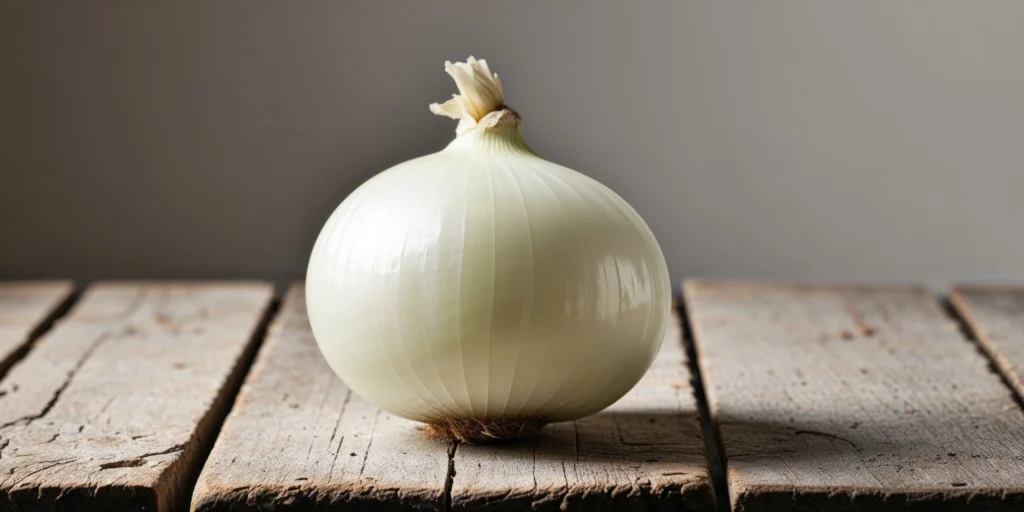
- Color: The outer skin is white, and the flesh is also white.
- Shape: Generally spherical, with a slightly tapered neck.
- Size: They can range from small (about 2 inches in diameter) to large (over 4 inches in diameter).
- Texture: Crisp and juicy when raw, becoming soft and sweet upon cooking.
Culinary Uses
- Common Dishes: White onions are often used in fresh salsas, chutneys, salads, and as a base for sauces and soups due to their sweet, mild flavor.
- Preparation Methods: They can be eaten raw, sautéed, grilled, or caramelized. The mildness of white onions makes them particularly suitable for use in raw applications.
- Suitable Pairings: Their subtle sweetness pairs well with other vegetables, fruits, meats, and seafood. They are commonly used in Mexican and Latin American cuisines, complementing ingredients like cilantro, tomatoes, and lime.
Geographical Information
- Origin: Onions are believed to have originated in central Asia or the Middle East, with a history of cultivation dating back thousands of years.
- Primary Growing Regions: Today, white onions are grown worldwide, with significant production in the United States, Mexico, China, and India.
- Seasonal Availability: While available year-round due to global agriculture and storage technologies, their peak season can vary by local growing conditions.
White onions are cherished for their ability to enhance a wide array of dishes without overpowering other flavors. Their nutritional profile offers benefits for health, contributing vitamins, minerals, and dietary fiber to the diet with a low caloric intake, making them a staple in health-conscious and flavorful cooking alike.
| proximates: | |
| Water | 91.3 g |
| Energy (Atwater General Factors) | 36 kcal |
| Energy (Atwater Specific Factors) | 33 kcal |
| Nitrogen | 0.14 g |
| Protein | 0.89 g |
| Total lipid (fat) | 0.13 g |
| Ash | <0.4 g |
| Carbohydrates: | |
| Carbohydrate, by difference | 7.68 g |
| Fiber, total dietary | 1.2 g |
| Sugars, Total | 5.76 g |
| Sucrose | 0.59 g |
| Glucose | 2.63 g |
| Fructose | 2.52 g |
| Lactose | <0.25 g |
| Maltose | <0.25 g |
| Galactose | 0.03 g |
| Minerals: | |
| Calcium, Ca | 21 mg |
| Iron, Fe | 0.15 mg |
| Magnesium, Mg | 9.3 mg |
| Phosphorus, P | 29 mg |
| Potassium, K | 141 mg |
| Sodium, Na | 2 mg |
| Zinc, Zn | 0.12 mg |
| Copper, Cu | 0.047 mg |
| Manganese, Mn | 0.099 mg |
| Selenium, Se | <2.5 µg |