

Basic Information
- Common Name: Peanuts
- Scientific Name: Arachis hypogaea
- Category: Legume (often considered a nut in the culinary context)
Varieties
There are several varieties of peanuts, including but not limited to:
- Runner: Used widely in peanut butter production.
- Virginia: Larger peanuts, often roasted and sold in-shell.
- Spanish: Smaller, oilier peanuts, commonly used for candy and peanut butter.
- Valencia: Typically sweet, with three or more kernels per shell, often roasted or boiled.
Nutritional Information
- Macronutrients:
- Carbohydrates: Peanuts contain about 26.5 grams of carbohydrates per 100 grams.
- Proteins: High in protein, providing about 23.2 grams per 100 grams.
- Fats: Rich in fats, particularly monounsaturated and polyunsaturated fats, with a total fat content of about 43.3 grams per 100 grams.
- Micronutrients: Peanuts are a good source of vitamins and minerals, including Vitamin E, niacin, folate, and minerals such as magnesium, phosphorus, potassium, and zinc.
Phytonutrients
Peanuts, despite their common categorization as nuts, are actually legumes and are packed with a variety of phytonutrients, which contribute to their health benefits. These bioactive compounds include flavonoids, phenolic acids, phytosterols, and resveratrol, among others. Here’s a detailed overview of the primary phytonutrients found in raw peanuts:
Flavonoids
- Catechins and Epicatechins: These antioxidants are part of the flavonoid family and contribute to the reduction of oxidative stress in the body, potentially lowering the risk of chronic diseases.
Phenolic Acids
- P-Coumaric Acid: This is one of the most abundant phenolic acids in peanuts and is known for its antioxidant properties. It can help neutralize free radicals, reducing oxidative stress and potentially lowering cancer risk.
- Ferulic Acid: Another potent antioxidant, ferulic acid helps to protect against various diseases by combating oxidative stress.
Phytosterols
- Beta-Sitosterol: Peanuts are a rich source of phytosterols, especially beta-sitosterol, which has been shown to lower cholesterol levels, improving heart health. Phytosterols are structurally similar to cholesterol and can inhibit the absorption of dietary cholesterol from the intestines.
Resveratrol
- Resveratrol: Although more commonly associated with grapes and red wine, peanuts also contain resveratrol, a compound with potent antioxidant and anti-inflammatory properties. Resveratrol is linked to a reduced risk of heart disease and certain cancers, as well as anti-aging effects.
Other Compounds
- Isoflavones: Peanuts contain isoflavones, which have been studied for their potential role in reducing the risk of cancer and heart disease.
- Lignans: These are associated with improved heart health and a lower risk of several chronic conditions, including certain types of cancer.
Health Benefits of Phytonutrients in Peanuts
The phytonutrients in peanuts contribute to a variety of health benefits:
- Antioxidant Effects: Many of the phytonutrients in peanuts act as antioxidants, protecting the body’s cells from damage caused by free radicals.
- Anti-inflammatory Properties: Compounds like resveratrol have anti-inflammatory effects, which can help reduce the risk of chronic diseases.
- Heart Health: The phytosterols, particularly beta-sitosterol, can help lower cholesterol levels, a key factor in reducing heart disease risk.
- Cancer Prevention: Certain phytonutrients in peanuts, including flavonoids and phenolic acids, have been linked to a reduced risk of some cancers.
Incorporating peanuts into your diet can offer these health benefits due to their rich phytonutrient content. However, it’s important to consume them in moderation, as they are also high in calories and fats.
Calorie Count and Glycemic Index
- Calorie Count: About 551 calories per 100 grams.
- Glycemic Index: Low glycemic index (approximately 14), making them a good option for blood sugar control.
Physical Characteristics
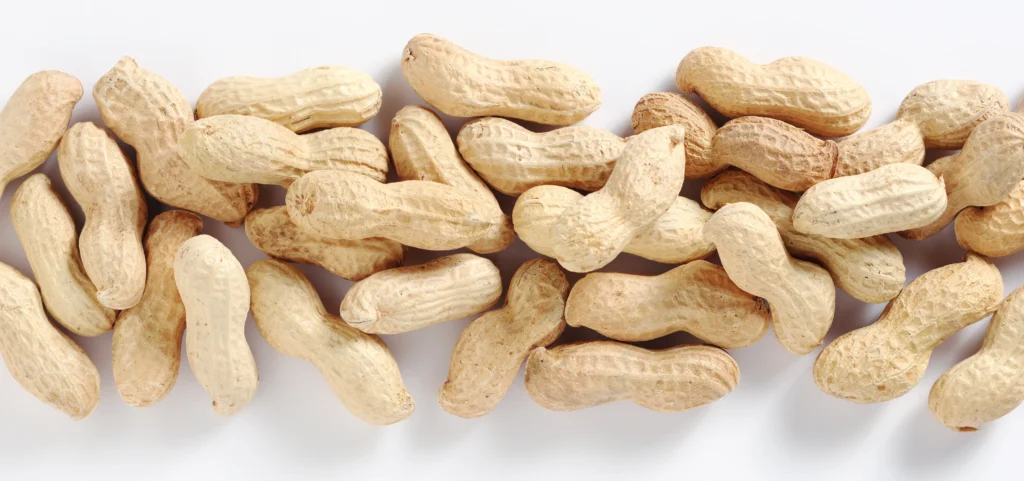
- Color: The skin of raw peanuts is reddish-brown, while the nuts themselves are a pale, creamy yellow.
- Shape: Oblong, with a curved and tapered end.
- Size: Typically, peanuts are about 1 to 1.5 inches long.
- Texture: Raw peanuts have a firm, slightly crunchy texture.
Culinary Uses
Peanuts are incredibly versatile in culinary applications. They can be eaten raw, roasted, or boiled. Peanuts are widely used in making peanut butter, oils, and flour. They’re also a popular addition to salads, stir-fries, desserts, and snack mixes. Peanuts add a nutty flavor and crunchy texture to dishes.
Geographical Information
- Origin: Peanuts are believed to have originated in South America, specifically in Peru or Brazil.
- Primary Growing Regions: Today, peanuts are grown in warm climates worldwide, with major producers including China, India, the United States (particularly Georgia, Texas, and Virginia), Nigeria, and Indonesia.
- Seasonal Availability: Peanuts are harvested in the fall, but they are available year-round due to storage and global cultivation.
Peanuts, while often categorized with nuts, are actually legumes. They are a rich source of nutrients, offering significant amounts of protein, healthy fats, and various vitamins and minerals. Their low glycemic index makes them a healthy choice for maintaining steady blood sugar levels, contributing to their popularity in various diets and cuisines worldwide.
| proximates: | |
| Water | 4.82 g |
| Energy (Atwater General Factors) | 588 kcal |
| Energy (Atwater Specific Factors) | 551 kcal |
| Nitrogen | 4.25 g |
| Protein | 23.2 g |
| Total lipid (fat) | 43.3 g |
| Ash | 2.2 g |
| Carbohydrates: | |
| Carbohydrate, by difference | 26.5 g |
| Fiber, total dietary | 8 g |
| Minerals: | |
| Calcium, Ca | 49 mg |
| Iron, Fe | 1.55 mg |
| Magnesium, Mg | 180 mg |
| Phosphorus, P | 380 mg |
| Potassium, K | 636 mg |
| Sodium, Na | 1 mg |
| Zinc, Zn | 2.78 mg |
| Copper, Cu | 0.46 mg |
| Manganese, Mn | 1.68 mg |
| Selenium, Se | 17.8 µg |