

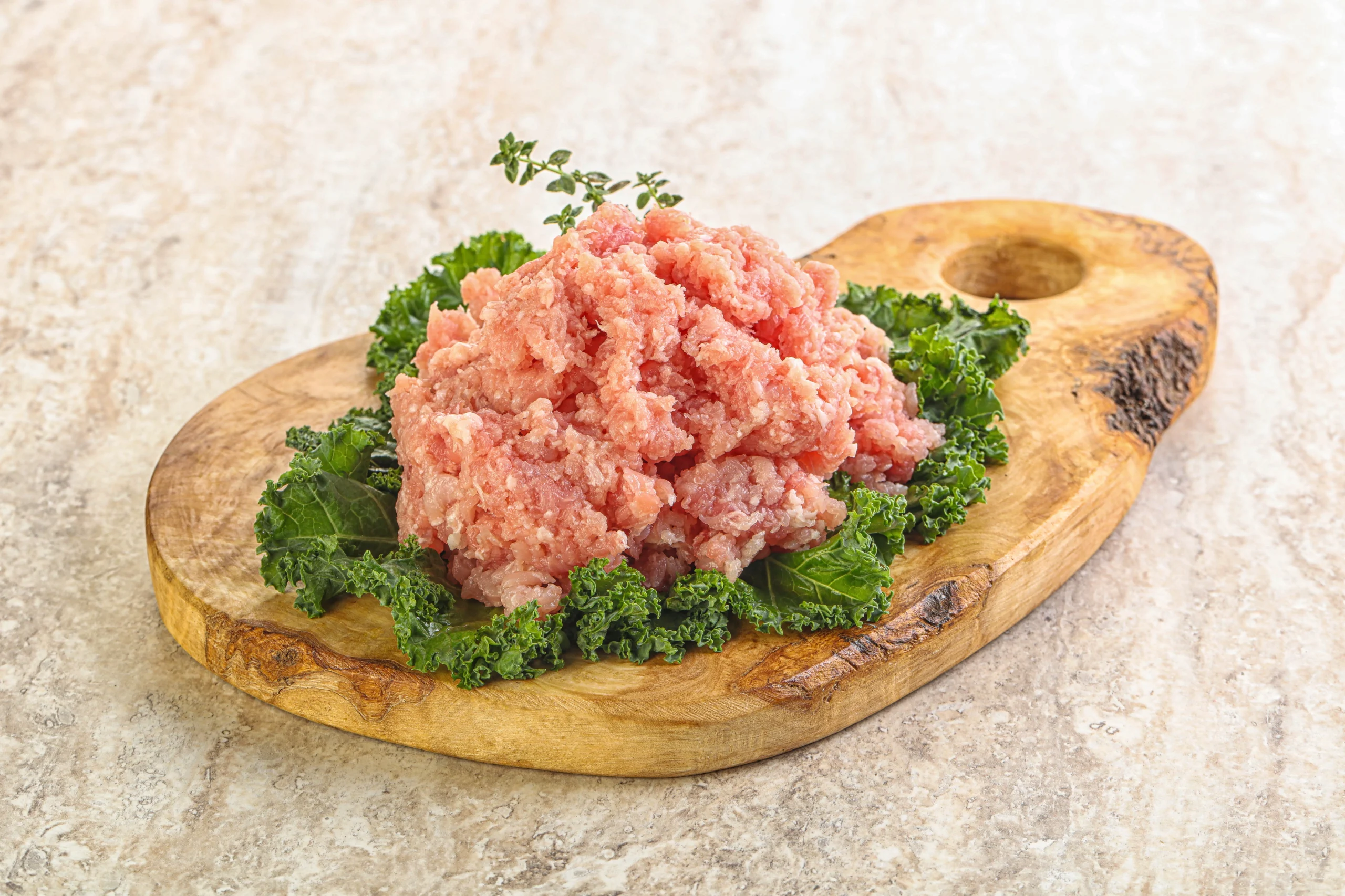
Ground pork, a versatile and widely used meat product, is made by grinding pork meat. It serves as a key ingredient in a variety of dishes across different cuisines. Here’s a detailed overview of ground pork, covering its basic information, nutritional content, physical characteristics, culinary uses, and geographical data.
Basic Information
- Common Name: Ground Pork
- Scientific Name: Derived from Sus scrofa domesticus
- Category: Meat
- Varieties: Ground pork can come from various parts of the pig and can vary in fat content, commonly found in lean (about 10% fat) and regular (about 20-30% fat) varieties.
Nutritional Information
- Macronutrients: Ground pork is rich in proteins and fats, with negligible carbohydrates. The exact macronutrient ratio can vary based on the fat content of the meat. Approximately, a 100g serving of raw, ground pork can contain about 17.8g of protein and 17.5g of fat in the regular variety.
- Micronutrients: It is a good source of B vitamins (especially B1, B2, B3, B6, and B12), phosphorus, zinc, selenium, and iron.
Phytonutrients
Pork, including ground pork, is an animal-based product and therefore does not contain phytonutrients in the same sense that plants do. Phytonutrients, or phytochemicals, are compounds produced by plants to aid in their growth or to protect them from pathogens, predators, and environmental stresses. They are known for their potential health benefits in humans, including antioxidant and anti-inflammatory effects.
However, pork does provide a range of nutrients essential for human health, although these are not classified as phytonutrients. Here’s an overview of the nutritional components found in ground pork:
Nutritional Components in Ground Pork
- Proteins: Ground pork is a rich source of high-quality protein, essential for muscle repair, growth, and overall body maintenance.
- Fats: Depending on the cut, ground pork can have varying levels of saturated and unsaturated fats, including omega-3 fatty acids, which are important for heart health.
- Vitamins:
- B Vitamins: Pork is an excellent source of several B vitamins, including B1 (thiamine), B2 (riboflavin), B3 (niacin), B6, and B12, crucial for energy metabolism, brain function, and red blood cell formation.
- Vitamin D: Some pork products, especially those from pigs raised with exposure to sunlight, can contain vitamin D, important for bone health and immune function.
- Minerals:
- Selenium: An important antioxidant that helps to protect cells from damage.
- Zinc: Essential for immune function, wound healing, and DNA synthesis.
- Iron: Particularly heme iron, which is more easily absorbed by the body than the non-heme iron found in plant sources, is important for transporting oxygen in the blood.
- Phosphorus: Vital for the formation of bones and teeth, as well as the synthesis of protein for the growth, maintenance, and repair of cells and tissues.
Health Considerations
While pork provides these essential nutrients, it’s important to consume it as part of a balanced diet. Ground pork, especially the varieties with higher fat content, should be eaten in moderation due to the potential health risks associated with high intakes of saturated fats and cholesterol. Cooking methods can also impact the healthiness of ground pork; for example, grilling or baking is generally healthier than frying.
To complement the nutritional profile of pork and ensure a diet rich in phytonutrients, it’s advisable to include a variety of fruits, vegetables, whole grains, and legumes in your diet. These plant-based foods will provide the phytonutrients and fiber that meat lacks, contributing to overall health and well-being.

Calorie Count and Glycemic Index
- Calorie Count: A 100g serving of raw ground pork contains roughly 233 calories.
- Glycemic Index: Meat products, including ground pork, have a glycemic index of 0 as they contain no carbohydrates.
Physical Characteristics
- Color: Raw ground pork typically has a light pink to reddish-pink color.
- Shape: It is sold as a loose mound or sometimes shaped into patties or meatballs by consumers or chefs.
- Size: Packaged in various weights, depending on consumer need or recipe requirements.
- Texture: Soft, moist, and malleable, allowing it to be easily formed into different shapes for cooking.
Culinary Uses
- Common Dishes: Ground pork is used in a myriad of dishes, including meatballs, burgers, sausages, dumplings, and as a filling in tacos and lettuce wraps. It’s also a key ingredient in meatloaf, pasta sauces, and Asian cuisine.
- Preparation Methods: It can be cooked in various ways, including frying, baking, grilling, or boiling. Ground pork must be cooked to an internal temperature of 160°F (71°C) to ensure safety.
- Suitable Pairings: Ground pork pairs well with a variety of spices and herbs, such as garlic, ginger, sage, and thyme. It complements vegetables like bell peppers, mushrooms, and onions, and can be mixed with other meats for more complex flavors.
Geographical Information
- Origin: Pork has been an important food source since ancient times, with domestic pigs (Sus scrofa domesticus) descended from wild boars.
- Primary Growing Regions: China is the world’s largest pork producer, followed by the European Union, United States, and Brazil.
- Seasonal Availability: Ground pork is available year-round, as pigs are farmed continuously to meet demand.
Ground pork’s nutritional value, combined with its culinary versatility, makes it a favored ingredient worldwide. Its use across various cuisines highlights its adaptability to different flavors and preparation methods, offering endless possibilities for creative and traditional dishes alike.
| proximates: | |
| Water | 63.9 g |
| Energy (Atwater General Factors) | 228 kcal |
| Energy (Atwater Specific Factors) | 233 kcal |
| Nitrogen | 2.85 g |
| Protein | 17.8 g |
| Total lipid (fat) | 17.5 g |
| Ash | 0.92 g |
| Minerals: | |
| Calcium, Ca | 6 mg |
| Iron, Fe | 0.79 mg |
| Magnesium, Mg | 19 mg |
| Phosphorus, P | 173 mg |
| Potassium, K | 318 mg |
| Sodium, Na | 54 mg |
| Zinc, Zn | 2.23 mg |
| Copper, Cu | 0.067 mg |
| Manganese, Mn | <0.0125 mg |
| Lipids: | |
| Fatty acids, total saturated | 6.28 g |
| Fatty acids, total monounsaturated | 7.78 g |
| Fatty acids, total polyunsaturated | 2.55 g |
| Fatty acids, total trans | 0.066 g |
| Cholesterol | 71 mg |