
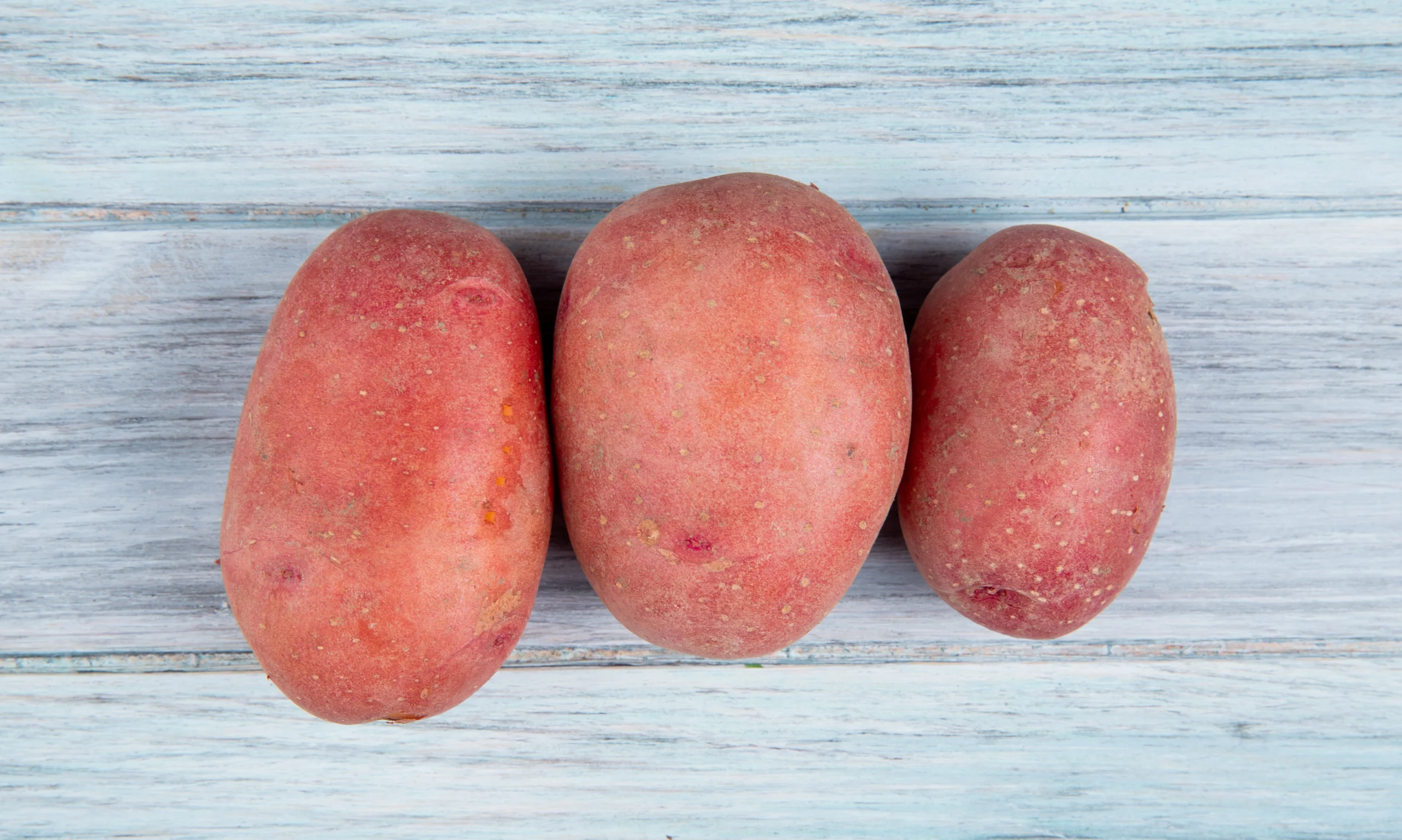
Red potatoes, known for their vibrant color and waxy texture, are a popular choice for a variety of dishes. Here’s an overview of red potatoes, focusing on their attributes from nutritional content to culinary uses.
Basic Information
- Common Name: Red Potatoes
- Scientific Name: Solanum tuberosum
- Category: Vegetable
- Varieties: There are several varieties of red potatoes, including Red Pontiac, Red Norland, and Red Bliss, each with its distinct characteristics but similar nutritional profiles.
Nutritional Information
- Macronutrients: Red potatoes without skin primarily consist of carbohydrates, with modest amounts of protein and minimal fat. A 100-gram serving of raw red potatoes contains about 16.3 grams of carbs, 2.06 grams of protein, and less than 0.25 grams of fat.
- Micronutrients: They are a good source of vitamin C, vitamin B6, and potassium. They also contain smaller amounts of magnesium, iron, and dietary fiber.
Phytonutrients
Red potatoes, like other colored vegetables, contain a variety of phytonutrients that contribute to their color and nutritional benefits. However, it’s important to note that while the skin of potatoes is often rich in phytonutrients, even potatoes without their skin still offer some beneficial compounds. Here’s an overview of the key phytonutrients found in red potatoes without skin:
1. Flavonoids
- Types and Presence: Red potatoes contain flavonoids such as anthocyanins (although in lesser amounts in the flesh than in the skin) and others like quercetin.
- Benefits: Flavonoids are known for their antioxidant properties, helping to neutralize free radicals and reduce inflammation. They have been associated with a reduced risk of chronic diseases such as heart disease and cancer.
2. Carotenoids
- Types and Presence: While more prevalent in orange and yellow vegetables, red potatoes may still contain small amounts of carotenoids like lutein and zeaxanthin in their flesh.
- Benefits: Carotenoids are beneficial for eye health, protecting against age-related macular degeneration and cataracts, and also possess antioxidant properties.
3. Phenolic Acids
- Types and Presence: Chlorogenic acid is a significant phenolic acid found in red potatoes.
- Benefits: This compound has antioxidant activity, which may help lower blood pressure and reduce the risk of chronic diseases.
Nutritional Synergy
The combination of these phytonutrients in red potatoes contributes to their overall health benefits. While the skin of red potatoes is a richer source of these compounds, the flesh still offers nutritional value, especially when it comes to their antioxidant properties. It’s the synergy of these nutrients and compounds that contributes to the health benefits associated with consuming a variety of fruits and vegetables.
Cooking and Phytonutrient Content
The method of cooking can impact the phytonutrient content of red potatoes. Boiling and steaming are generally considered better methods to preserve antioxidants, whereas frying can significantly reduce their content. To maximize the health benefits of red potatoes, including those without skin, it’s beneficial to incorporate cooking methods that preserve their nutritional value.
In summary, red potatoes without skin contain valuable phytonutrients that can contribute to a healthy diet. Despite the removal of the skin, which is a concentrated source of certain phytonutrients, the flesh of red potatoes still provides health-promoting compounds, especially when prepared in ways that minimize nutrient loss.
Calorie Count and Glycemic Index
- Calorie Count: A 100-gram serving provides approximately 76 calories.
- Glycemic Index: Raw potatoes have a low glycemic index, but this increases significantly when cooked. The GI of cooked red potatoes can vary depending on the preparation method, but generally, they have a medium GI.
Physical Characteristics
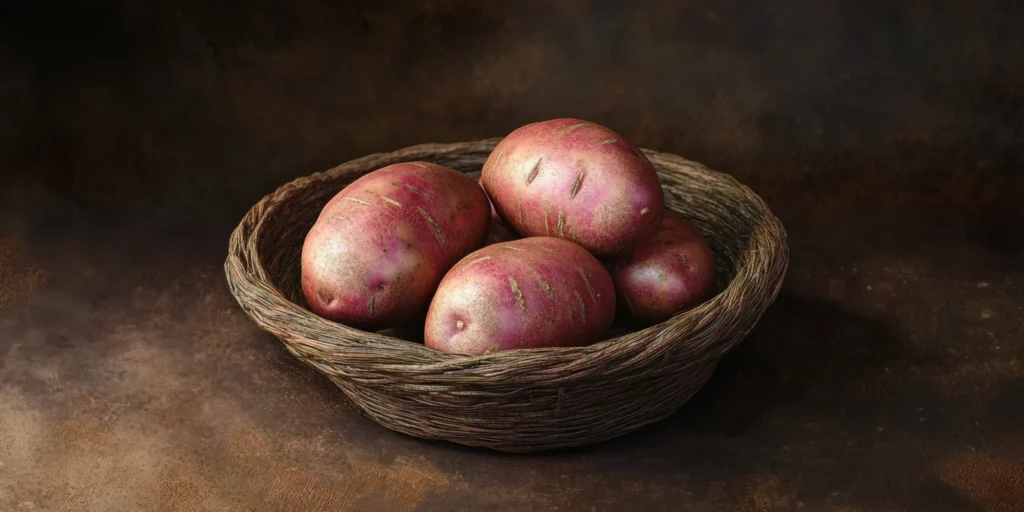
- Color: The flesh of red potatoes is white to creamy yellow, while the skin is a distinctive red.
- Shape: They are often small to medium in size, with a round to slightly oblong shape.
- Size: Typically, red potatoes range from the size of a golf ball to that of a small fist.
- Texture: Red potatoes have a waxy texture, making them firm and moist when cooked.
Culinary Uses
- Common Dishes: Ideal for boiling, roasting, and making salads due to their firm texture that holds up well during cooking. They are also popular in soups, stews, and as a side dish.
- Preparation Methods: Can be cooked whole, sliced, diced, or cut into wedges. Their waxy texture makes them excellent for dishes where the potato’s shape should be maintained.
- Suitable Pairings: Red potatoes pair well with olive oil, herbs (like dill, parsley, and rosemary), garlic, and butter. They complement both meat and vegetable dishes effectively.
Geographical Information
- Origin: Potatoes are native to the Andean mountain region of South America. Red potato varieties have been developed over time for their color, taste, and texture.
- Primary Growing Regions: Potatoes are grown globally, with China, India, Russia, Ukraine, and the United States among the top producers. Red potatoes are cultivated in many potato-growing regions, particularly in temperate climates.
- Seasonal Availability: While potatoes are harvested at various times of the year depending on the region, storage capabilities allow red potatoes to be available year-round.
Red potatoes offer a delicious and nutritious option for a wide range of dishes, favored for their appealing color, texture, and flavor. Their nutritional content, combined with their culinary versatility, makes them a valuable addition to a healthy, balanced diet.
| proximates: | |
| Water | 80.5 g |
| Energy (Atwater General Factors) | 76 kcal |
| Energy (Atwater Specific Factors) | 73 kcal |
| Nitrogen | 0.33 g |
| Protein | 2.06 g |
| Total lipid (fat) | 0.25 g |
| Ash | 0.95 g |
| Carbohydrates: | |
| Carbohydrate, by difference | 16.3 g |
| Total dietary fiber (AOAC 2011.25) | 13.8 g |
| High Molecular Weight Dietary Fiber (HMWDF) | 12.9 g |
| Low Molecular Weight Dietary Fiber (LMWDF) | 0.89 g |
| Sugars, Total | 0.66 g |
| Sucrose | 0.26 g |
| Glucose | 0.18 g |
| Fructose | 0.22 g |
| Lactose | <0.25 g |
| Maltose | <0.25 g |
| Minerals: | |
| Calcium, Ca | 5 mg |
| Iron, Fe | 0.39 mg |
| Magnesium, Mg | 23.6 mg |
| Phosphorus, P | 56 mg |
| Potassium, K | 472 mg |
| Sodium, Na | 3 mg |
| Zinc, Zn | 0.39 mg |
| Copper, Cu | 0.091 mg |
| Manganese, Mn | 0.165 mg |
| Selenium, Se | <2.5 µg |
| Molybdenum, Mo | 7.4 µg |
| Vitamins and Other Components: | |
| Vitamin C, total ascorbic acid | 21.3 mg |
| Thiamin | 0.066 mg |
| Niacin | 1.48 mg |
| Vitamin B-6 | 0.144 mg |
| Vitamin K (phylloquinone) | 1.1 µg |
| Vitamin K (Dihydrophylloquinone) | <0.1 µg |
| Vitamin K (Menaquinone-4) | <0.1 µg |