Russet potatoes, known for their starchy quality and versatility, are a staple in many diets around the world. Here’s a comprehensive look at russet potatoes, focusing on their basic information, nutritional content, physical characteristics, culinary uses, and geographical information.
Basic Information
- Common Name: Russet Potatoes
- Scientific Name: Solanum tuberosum
- Category: Vegetable
- Varieties: The term “russet” generally refers to potatoes that have a russet-colored skin and are part of the larger group of potatoes that include several varieties, such as Russet Burbank, Russet Norkotah, and more.
Nutritional Information
- Macronutrients: Russet potatoes are high in carbohydrates, with a moderate amount of protein and minimal fat. A 100-gram serving of raw, skinless russet potatoes contains approximately 17.8 grams of carbs, 2.27 grams of protein, and less than 0.36 grams of fat.
- Micronutrients: They are an excellent source of vitamin C, vitamin B6, and potassium. They also contain smaller amounts of magnesium, iron, and dietary fiber.
Phytonutrients
Russet potatoes, even without their skin, contain a range of phytonutrients, although the skin is often richer in these compounds. Phytonutrients are natural compounds produced by plants that have antioxidant and anti-inflammatory properties, contributing to various health benefits. Here’s an overview of the key phytonutrients found in russet potatoes, focusing on the flesh portion:
1. Phenolic Compounds
- Types and Presence: Chlorogenic acid is the most predominant phenolic compound in the flesh of russet potatoes.
- Benefits: Phenolic compounds are known for their antioxidant properties, which help neutralize harmful free radicals in the body. Chlorogenic acid, in particular, has been studied for its potential to reduce blood pressure and improve cardiovascular health.
2. Flavonoids
- Types and Presence: Though more concentrated in the skin, the flesh of russet potatoes still contains flavonoids such as quercetin.
- Benefits: Flavonoids have strong antioxidant and anti-inflammatory effects. Quercetin, specifically, has been associated with a lower risk of chronic diseases such as heart disease and certain cancers, and may also have antiviral properties.
3. Carotenoids
- Types and Presence: Carotenoids are present in russet potatoes in smaller amounts, especially in the flesh. The types include lutein and zeaxanthin, although in lower concentrations compared to potatoes with darker or more vibrant flesh colors.
- Benefits: Carotenoids are beneficial for eye health, protecting against age-related macular degeneration and cataracts. They also possess antioxidant properties.
4. Glycoalkaloids
- Types and Presence: Glycoalkaloids such as solanine and chaconine can be found throughout the potato, including in the flesh, although concentrations are typically higher in the skin and in green or sprouted parts.
- Benefits: In small amounts, glycoalkaloids have antimicrobial and antifungal properties. However, in higher concentrations, they can be toxic, which is why it’s important to avoid eating green or sprouted potatoes.
Nutritional Synergy
The phytonutrients in russet potatoes work together with other nutrients such as vitamins, minerals, and fiber to contribute to overall health. While the skin of the potato is a significant source of these phytonutrients, the flesh itself still offers health benefits, particularly through its antioxidant capacity.
Considerations
To maximize the intake of phytonutrients from potatoes, consuming them with the skin on is often recommended. However, when the skin is removed, as with peeled russet potatoes, it’s beneficial to include a variety of other vegetables and fruits in the diet to ensure a broad intake of phytonutrients.
In summary, while russet potatoes without skin may have reduced phytonutrient content compared to those with skin, they still contribute valuable antioxidants and compounds that support health, especially when included as part of a varied and balanced diet.
Calorie Count and Glycemic Index
- Calorie Count: A 100-gram serving provides about 81 calories.
- Glycemic Index: Raw potatoes have a low glycemic index, but this increases significantly when cooked. The GI of cooked russet potatoes can vary but is generally considered high due to their starchy nature.
Physical Characteristics
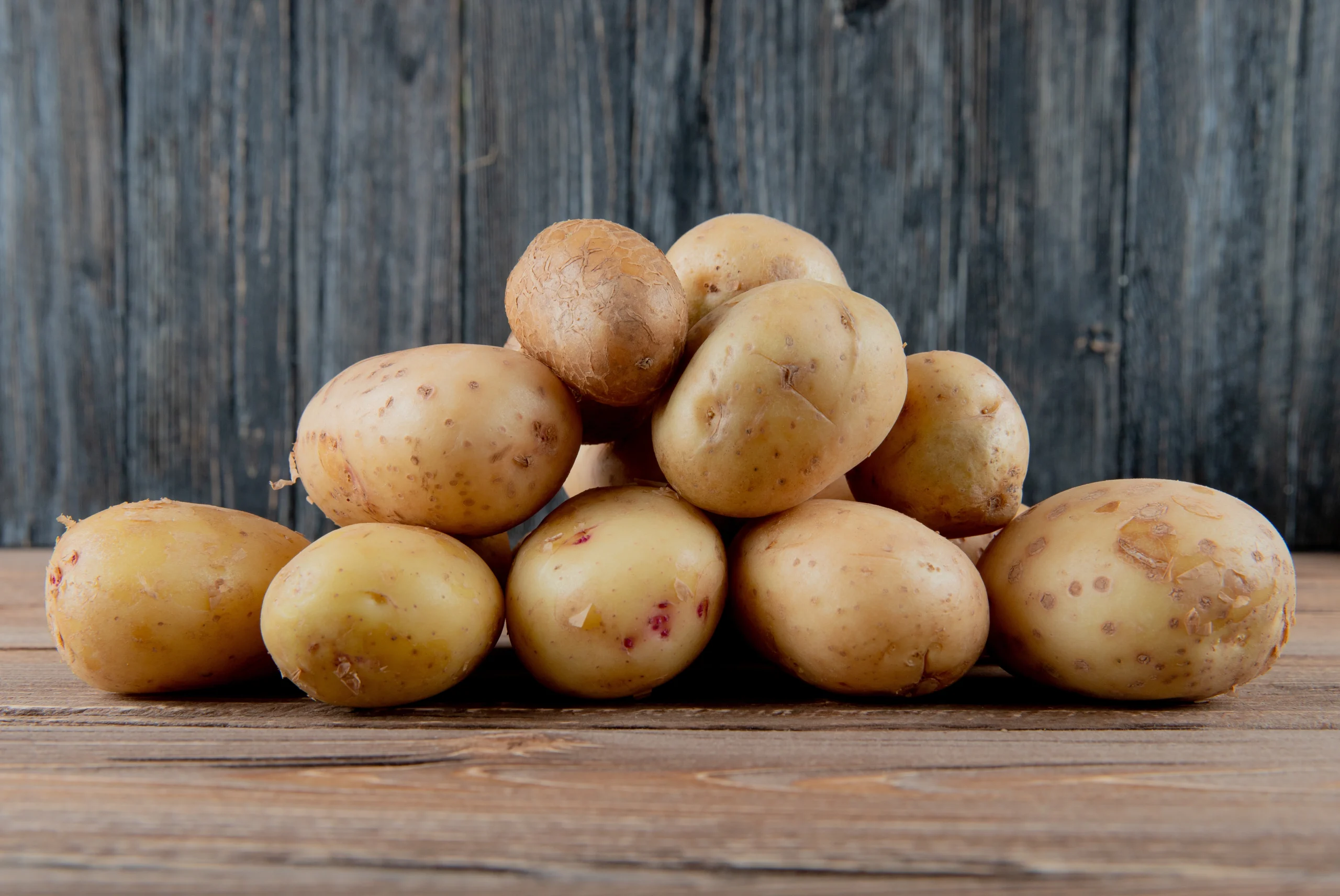
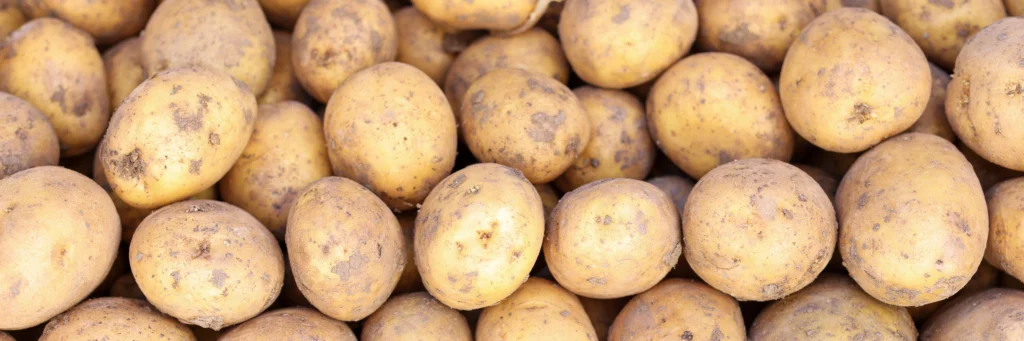
- Color: The flesh of russet potatoes is white to pale yellow.
- Shape: They are typically oblong or slightly flattened.
- Size: Russet potatoes can be quite large, often weighing several pounds.
- Texture: The flesh is dry and starchy, making them ideal for baking and mashing.
Culinary Uses
- Common Dishes: Russet potatoes are widely used in baking, mashing, and frying due to their fluffy texture after cooking. They’re commonly used for baked potatoes, mashed potatoes, French fries, and potato wedges.
- Preparation Methods: Can be boiled, baked, mashed, or fried. They absorb flavors well, making them suitable for a variety of recipes.
- Suitable Pairings: Russet potatoes pair well with butter, cream, cheese, and herbs like rosemary and thyme. They also complement both meat and vegetable dishes.
Geographical Information
- Origin: Potatoes are native to the South American Andes. The russet varieties were developed primarily in the United States for their desirable cooking qualities.
- Primary Growing Regions: Russet potatoes are grown extensively in the United States, particularly in Idaho, Washington, and Oregon, due to the favorable soil and climate conditions. They are also cultivated in other parts of the world with similar climates.
- Seasonal Availability: Potatoes are generally available year-round due to modern storage techniques, although they are harvested in late summer through fall.
Russet potatoes are cherished for their culinary flexibility and nutritional value. Their ability to be transformed into a variety of textures and flavors makes them a favorite ingredient in kitchens worldwide. Whether baked, mashed, or fried, russet potatoes provide a comforting and satisfying base for countless dishes.
| proximates: | |
| Water | 78.6 g |
| Energy (Atwater General Factors) | 83 kcal |
| Energy (Atwater Specific Factors) | 81 kcal |
| Nitrogen | 0.36 g |
| Protein | 2.27 g |
| Total lipid (fat) | 0.36 g |
| Ash | 0.98 g |
| Carbohydrates: | |
| Carbohydrate, by difference | 17.8 g |
| Total dietary fiber (AOAC 2011.25) | 14.9 g |
| High Molecular Weight Dietary Fiber (HMWDF) | 13.8 g |
| Low Molecular Weight Dietary Fiber (LMWDF) | 1.09 g |
| Sugars, Total | 0.53 g |
| Sucrose | 0.07 g |
| Glucose | 0.16 g |
| Fructose | 0.29 g |
| Lactose | <0.25 g |
| Maltose | <0.25 g |
| Minerals: | |
| Calcium, Ca | 8 mg |
| Iron, Fe | 0.38 mg |
| Magnesium, Mg | 25.6 mg |
| Phosphorus, P | 55 mg |
| Potassium, K | 450 mg |
| Sodium, Na | 3 mg |
| Zinc, Zn | 0.38 mg |
| Copper, Cu | 0.091 mg |
| Manganese, Mn | 0.152 mg |
| Selenium, Se | <2.5 µg |
| Molybdenum, Mo | 4.9 µg |
| Vitamins and Other Components: | |
| Vitamin C, total ascorbic acid | 10.9 mg |
| Thiamin | 0.074 mg |
| Niacin | 1.5 mg |
| Vitamin B-6 | 0.157 mg |
| Vitamin K (phylloquinone) | 1.5 µg |
| Vitamin K (Dihydrophylloquinone) | <0.1 µg |
| Vitamin K (Menaquinone-4) | <0.1 µg |