
Basic Information
- Common Name: Almond Butter, Creamy
- Scientific Name: Prunus dulcis
- Category: Nut Butter
Varieties
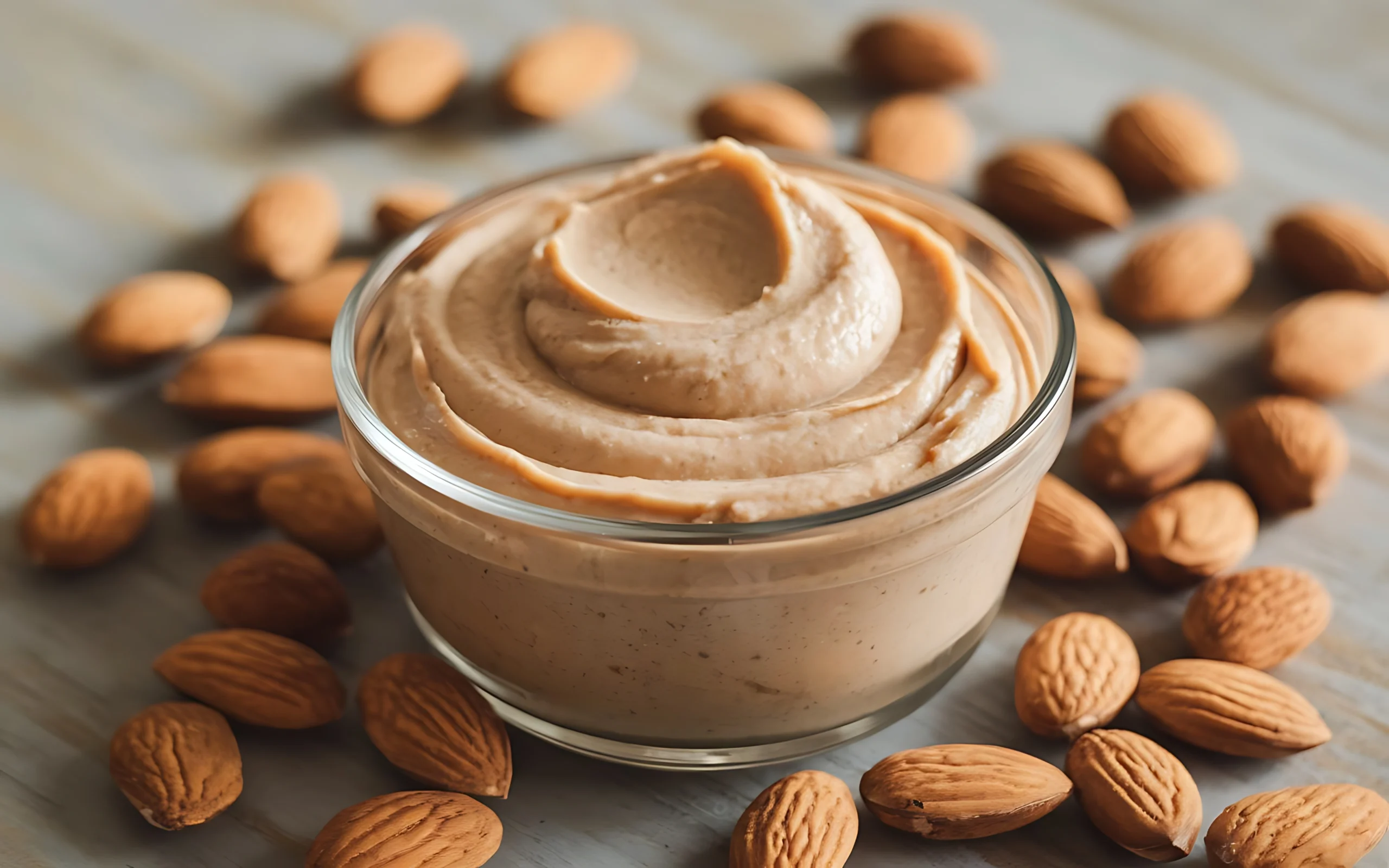
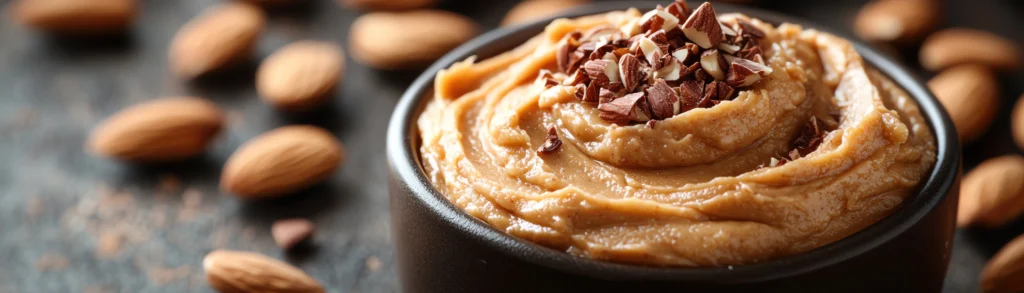
Almond butter can be found in various forms including creamy (smooth), crunchy (with almond pieces), and with added flavors or ingredients such as salt, honey, or chocolate. This entry focuses on creamy almond butter, which is smooth with a uniform texture.
Nutritional Information
- Macronutrients:
- Carbohydrates: Approximately 22g per 100g. Contains a small amount of dietary fiber and sugars.
- Proteins: About 21g per 100g, making it a good plant-based protein source.
- Fats: High, around 56g per 100g, with a predominance of monounsaturated and polyunsaturated fats, including omega-6 fatty acids.
- Micronutrients:
- Vitamins: Rich in vitamin E, an antioxidant that helps protect cells from oxidative damage. Also contains some B vitamins, including niacin.
- Minerals: Excellent source of magnesium, phosphorus, and copper. Also provides significant amounts of calcium, iron, and potassium.
- Calorie Count: About 614 calories per 100g.
- Glycemic Index: Low; almond butter has a minimal impact on blood sugar levels due to its low carbohydrate and high healthy fat content.
Phytonutrients
Creamy almond butter is packed with various phytonutrients that contribute to its nutritional profile and health benefits. While almond butter primarily provides healthy fats, proteins, vitamins, and minerals, it also contains bioactive compounds found in almonds. Here’s an overview of the key phytonutrients present in creamy almond butter:
Flavonoids
- Quercetin: Known for its antioxidant and anti-inflammatory properties, quercetin may help reduce blood pressure and improve heart health.
- Kaempferol: Another antioxidant that may contribute to cancer prevention and promote heart health.
Phenolic Acids
- Caffeic Acid: Offers antioxidant properties that can protect cells from damage.
- Ferulic Acid: Has antioxidant effects that help neutralize free radicals, potentially reducing the risk of chronic diseases.
Tannins
- Catechin: A type of flavonoid found in almonds, catechin is linked to improved cardiovascular health and antioxidant protection.
Phytosterols
- Almonds are a rich source of phytosterols, particularly beta-sitosterol, which may help lower cholesterol levels by reducing the absorption of cholesterol from the diet.
Vitamin E Compounds
- Tocopherols: Almond butter is an excellent source of vitamin E, particularly gamma-tocopherol, which acts as a powerful antioxidant to protect cells from oxidative stress and may have anti-inflammatory effects.
Unsaturated Fats
- While not phytonutrients, the high content of monounsaturated and polyunsaturated fats in almond butter, including omega-6 and omega-9 fatty acids, supports heart health and may have anti-inflammatory benefits.
These phytonutrients contribute to the antioxidant, anti-inflammatory, and heart-healthy properties of almond butter. Consuming almond butter can be a delicious way to incorporate these beneficial compounds into your diet, supporting overall health and potentially reducing the risk of chronic diseases. However, due to the concentration process in making almond butter, the amounts of these compounds can vary, and consuming whole almonds can also provide similar benefits.
Physical Characteristics
- Color: Light to medium brown, depending on the processing.
- Shape: Does not hold shape; it’s a spreadable paste.
- Size: Sold in various jar sizes, typically ranging from 8 ounces to 16 ounces or larger.
- Texture: Creamy and smooth with a uniform consistency.
Culinary Uses
- Common Dishes: Used as a spread on toast, in sandwiches, smoothies, sauces, dressings, and various baking recipes. It’s also a popular ingredient in energy bars and balls.
- Preparation Methods: Ready to use straight from the jar. Can be incorporated into both sweet and savory dishes.
- Suitable Pairings: Complements fruits like apples and bananas, honey, chocolate, and is used in savory sauces and dips.
Geographical Information
- Origin: Almonds are native to the Middle East and South Asia, with almond butter being a relatively modern culinary creation.
- Primary Growing Regions: The United States (particularly California) is the largest producer of almonds, followed by countries like Spain, Iran, and Morocco.
- Seasonal Availability: Almond butter is available year-round due to the shelf-stability of the product.
Creamy almond butter is a nutritious and versatile food product, offering a rich source of proteins, healthy fats, vitamins, and minerals. Its creamy texture and nutty flavor make it a popular alternative to peanut butter, suitable for a wide range of dietary preferences including vegan and gluten-free diets.
| Proximates: | |
| Water | 1.75 g |
| Energy (Atwater General Factors) | 645 kcal |
| Energy (Atwater Specific Factors) | 603 kcal |
| Nitrogen | 4.01 g |
| Protein | 20.8 g |
| Total lipid (fat) | 53 g |
| Ash | 3.18 g |
| Carbohydrates: | |
| Carbohydrate, by difference | 21.1 g |
| Fiber, total dietary | 9.7 g |
| Minerals: | |
| Calcium, Ca | 264 mg |
| Iron, Fe | 4.11 mg |
| Magnesium, Mg | 268 mg |
| Phosphorus, P | 507 mg |
| Potassium, K | 705 mg |
| Sodium, Na | 1 mg |
| Zinc, Zn | 3.18 mg |
| Copper, Cu | 0.975 mg |
| Manganese, Mn | 2.14 mg |
| Selenium, Se | 0.8 µg |
| Vitamins and Other Components: | |
| Thiamin | 0.095 mg |
| Niacin | 3.91 mg |
| Vitamin B-6 | 0.084 mg |
| Biotin | 57.3 µg |
| Folate, total | 42 µg |
| Vitamin E (alpha-tocopherol) | 16.7 mg |
| Vitamin K (phylloquinone) | <0.1 µg |
| Lipids: | |
| Fatty acids, total saturated | 4.25 g |
| SFA 16:0 | 3.3 g |
| SFA 18:0 | 0.819 g |
| Fatty acids, total monounsaturated | 34.7 g |
| MUFA 16:1 c | 0.247 g |
| MUFA 18:1 c | 34.3 g |
| Fatty acids, total polyunsaturated | 12.6 g |
| PUFA 18:2 n-6 c,c | 12.6 g |
| Amino acids: | |
| Tryptophan | 0.196 g |
| Threonine | 0.779 g |
| Isoleucine | 0.93 g |
| Leucine | 1.75 g |
| Lysine | 0.646 g |
| Methionine | 0.189 g |
| Phenylalanine | 1.38 g |
| Tyrosine | 0.76 g |
| Valine | 1.09 g |
| Arginine | 2.77 g |
| Histidine | 0.639 g |
| Alanine | 1.18 g |
| Aspartic acid | 3.01 g |
| Glutamic acid | 7.42 g |
| Glycine | 1.65 g |
| Proline | 1.12 g |
| Serine | 1.06 g |
| Hydroxyproline | 0.044 g |
| Cysteine | 0.449 g |
| Isoflavones: | |
| Daidzein | <0.033 mg |
| Genistein | 0.079 mg |
| Daidzin | 0.028 mg |
| Genistin | <0.016 mg |
| Glycitin | 0.17 mg |