
Basic Information:
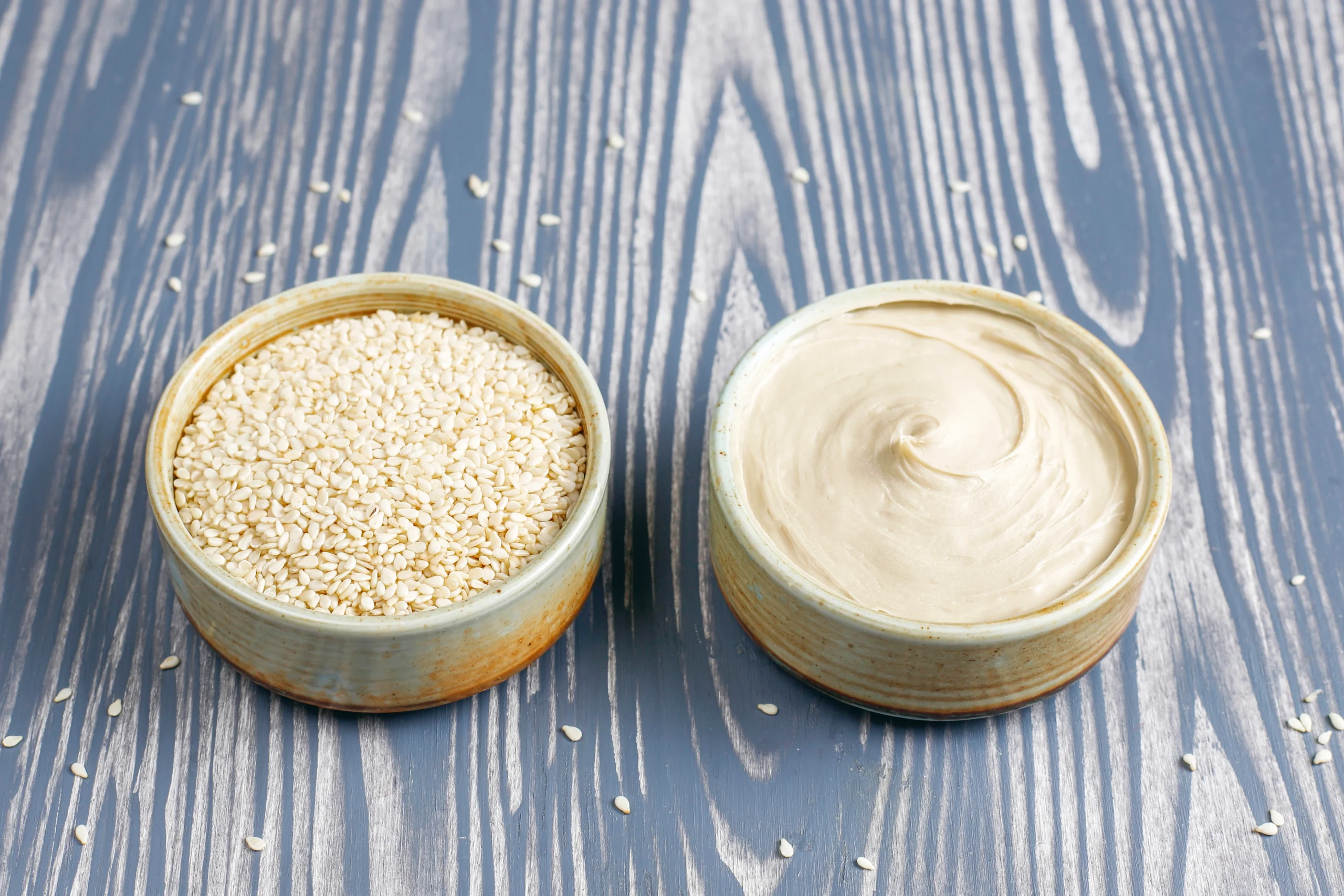
- Common Name: Sesame Butter, Tahini
- Scientific Name: Sesamum indicum (sesame seeds are the base ingredient)
- Category: Seed-based spread
- Varieties: There are several varieties of tahini, including hulled (lighter and milder) and unhulled (darker and more robust in flavor). It can also be categorized as raw or roasted, depending on the processing method.
Nutritional Information:
- Macronutrients (per 100 grams):
- Carbohydrates: 14.2 grams
- Proteins: 19.7 grams
- Fats: 62.4 grams
- Saturated Fat: 8.0 grams
- Monounsaturated Fat: 19.0 grams
- Polyunsaturated Fat: 21.0 grams
- Micronutrients:
- Vitamins:
- Vitamin E: 2.3 mg (15% DV)
- Vitamin B1 (Thiamine): 1.6 mg (133% DV)
- Vitamin B6: 0.8 mg (47% DV)
- Folate: 98 µg (25% DV)
- Minerals:
- Calcium: 426 mg (43% DV)
- Magnesium: 100 mg (25% DV)
- Phosphorus: 670 mg (95% DV)
- Iron: 9.3 mg (52% DV)
- Zinc: 4.6 mg (42% DV)
- Selenium: 6.7 µg (12% DV)
Phytonutrients
Sesame butter, also known as tahini, is derived from sesame seeds and contains a variety of phytonutrients that contribute to its health benefits. Here are the primary phytonutrients found in creamy sesame butter:
- Lignans:
- Sesamin: Known for its antioxidant and anti-inflammatory properties, sesamin helps protect the liver, reduce cholesterol levels, and may have anticancer effects.
- Sesamolin: Another lignan with strong antioxidant properties that helps reduce oxidative stress and improve heart health.
- Phytosterols:
- Beta-sitosterol: Helps lower cholesterol levels, supports prostate health, and has anti-inflammatory effects.
- Campesterol: Works alongside beta-sitosterol to support cholesterol reduction and has anti-inflammatory properties.
- Stigmasterol: Known for its role in reducing cholesterol levels and supporting overall cardiovascular health.
- Phenolic Compounds:
- Ferulic Acid: An antioxidant that helps protect cells from damage caused by free radicals, supports skin health, and may reduce the risk of chronic diseases.
- P-Coumaric Acid: Possesses antioxidant properties and contributes to reducing oxidative stress and inflammation.
- Flavonoids:
- Quercetin: A potent antioxidant that helps reduce inflammation, supports cardiovascular health, and boosts the immune system.
- Kaempferol: Known for its anti-inflammatory, antioxidant, and anticancer properties.
- Saponins:
- These compounds have cholesterol-lowering properties, immune-boosting effects, and potential anticancer activity.
- Tocopherols (Vitamin E):
- Alpha-tocopherol: A powerful antioxidant that protects cells from oxidative damage, supports immune function, and promotes skin health.
- Gamma-tocopherol: Another form of Vitamin E that provides antioxidant benefits and supports heart health.
Health Benefits of Phytonutrients in Sesame Butter
- Antioxidant Protection: The lignans, phenolic compounds, flavonoids, and tocopherols in sesame butter help protect cells from oxidative damage caused by free radicals, reducing the risk of chronic diseases.
- Anti-inflammatory Effects: Many phytonutrients, including lignans, phytosterols, and flavonoids, reduce inflammation, which is beneficial for managing chronic conditions such as arthritis and heart disease.
- Heart Health: Phytosterols (beta-sitosterol, campesterol, stigmasterol) and tocopherols help lower cholesterol levels and protect cardiovascular health.
- Cancer Prevention: Some phytonutrients, such as sesamin, quercetin, and kaempferol, have anticancer properties, potentially reducing the risk of certain types of cancer.
- Liver Protection: Sesamin, in particular, is known for its liver-protective effects, helping to improve liver function and detoxification processes.
- Immune Support: Compounds like quercetin and saponins boost immune function, helping the body to fight off infections and diseases.
- Hormonal Balance: Lignans like sesamin and sesamolin can help balance hormones, particularly in postmenopausal women.
Summary
Creamy sesame butter, or tahini, is rich in a variety of phytonutrients, including lignans (sesamin, sesamolin), phytosterols (beta-sitosterol, campesterol, stigmasterol), phenolic compounds (ferulic acid, p-coumaric acid), flavonoids (quercetin, kaempferol), saponins, and tocopherols (alpha-tocopherol, gamma-tocopherol). These compounds provide numerous health benefits, such as antioxidant protection, anti-inflammatory effects, heart health support, cancer prevention, liver protection, immune support, and hormonal balance. Including sesame butter in your diet can contribute to overall health and well-being due to its rich phytonutrient profile.
Calorie Count and Glycemic Index
- Calorie Count: Approximately 648 calories
- Glycemic Index: Low
Physical Characteristics:
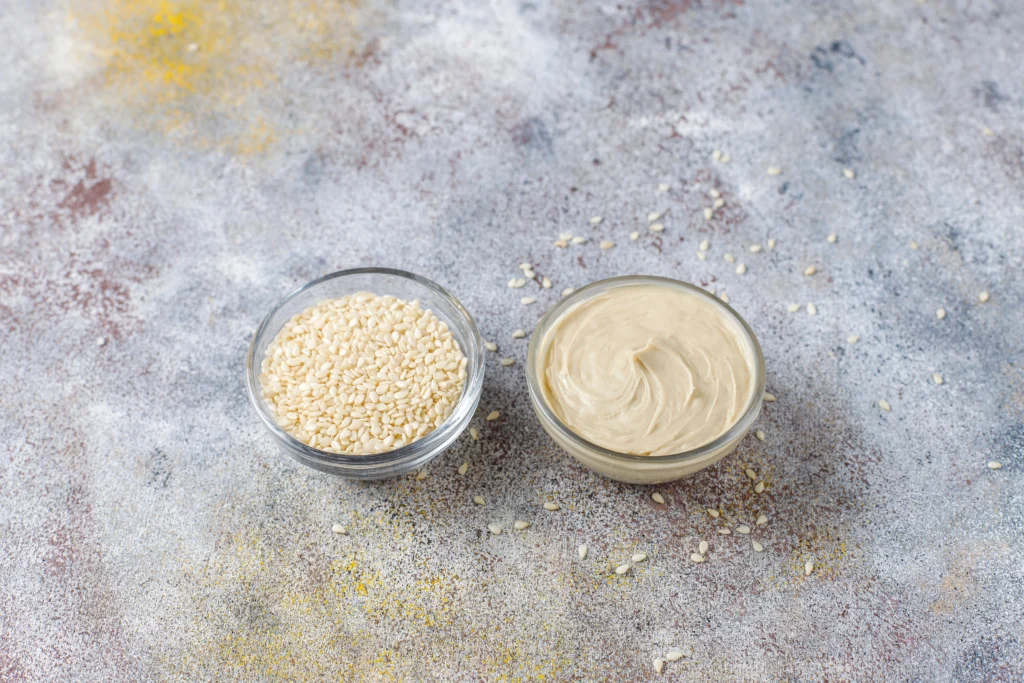
- Color: Light beige to dark brown, depending on whether hulled or unhulled sesame seeds are used and if they are roasted.
- Shape: Not applicable, as it is a creamy paste.
- Size: Not applicable, as it is a spreadable paste.
- Texture: Smooth and creamy, with a slightly oily consistency.
Culinary Uses:
- Common Dishes: Tahini is used in a variety of dishes, including hummus, baba ganoush, salad dressings, sauces, and dips.
- Preparation Methods: Can be used raw or incorporated into cooked dishes. Often mixed with lemon juice, garlic, and water to create a sauce.
- Suitable Pairings: Pairs well with chickpeas, garlic, lemon, olive oil, and various vegetables. It is also used in sweet dishes, pairing well with honey, chocolate, and fruits.
Geographical Information:
- Origin: Sesame seeds are believed to have originated in Africa and were cultivated in ancient Mesopotamia and the Indian subcontinent.
- Primary Growing Regions: Major producers of sesame seeds include India, Myanmar, Sudan, China, and Nigeria. Sesame butter production is widespread, with significant amounts produced in the Middle East, Mediterranean, and North America.
- Seasonal Availability: Available year-round due to its long shelf life when stored properly.
Sesame butter, or tahini, is a versatile and nutritious spread that is a staple in many cuisines around the world. Its rich flavor and health benefits make it a valuable addition to both savory and sweet dishes.
| Proximates: | |
| Water | 0.61 g |
| Energy (Atwater General Factors) | 697 kcal |
| Energy (Atwater Specific Factors) | 648 kcal |
| Nitrogen | 3.72 g |
| Protein | 19.7 g |
| Total lipid (fat) | 62.4 g |
| Ash | 3.11 g |
| Carbohydrates: | |
| Carbohydrate, by difference | 14.2 g |
| Fiber, total dietary | 8.4 g |
| Minerals: | |
| Calcium, Ca | 116 mg |
| Iron, Fe | 7 mg |
| Magnesium, Mg | 357 mg |
| Phosphorus, P | 719 mg |
| Potassium, K | 408 mg |
| Sodium, Na | 64 mg |
| Zinc, Zn | 6.04 mg |
| Copper, Cu | 1.65 mg |
| Manganese, Mn | 1.61 mg |
| Selenium, Se | 46.5 µg |
| Vitamins and Other Components: | |
| Thiamin | 0.993 mg |
| Niacin | 5.81 mg |
| Vitamin B-6 | 0.595 mg |
| Biotin | 13.3 µg |
| Folate, total | 108 µg |
| Vitamin E (alpha-tocopherol) | <0.001 mg |
| Vitamin K (phylloquinone) | 1.7 µg |
| Lipids: | |
| Fatty acids, total saturated | 8.97 g |
| SFA 16:0 | 5.32 g |
| SFA 18:0 | 3.1 g |
| SFA 20:0 | 0.361 g |
| Fatty acids, total monounsaturated | 22.6 g |
| MUFA 18:1 c | 22.4 g |
| MUFA 20:1 c | 0.122 g |
| Fatty acids, total polyunsaturated | 26.4 g |
| PUFA 18:2 n-6 c,c | 26.1 g |
| PUFA 18:3 n-3 c,c,c (ALA) | 0.25 g |
| Amino acids: | |
| Tryptophan | 0.309 g |
| Threonine | 0.916 g |
| Isoleucine | 0.859 g |
| Leucine | 1.65 g |
| Lysine | 0.672 g |
| Methionine | 0.739 g |
| Phenylalanine | 1.12 g |
| Tyrosine | 0.836 g |
| Valine | 1.1 g |
| Arginine | 3.14 g |
| Histidine | 0.618 g |
| Alanine | 1.17 g |
| Aspartic acid | 2.06 g |
| Glutamic acid | 5.05 g |
| Glycine | 1.22 g |
| Proline | 0.929 g |
| Serine | 1.15 g |
| Hydroxyproline | 0.035 g |
| Cysteine | 0.751 g |
| Isoflavones: | |
| Daidzein | 1.52 mg |
| Genistein | <0.013 mg |
| Daidzin | 0.406 mg |
| Genistin | <0.016 mg |
| Glycitin | 0.17 mg |